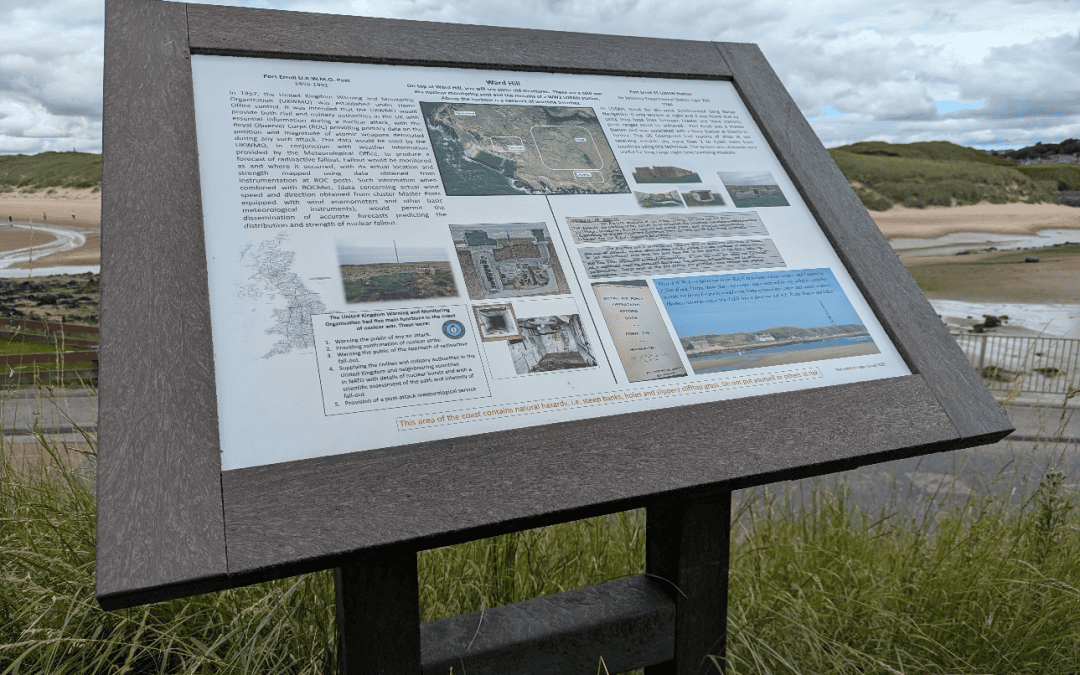
Ward Hill
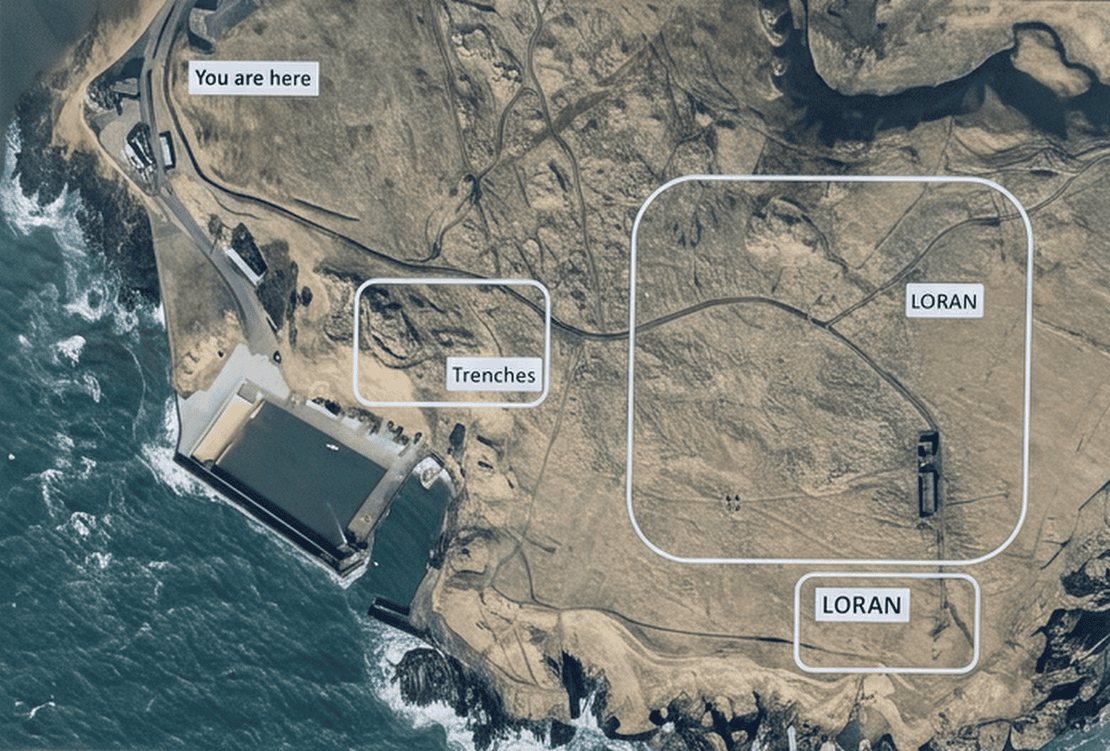
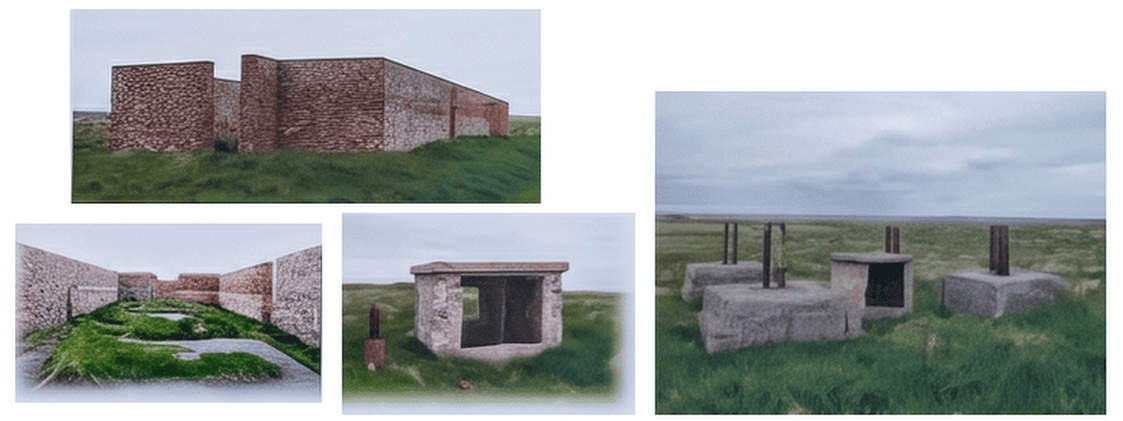
On top of Ward Hill, you will see some old structures. These are a cold war era nuclear monitoring post and the remains of a WW2 LORAN station. Above the harbour is a network of wartime trenches.
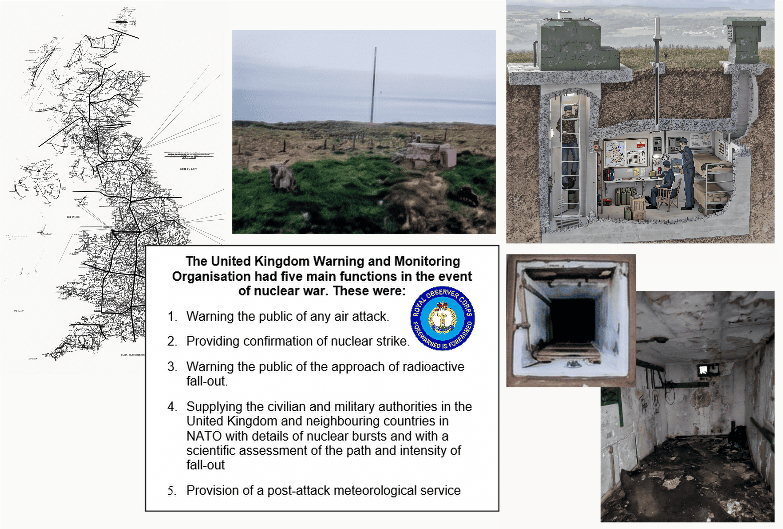
Port Erroll U.K.W.M.O. Post
1959–1991
In 1957, the United Kingdom Warning and Monitoring Organisation (UKWMO) was established under Home Office control. It was intended that the UKWMO would provide both civil and military authorities in the UK with essential information during a nuclear attack, with the Royal Observer Corps (ROC) providing primary data on the position and magnitude of atomic weapons detonated during any such attack. This data would be used by the UKWMO, in conjunction with weather information provided by the Meteorological Office, to produce a forecast of radioactive fallout. Fallout would be monitored as and where it occurred, with its actual location and strength mapped using data obtained from instrumentation at ROC posts. Such information when combined with ROCMet, (data concerning actual wind speed and direction obtained from cluster Master Posts equipped with wind anemometers and other basic meteorological instruments), would permit the dissemination of accurate forecasts predicting the distribution and strength of nuclear fallout.
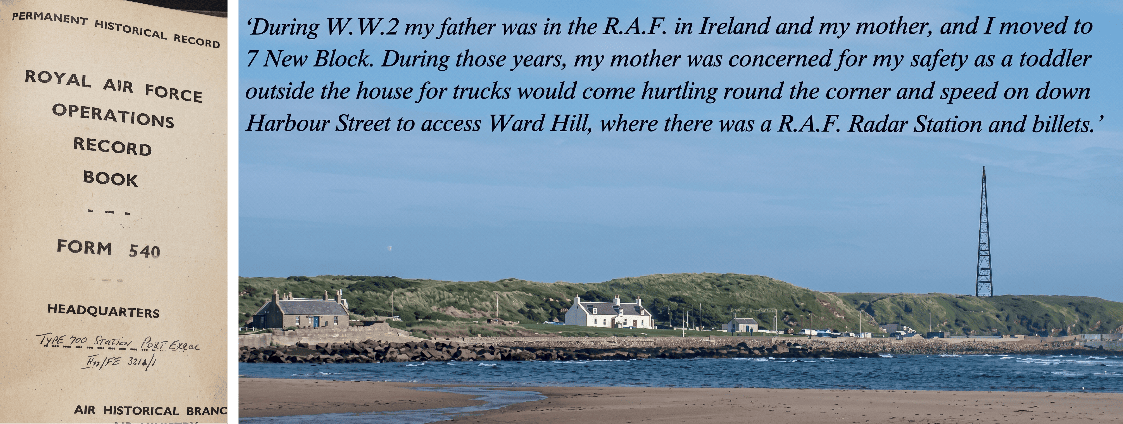
Port Erroll SS LORAN Station
Air Ministry Experimental Station type 700
1944
SS LORAN stood for Sky-wave Synchronised LOng Range Avigation. It only worked at night and it was found that by using long base lines between Master and Slave stations, great ranges could be achieved. Port Erroll was a Master Station and was associated with a Slave Station at Bizerta in Tunisia. The US Coastguard had reports of ships at sea receiving useable sky wave fixes 2 to 3,000 miles from baselines using this technique. The system was obviously very useful for long range night-time bombing missions.


This area of the coast contains natural hazards, i.e. steep banks, holes and slippery clifftop grass. Do not put yourself or others at risk
Port Erroll Heritage Group 2025