
The Wistow Hall
Shipwrecked - 18th January 1912The Ghosts Of The Wistow Hall is an original Cruden Bay Life composition recounting the harrowing tale of the Wistow Hall’s final voyage in January 1912.
Additional Information:
[Live Life Aberdeenshire] [Aberdeen Archives] [Aberdeen Archives]
The Wreck of the Wistow Hall, Port Erroll, 1912
In January 1912, the 3,314-ton steamship Wistow Hall set out from Newcastle bound for Glasgow, carrying a crew of 57 men. Days into her journey, she was caught in a fierce North Sea storm that would become one of the most tragic shipwrecks along the Aberdeenshire coast.
Battling towering seas, the Wistow Hall lost her funnel and lifeboats as waves smashed across her decks. Seawater flooded the engine room, extinguishing the fires and leaving the ship powerless. For three days, the crew endured without food or fresh water, clinging together in the freezing dark while the storm drove them northward.
Near the Bullers of Buchan, the vessel finally struck the rocks at North Haven, helpless against the raging sea. Lifeboat men from Port Erroll launched a desperate rescue, but the surf was too violent to reach those trapped aboard. Local fishermen waded into the breakers, risking their lives to pull survivors from the wreckage. Only four men were saved — among them Captain Stoddart, who was found barely conscious after suffering serious injuries.
On the morning of January 18, 1912, fifty-three sailors lost their lives. Captain Stoddart did not survive his injuries, and his name was later added to the list of the dead, bringing the total death toll to fifty-four. Many of those lost were Lascar mariners from South Asia, serving far from their native shores. Their bodies were recovered along the shoreline and laid to rest in the churchyards of St. James’s Episcopal Church, and Cruden Parish Church, where large memorials still stand to their memory. The wreck of the Wistow Hall remains a somber reminder of the sea’s unforgiving power and the courage of the local community who rose to face it.

These memorial stones stand side by side in St James’s Episcopal Church in Cruden Bay and commemorate the loss of 54 lives on Thursday, 18th January 1912.
The Inscriptions on both stones are now dimmed with age, but their presence ever reminds us of the perils faced by those who go to sea.
Inscribed on the stone to the right (upon 3 of its sides)
In Memory of the crew of the Wistow Hall,
wrecked on the 18th of January 1912 of North Haven during a heavy gale.
When 14 European and 40 natives of India were drowned.
The bodies of the following 9 were washed ashore and are interred here.
Arthur Leslie Clark aged 32 2nd Officer, Thomas Alfred Macintosh aged 26 storekeeper, Officer William Night aged 33 Chief Engineer, Arthur Alexander Mcleod aged 40 Chief Steward, Walter Sidney Harris aged 28 4th Engineer, John Owen Robert aged 44 3rd Engineer, Thomas Spencer Rose aged 19 3rd Officer, Albert Johnstone aged 23 Quartermaster, James Edward Lister aged 25 Quartermaster.
Inscribed on the stone to the left
In Loving Memory of Thomas Spencer Rose aged 19 years, Son of Thomas and Mary Rose of Liverpool, 3rd Officer of the Wistow Hall who lost his life in the wreck of that vessel on the 18th of January 1912
This memorial stone stands in the graveyard of Cruden Bay Parish Church, just a few hundred yards distant from the cemetery at St. James’s Episcopal Church.
Inscribed on the stone
This Stone is erected by public subscription to commemorate the loss of the SS Wistow Hall of Liverpool, which was wrecked at North Haven, Cruden Bay on the morning of Thursday 18th January 1912, *54 lives lost 4 saved.
In this and in 3 adjacent graves rest the remnants of;
Esmal Hassayer
Sheik Hoosain
Sheik Abdulah Cassim
Sheik Ameen Camalooden
Sheik Adam
and seven of their Lasar Seamen who perished in the wreck of the Wistow Hall.
Nine of their English Comrades rest in the neighbouring graveyard of St. James’s Episcopal Church
*(Note: Various accounts of the tragedy state that the crew numbered 57 in total of which 53 perished and 4 were rescued alive. One of the survivors was Captain Stodart who died of his injuries soon after raising the number of lost souls to 54 and survivors to only 3)
The entire Crew List of those who perished can be found in the Accident Inquiry Report below.

In Memory
of the terrible disaster which occurred off Whinnyfold, on the Buchan Coast, resulting in the foundering of the steamship — FREDERICK SNOWDON, of ABERDEEN, on Wednesday, 17th January, 1912, when the whole of the crew, numbering 14 hands, perished.
Also, on the following morning, Thursday, 18th January, 1912, the wreck of the WISTOW HALL, of LIVERPOOL, at North-haven, beside the Bullers of Buchan, when out of a crew of 57 hands, only 3 survived.

By: JAMES GOWER
Oh, ye awe-struck gazers on the shore, keep well your vigils on the sea,
This dreadful storm foretells no good, great loss of life there’s sure to be.
Behold yon fearful mountain waves, try o’er their boiling tops to scan;
Could any ship live in that sea? nay, not yet built by hand of man.
Hark to the hideous whistling wind driving the ocean against the shore;
Do you not feel the driven sleet? do you not hear the wild waves roar?
The storm king is on his course, clapping his hands he leaps with glee:
“South-easterly, oho! I’ll have my toll, keep up the chase along with me.”
Come, oh Lord, to the perishing souls, just as you did at Galilee;
Bid the winds, be still for the orphans sake, the widow’s prayer appeals to Thee.
“No hope, no hope,” the clouds replied, like fiends wrapt in blankets onward flew.
Is there no hope? is all now lost? “All is in vain,” cries the lifeboat crew.
Ah, the brave Coastguard, God bless the men who trudge that dark and stormy beach,
In tempestuous darkness, there to rescue all within their reach.
But now they spy a ship struggling with the billows in great distress,
She is flaring lights. Oh God, bring help, she is somewhere near Buchan Ness.
Her lights are gone, she’s down near where Slains defiant castle stands;
“She is lost, she is lost,” the tempest cried, the Snowdon down with all her hands,
She’ll ne’er again cross the bar of the Silver City with golden sands.
Oh, mothers, dry your children’s eyes, and hush them safely off to sleep,
The day will come when they’ll arise to learn their father’s in the deep.
The city now is wrapt in gloom, with soothing tears she shows her grief,
But noble and generous she’s ever been, brought to the widows’ doors their kind relief.
South-easterly, oho! in the distance a doomed ship is flaring lights,
Rockets ascend through the spray, now they’re out, and all is dark as the darkest night.
Oh, patient watchers of North-haven shore, the grey dawn is breaking o’er the sea,
Thou shalt say within thyselves—“Ah, never more I hope this sight to see.”
Now the morning’s in, south-easterly oho!,
What is this your cruel winds blow,
Followed and battered by every squall?,
My God! it is the doomed ship Wistow Hall.
Look at the waves in vengeance rise,
The forming of the threatening skies.
I’ll have my toll, perish on board every soul.
The Bullers of Buchan, with their dark fierce caves,
Are hollowed by the sea for mariners’ graves.
Now, now, brave landsmen, run to the beach,
Now, brave Coastguard, she’s within your reach.
Oh my God, what a terrible shock,
She’s struck on the teeth of the Tempion Rock.
Oh heaven! what a scene in the morning air,
What wringing of hands in wild despair—
She’s down, she’s down with all her hands,
She is shattered with rocks, she is smothered with sands;
What screams, what weeping, oh what groans,
The sea fighting and battling with dead men’s bones.

A Family Memorial to the Wistow Hall
This simple wooden cross has been in the possession of Anne Bissett and several generations of her family, quietly preserved within the home while the fuller story of its creation has gradually faded from living memory. No written record survives to explain who made it or precisely when, yet family tradition and local knowledge point clearly to its association with the wreck of the Wistow Hall. Its unadorned form suggests it was never intended as a public monument, but rather as a deeply personal object of remembrance, created in response to a moment of profound loss.
The Wistow Hall was lost during one of the fiercest North Sea storms of the early twentieth century, wrecking at North Haven near the Bullers of Buchan on 18 January 1912. 54 of the 57 men on board perished. Many of the crew were Lascar mariners, thousands of miles from their homes, whose deaths added a further layer of tragedy to the disaster. News of the wreck spread quickly, and the event left a lasting impression on coastal communities along the Aberdeenshire shore, where the sea was both a livelihood and a constant danger.
In the days and weeks that followed, wreckage and bodies were washed ashore, and local residents were confronted directly with the human cost of the storm. It was not uncommon at that time for memorial objects to be fashioned from salvaged timber or made by hand as private acts of remembrance. The cross may have been carved from wood associated with the wreck itself, or created by a local resident, fisherman, or family member connected with the rescue attempts or recovery of the dead. Such items were rarely documented, instead being kept quietly within families and passed down as silent witnesses to tragedy.
Although the precise origins of the cross may never be fully recovered, its survival across generations speaks powerfully of the impact the Wistow Hall disaster had on ordinary people. It represents a quieter form of remembrance — one rooted not in stone or formal inscription, but in memory, loss, and respect for those who never returned from the sea.
The Bisset family now plans to lend the cross to the new Heritage Centre due to be opened by the Port Erroll Heritage Group in the Old Mission Hall, allowing this deeply personal memorial to be shared with the wider community for the first time.
Ship’s Clock
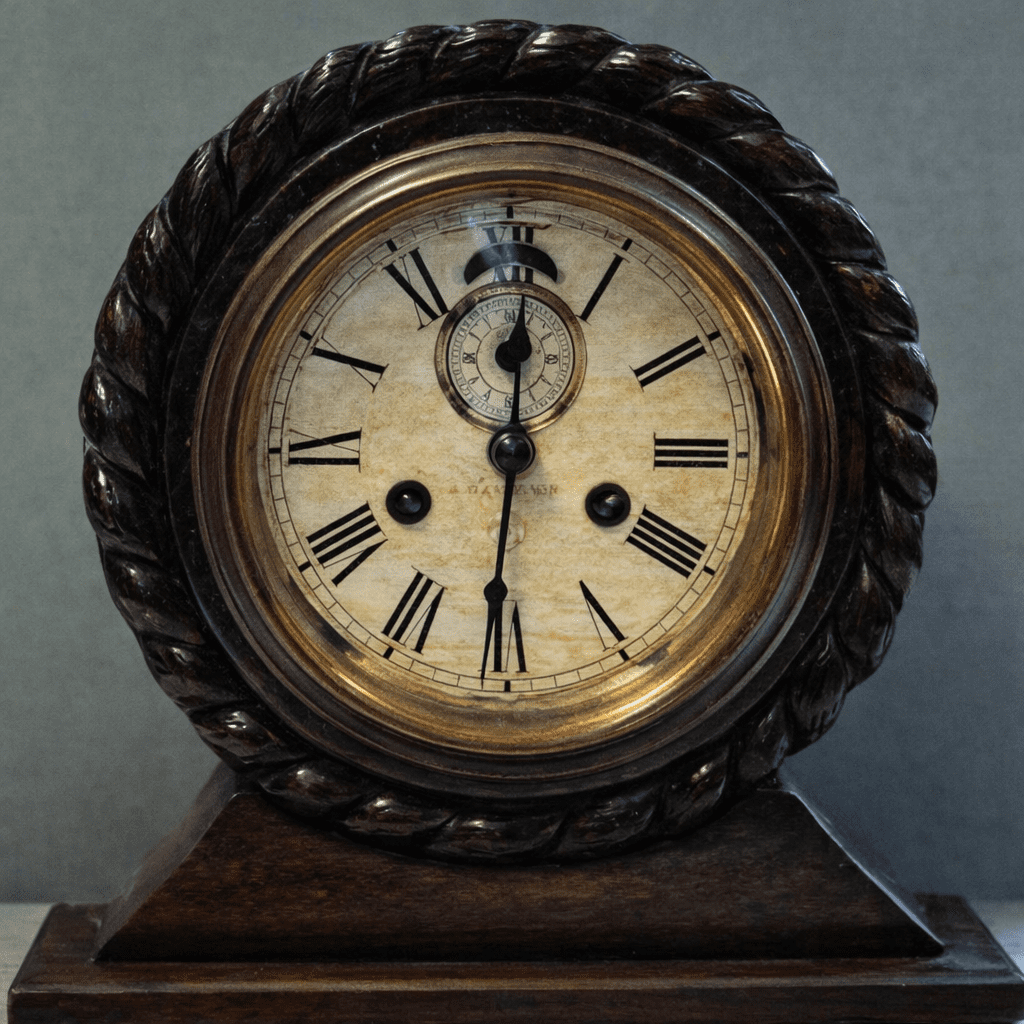
This is the ship’s clock from the Wistow Hall. After the shipwreck, it washed up on the shore. It somehow found its way to New Zealand Maritime Museum, Hui Te Ananui a Tangaroa.
It was identified as an Ansonia Company Clock.
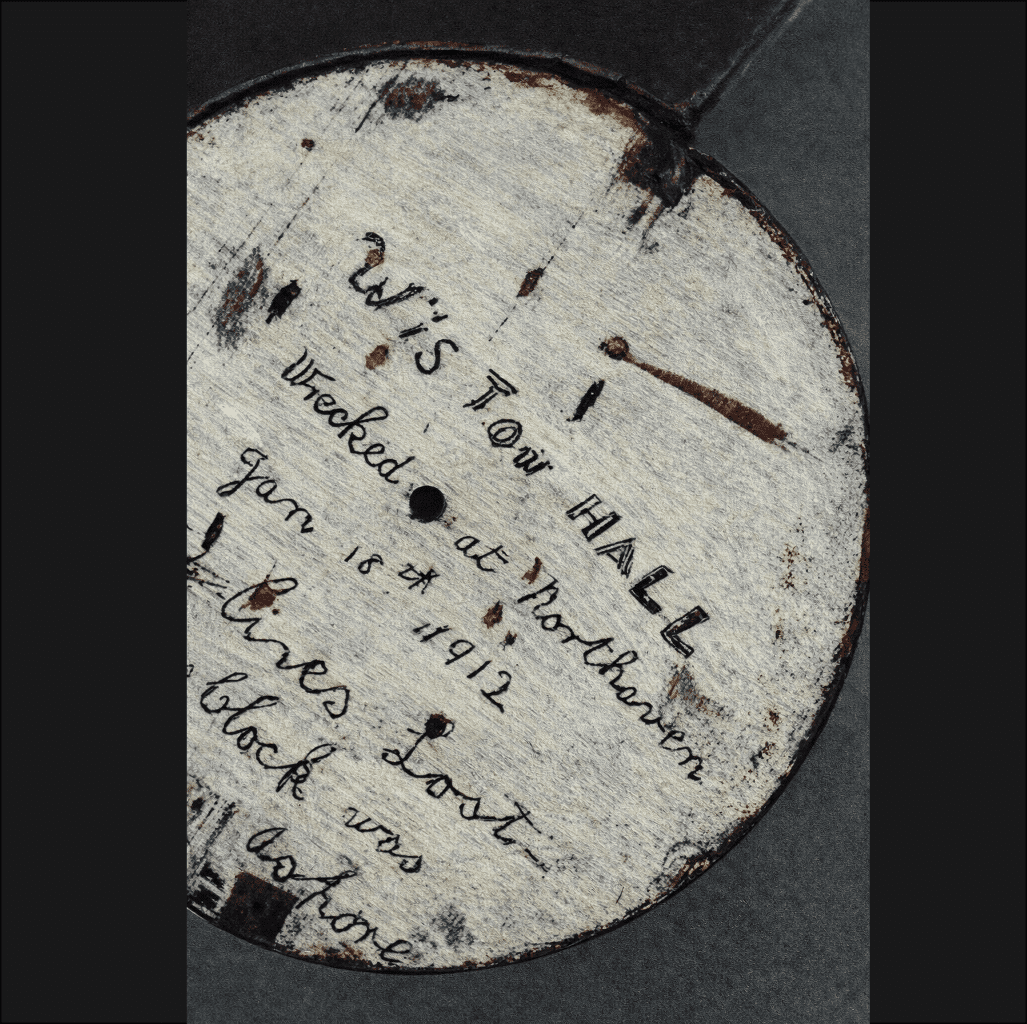
The clock’s backplate has etched upon it the following words (partially shown in the second image), “Wistow Hall, Wrecked at Northaven, Jan 18th 1912 with 54 Lives Lost, This Clock was washed ashore”.
BULLERS OF BUCHAN TRAGEDY
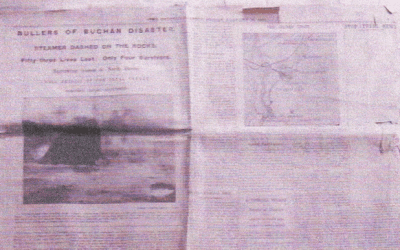
Gordon Findlay has kindly provided a copy of The Evening Gazette, published in Aberdeen on Friday, January 19th, 1912 (cost one halfpenny). It features the following graphic account of the loss of the Wistow Hall and its crew on page 5 of this broadsheet publication,...

THE REGISTER. ADELAIDE. SATURDAY JANUARY 20 1912
Image created for creatative purposes by Cruden Bay Life An article from THE REGISTER, a newspaper published in Adelaide, Australia, on Saturday, 20th January 1912. WRECK OF WISTOW HALLTERRIBLE EXPERIENCES Further particulars have been received concerning the wreck of...

Accident Inquiry Report – Wistow Hall (SS)
(No. 7535.) “WISTOW HALL” (S.S.). The Merchant Shipping Act, 1894. In the matter of a Formal Investigation held at Liverpool on the 7th, 8th, 9th, 10th, and 14th days of May, 1912, before STUART DEACON, Esquire, Stipendiary Magistrate, assisted by Vice-Admiral JOHN...

An Account of the Wistow Hall Shipwreck
Image created for creatative purposes by Cruden Bay Life Wistow Hall The Buchan coast between Slains Castle and Buchanness, with its towering cliffs and jagged rocks has always been an area dreaded by shipping in winter, particularly before the invention of wireless...

The importance of Lascar Sailors in the early 1900’s
Image created for creatative purposes by Cruden Bay Life This article explores how early-20th-century British newspapers, including the Daily Mirror, portrayed Lascar seamen—sailors from South Asia, Southeast Asia, and East Africa—as visibly out of place in Britain. A...
So, have you been paying attention?
What have you learned from our journey into the harrowing tale of the Wistow Hall shipwreck?
From the fierce 1912 North Sea storm that drove the powerless steamship onto the rocks at North Haven, right through to the desperate rescue attempts by local fishermen and the enduring memorials honouring the Lascar mariners who perished, there is a lot of extraordinary local history to uncover!
Why don’t you see how much you’ve remembered by taking part in the brand new Cruden Bay Life Quiz? Test your knowledge of this tragic Aberdeenshire maritime disaster and see if you are an ultimate local history buff.
Just click the button below to get started!
Principal Sources
- Contemporary newspaper reports and maritime accounts documenting the loss of the S.S. Wistow Hall on 18 January 1912 and the events surrounding the disaster
- The official Board of Trade / Merchant Shipping Act inquiry report into the loss of the S.S. Wistow Hall, including testimony relating to the vessel, crew and circumstances of the wreck
- Maritime heritage records and historical references documenting the vessel’s construction, ownership, final voyage and loss off North Haven, Cruden Bay
- Historical publications and archive material relating to Scottish shipwrecks, the dangers of the North Sea and the maritime heritage of the Aberdeenshire coastline
- Research relating to Lascar sailors and their important role within early twentieth-century British merchant shipping, including the experiences of those who served aboard vessels such as the Wistow Hall
- Memorial inscriptions, church records and local commemorative material held at St James’s Episcopal Church and Cruden Parish Church, preserving the names and memory of those who lost their lives
- Archive material and historical records relating to surviving artefacts associated with the disaster, including the Wistow Hall ship’s clock and the privately preserved family memorial cross
- Local historical research, community knowledge and heritage contributions shared through Cruden Bay Life and associated local history sources
Image References
Unless otherwise stated, images featured in this article are sourced from historical collections, archive material, community contributions, contemporary photography or original creative interpretations produced for Cruden Bay Life.
Where original photographic records of the disaster do not exist, digital artwork and atmospheric illustrations may be created to help visualise the vessel, coastline and conditions surrounding the tragedy. These images are intended to support understanding and storytelling rather than represent exact historical photographs of events.
Images of memorials, surviving artefacts and locations connected with the wreck are included to help preserve the personal stories behind the disaster and recognise the lives of those who were lost.
We are grateful to historians, archives, local families and community contributors whose photographs, records and memories help ensure that the story of the Wistow Hall and her crew continues to be remembered.
About Cruden Bay Life
Cruden Bay Life celebrates the history, landscapes, people and stories that have shaped Cruden Bay and the surrounding Buchan coast.
Every article begins with research drawn from historical publications, archives, maritime records, maps, newspapers, photographs, family histories and contemporary accounts before being developed into an engaging narrative. Stories such as the loss of the S.S. Wistow Hall remind us that local history is not only about dramatic events, but also about the individual lives behind them — the sailors, families and communities forever connected to these moments in time.
Alongside traditional research methods, we make thoughtful use of modern creative tools—including artificial intelligence—to assist with research, editing, illustration, music composition and visual presentation. These tools allow forgotten stories to be explored and shared in new ways, while historical evidence, editorial judgement and respect for those whose lives shaped our past remain central to everything we publish.
Researched by people. Enhanced with modern creative tools. Inspired by history. Created for today’s audiences.
Learn more about how we research and create our stories. Click here →