

The Old Brickworks
Now a natural habitat with informal pathwaysOrigins, Location, and Early Purpose
Cruden Bay Brickworks was founded in the early 20th century, around 1902, nestled near the village of Cruden Bay. Positioned close to the clay-rich quarries of Port Erroll, the location was chosen for its abundant natural resources and convenient access to local transport routes.
The brickworks specialized primarily in the manufacture of field drain tiles and other essential infrastructure products, a role that would define much of its industrial identity. While bricks for buildings were produced, the bulk of the output supported the agricultural and rural economy, laying the hidden veins that sustained farms, roads, and drainage systems across the region.

Chris Allen / Cruden Bay Brickworks / CC BY-SA 2.0

Chris Allen / Cruden Bay Brickworks, steam engine / CC BY-SA 2.0
Although the Cruden Bay Brick & Tile Works, which operated between 1902 and 1990, is the best-known and longest-lived brickmaking site in the village, it was in fact the third brickworks established in Cruden Bay. The first was founded near the site of the present-day Cruden Bay Garage on Aulton Road, 1879, but was abandoned in 1881 after drifting blown sand made operations impractical.. A second brickworks was then established near the site of the present-day St. Olaf Hotel operating from 1882 until 1904. The success and experience gained from these earlier ventures ultimately led to the development of the larger and more prominent Cruden Bay Brick & Tile Works, which became one of the area’s most significant industrial employers.
Early operations at the Cruden Bay Brick & Tile Works were modest, employing a small workforce drawn from the local community. Men labored long hours in the kilns and clay pits, while families often lived nearby in houses provided or rented by the brickworks. These cottages, now known as the Bricker Houses, formed a close-knit community where work and home life were intertwined.
The kilns themselves were a defining feature, including a Hoffmann continuous kiln that allowed for efficient, large-scale production. Early reports suggest daily output could reach thousands of bricks and tiles, highlighting the significance of the works even in its first decade. The Brickworks quickly became a cornerstone of local industry, providing employment and supporting the infrastructure that underpinned life in Cruden Bay and beyond. Its early decades laid the foundations for a century-long story of industry, community, and transformation.
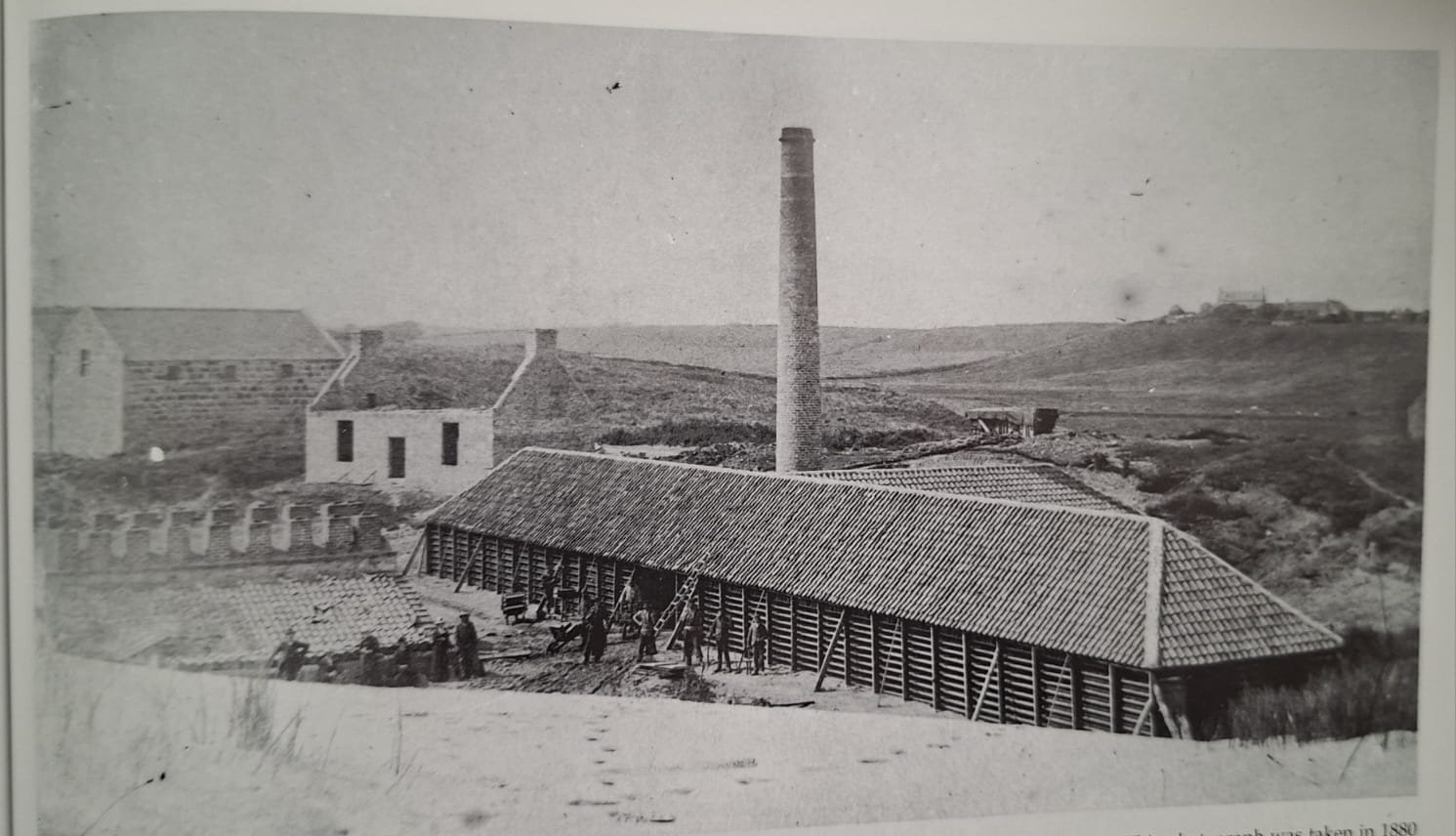
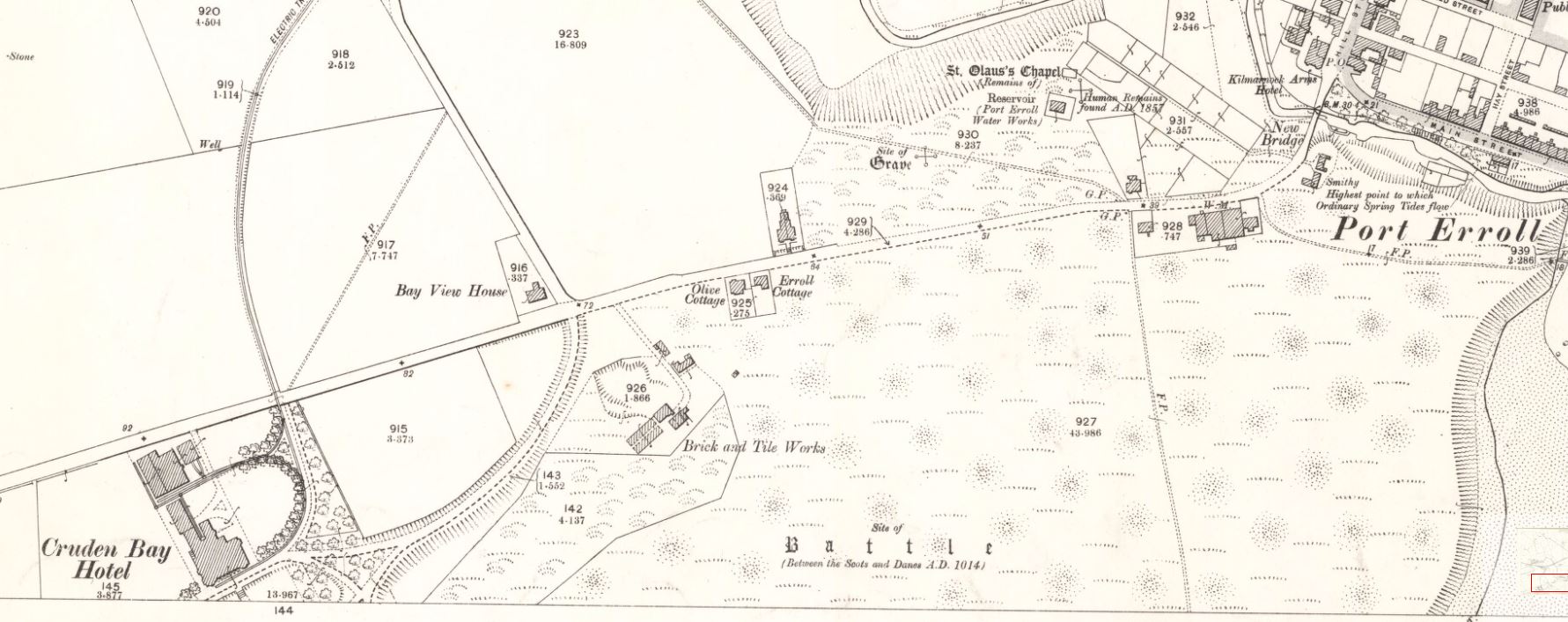
This map shows the location of the 2nd brickworks near the site of the present-day St. Olaf Hotel on Aulton Road, and adjacent image shows the location of the 1st brickworks next to the site of Cruden Bay Garage.
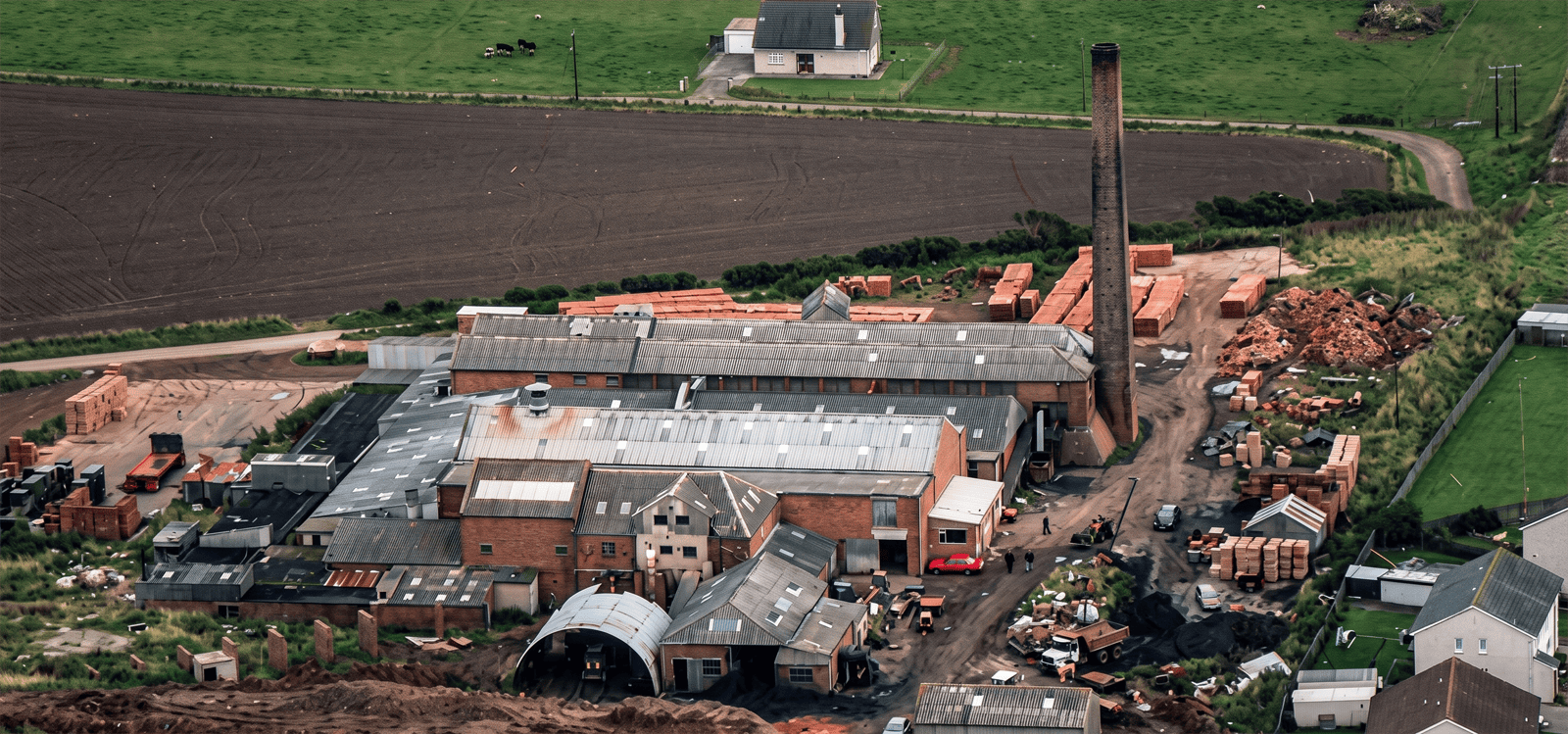
The image below shows the extent of the 3rd site, which operated from 1902 until 1990.
News Clippings
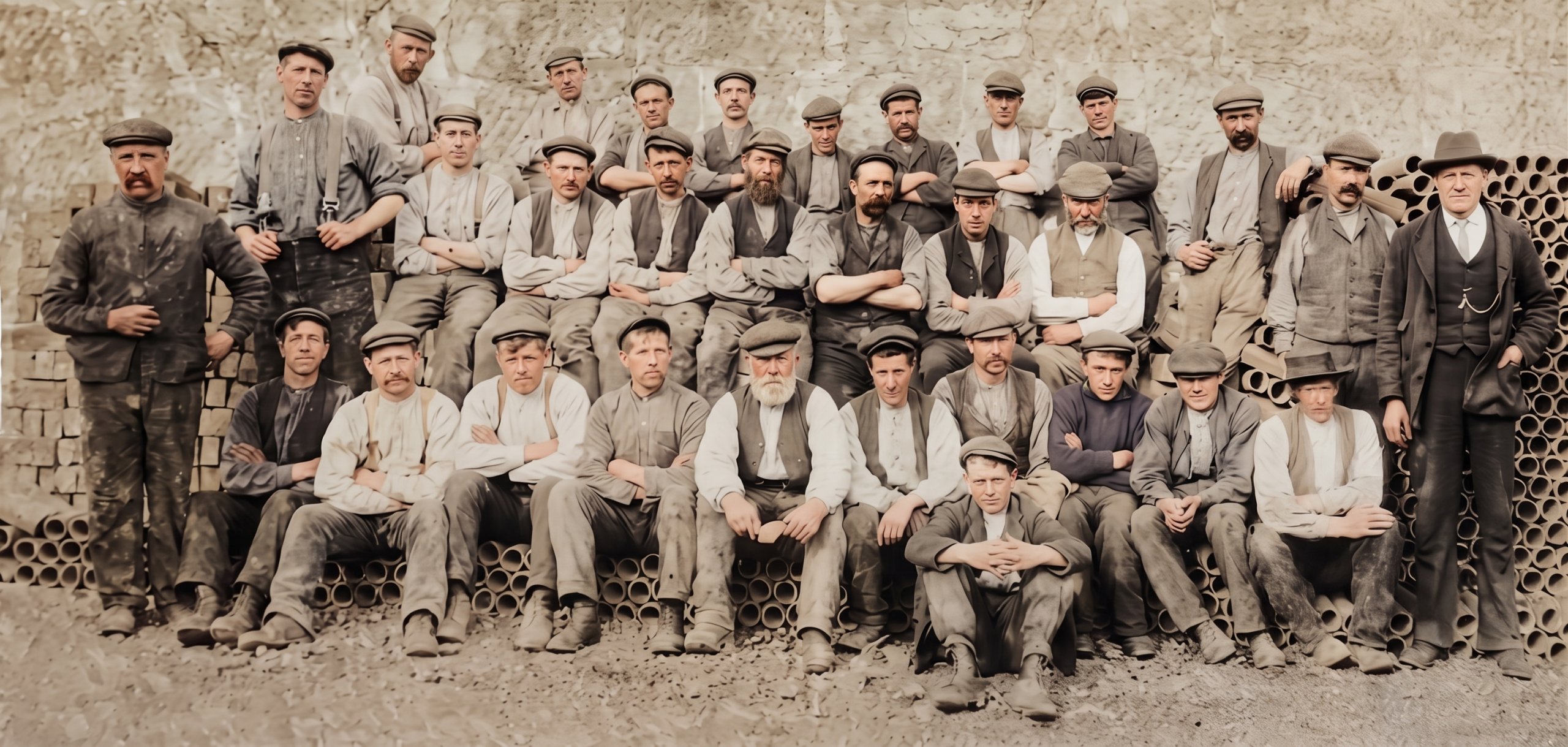
This image shows the original newspaper cutting from 1905 alongside an enhanced rendering of the same photograph. The original has suffered from the limitations of early newspaper printing, age, fading and loss of fine detail.
AI has been used to analyse the surviving shapes, contrasts and facial features, then carefully reconstruct areas that are indistinct or damaged. It was instructed to preserve the appearance, clothing, positioning and general character of those pictured as accurately as possible. However, where the original image contains insufficient detail, the enhanced version may include carefully interpreted features rather than an exact photographic record.
The rendering should therefore be viewed as a respectful visual reconstruction, intended to make the scene clearer and more accessible while remaining faithful to the surviving source.
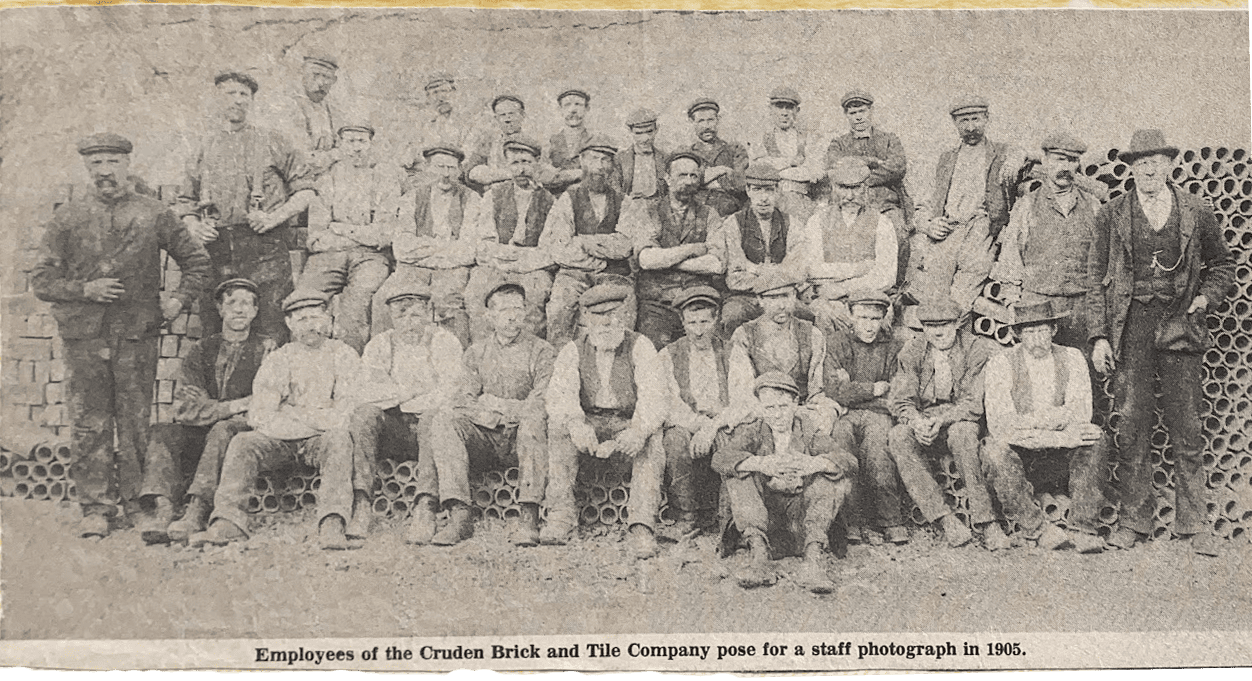
‘Employees from Cruden Bay Brick and Tile Company pose for a photograph in 1905.’
How Cruden Bay’s Telephone Numbers Evolved
Figure 1 shows an original newspaper advertisement, published on 27 October 1970, while Figure 2 presents a digitally enhanced version prepared to make the wording and design easier to view.
The advertisement records Cruden Bay Brick and Tile Works using the local three-digit telephone number Cruden Bay 260. As the telephone network expanded (around 1979 – 1981), an additional digit was later introduced, changing the number to Cruden Bay 2260.
Cruden Bay was subsequently incorporated into the Peterhead linked-numbering area (around the late 1980s or early 1990s), and the number became 0779 812260. The final change took place on 16 April 1995, when the national PhONEday alterations added the digit 1 to UK area codes, producing the number 01779 812260.
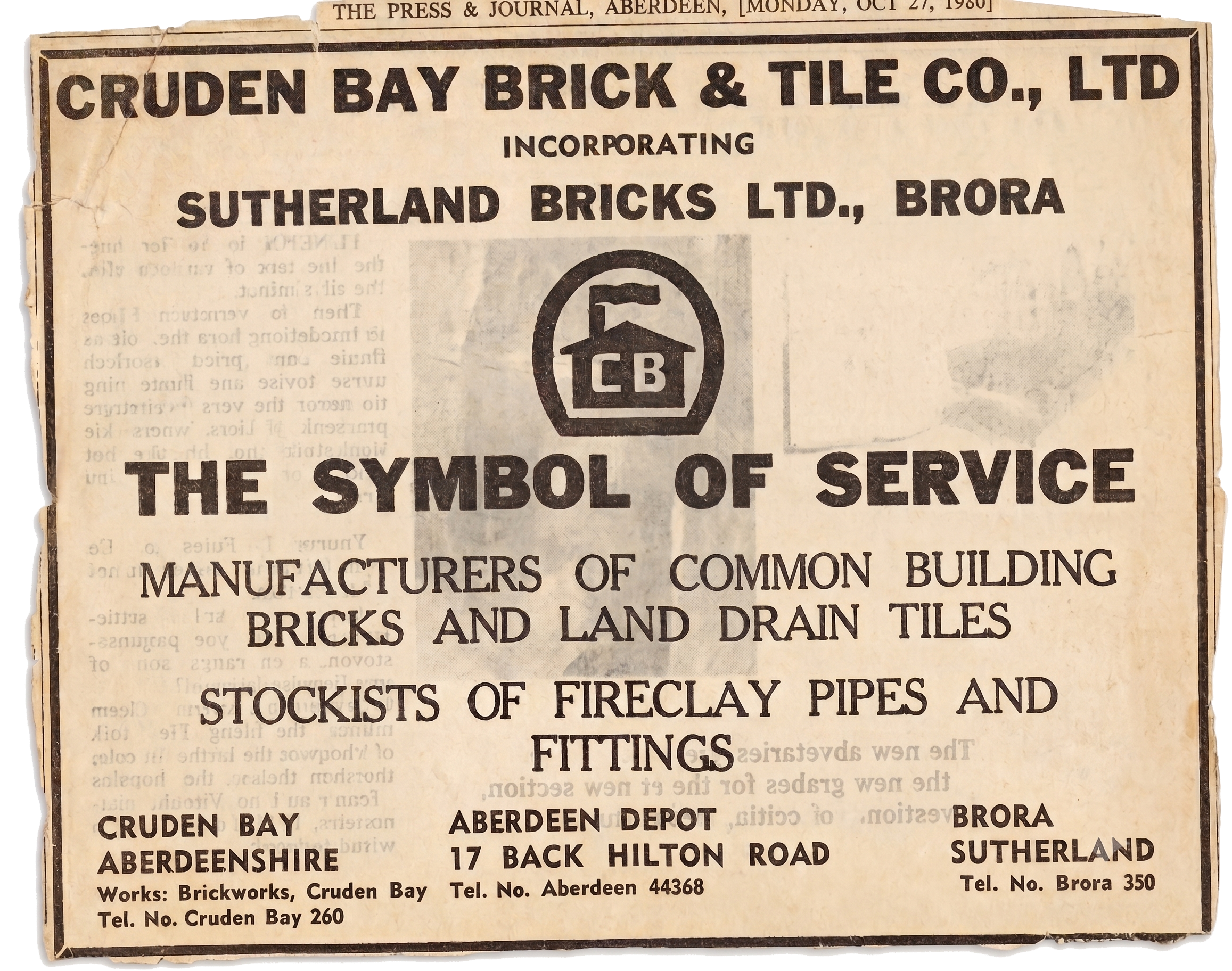
Figure 1
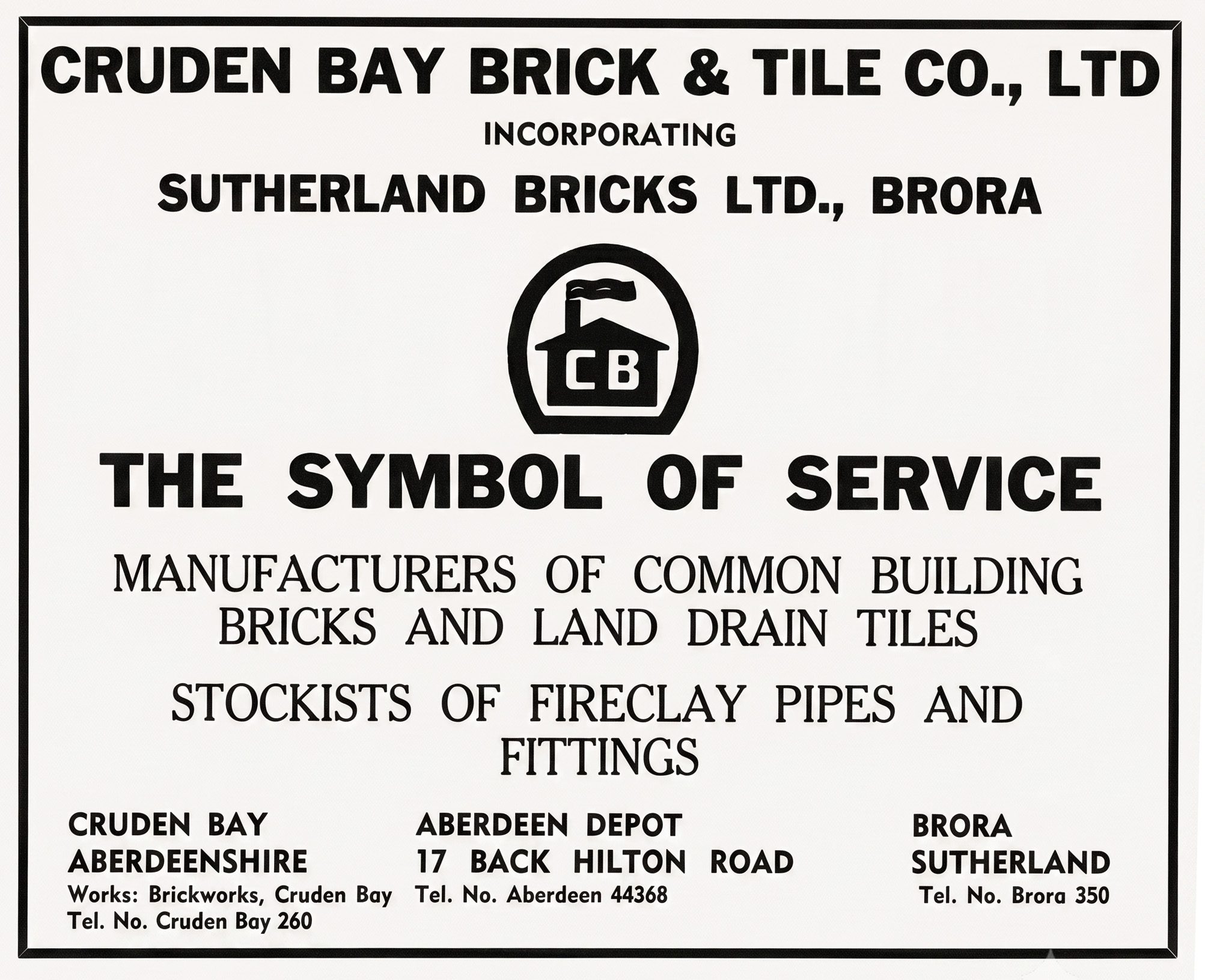
Figure 2
Enhancing Newspaper Clippings
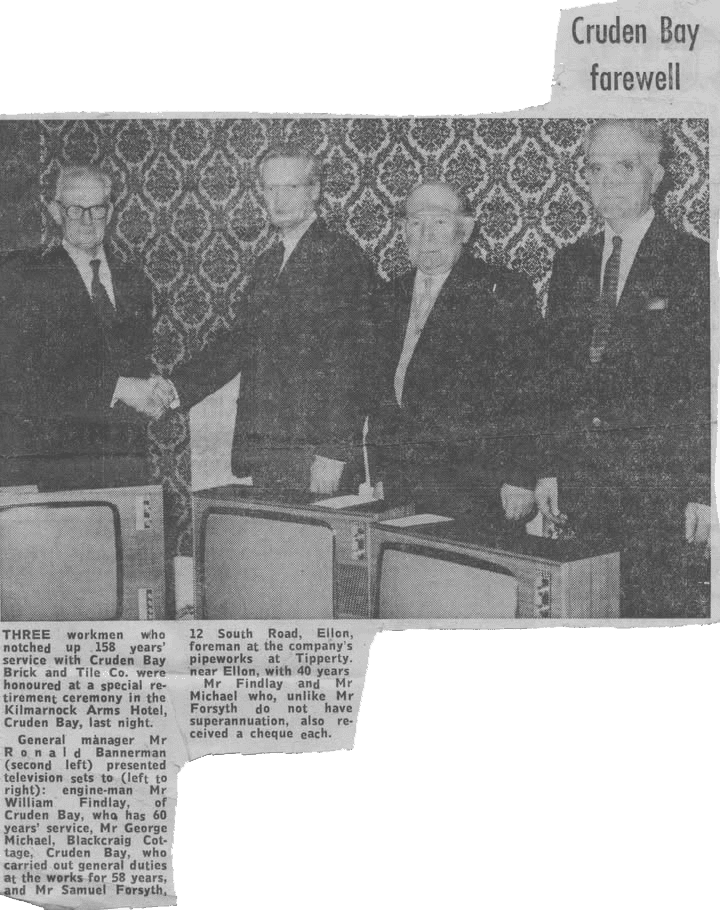
This example demonstrates how we can restore, enhance, and preserve historic newspaper content submitted to us. While the original clipping suffers from poor image quality and difficult-to-read text, modern enhancement techniques allow us to produce a much clearer image and a far more accurate transcription, making these valuable local history records easier to read, search, and share.

Cruden Bay farewell
THREE workmen who notched up 158 years’ service with Cruden Bay Brick and Tile Co. were honoured at a special retirement ceremony in the Kilmarnock Arms Hotel, Cruden Bay, last night.
General manager Mr Ronald Bannerman (second left) presented television sets to (left to right): engine-man Mr William Findlay, of Cruden Bay, who has 60 years’ service, Mr George Michael, Blackcraig Cottage, Cruden Bay, who carried out general duties at the works for 58 years, and Mr Samuel Forsyth, 12 South Road, Ellon, foreman at the company’s pipeworks at Tipperty. near Ellon, with 40 years.
Mr Findlay and Mr Michael who, unlike Mr Forsyth do not have superannuation, also received a cheque each.
This, and the following examples show how even poor-quality newspaper cuttings can be transformed into valuable historical resources. By enhancing the original image, extracting the text using OCR, and presenting both together, we make the content far more accessible for researchers, family historians, and the wider community. Retaining the enhanced image alongside the OCR transcript allows readers to compare the original source with the extracted text, preserving authenticity while improving readability. This approach helps safeguard local history and ensures these stories remain searchable and accessible for future generations.
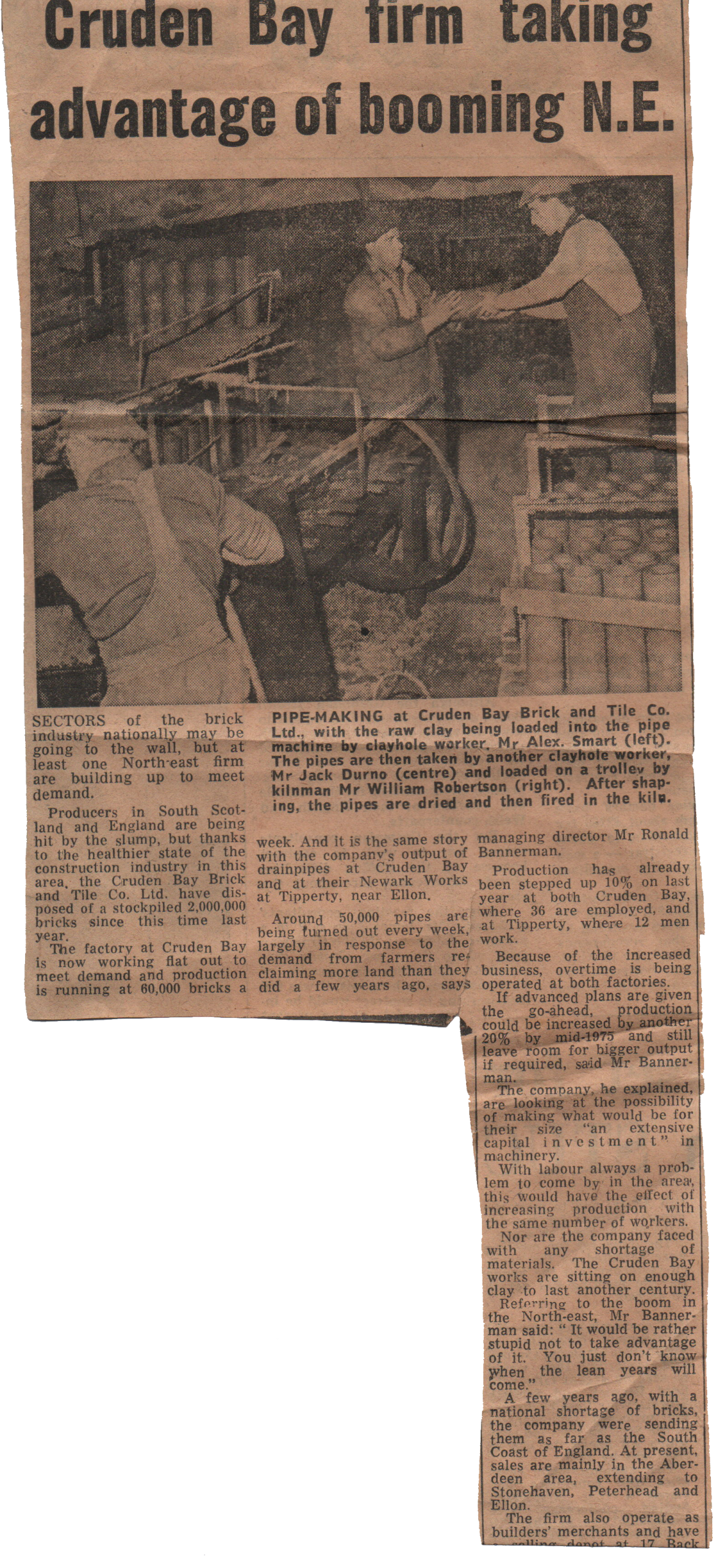
Cruden Bay firm taking advantage of booming N.E.
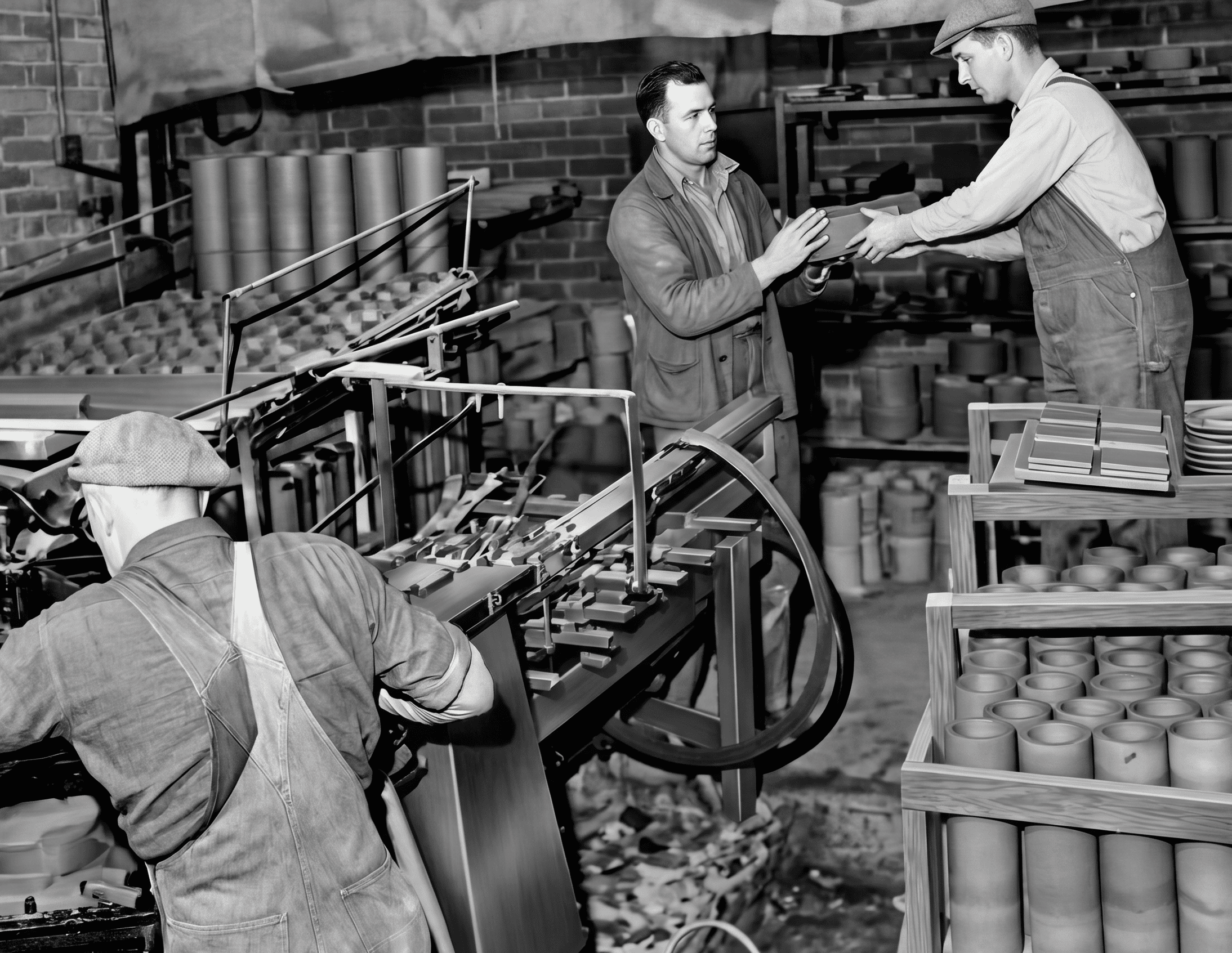
PIPE-MAKING at Cruden Bay Brick and Tile Co. Ltd.
With the raw clay being loaded into the pipe machine by clayhole worker, Mr Alex. Smart (left). The pipes are then taken by another clayhole worker, Mr Jack Durno (centre) and loaded on a trolley by kilnman Mr William Robertson (right). After shaping, the pipes are dried and then fired in the kiln.
SECTORS of the brick industry nationally may be going to the wall, but at least one North-east firm are building up to meet demand.
Producers in South Scotland and England are being hit by the slump, but thanks to the healthier state of the construction industry in this area, the Cruden Bay Brick and Tile Co. Ltd. have disposed of a stockpiled 2,000,000 bricks since this time last year.
The factory at Cruden Bay is now working flat out to meet demand and production is running at 60,000 bricks a week. And it is the same story with the company’s output of drainpipes at Cruden Bay and at their Newark Works at Tipperty, near Ellon.
Around 50,000 pipes are being turned out every week, largely in response to the demand from farmers reclaiming more land than they did a few years ago, says managing director Mr Ronald Bannerman.
Production has already been stepped up 10% on last year at both Cruden Bay, where 36 are employed, and at Tipperty, where 12 men work.
Because of the increased business, overtime is being operated at both factories.
If advanced plans are given the go-ahead, production could be increased by another 20% by mid-1975 and still leave room for bigger output if required, said Mr Bannerman.
The company, he explained, are looking at the possibility of making what would be for their size “an extensive capital investment” in machinery.
With labour always a problem to come by in the area, this would have the effect of increasing production with the same number of workers.
Nor are the company faced with any shortage of materials. The Cruden Bay works are sitting on enough clay to last another century.
Referring to the boom in the North-east, Mr Bannerman said: “It would be rather stupid not to take advantage of it. You just don’t know when the lean years will come.”
A few years ago, with a national shortage of bricks, the company were sending them as far as the South Coast of England. At present, sales are mainly in the Aberdeen area, extending to Stonehaven, Peterhead and Ellon.
The Brickworks Through Important Times
Throughout the 20th century, Cruden Bay Brickworks played a crucial role in supporting the community and the wider region, especially during periods of national challenge. During the World Wars, the brickworks’ production of field drain tiles and essential construction materials became even more significant. As agriculture and rural infrastructure faced manpower shortages, the steady output of the brickworks helped maintain vital systems that kept farms operational.
The workforce adapted to changing demands, balancing routine production with wartime priorities. Men labored long hours in the kilns, while families supported the effort on the home front, maintaining households and contributing to a resilient, local economy. The mid-century years saw further modernization. In 1947, the brickworks were extended and updated, increasing production to meet both local and regional needs.
At its peak, annual output reportedly reached several million bricks, highlighting its enduring industrial importance. Beyond numbers, the brickworks fostered a strong sense of community. Workers developed lifelong friendships, and many families had generational ties to the site. The Bricker Houses remained a focal point for this community life, housing workers and reinforcing bonds between home and workplace.
Even as technology changed and kilns were modernised from coal to gas, the human element—the labor, camaraderie, and dedication—remained central. Cruden Bay Brickworks was more than an industrial facility; it was a hub of social and economic life, quietly shaping the landscape and sustaining the region through both ordinary and extraordinary times.
The Scottish Brick History website provides a remarkable and extensively researched record of Scotland’s once-thriving brick, tile and clay-products industries. Bringing together information from historic newspapers, trade directories, maps, photographs, archaeological surveys and surviving examples of marked bricks, the website preserves the stories of works that played an important role in the industrial and architectural development of communities throughout Scotland.
Its wide-ranging collection explores individual brick and tile works, the companies and people who operated them, the products they manufactured and the distinctive makers’ marks impressed into many surviving bricks. It also includes archive advertisements, technical descriptions, historic maps and references to bricks discovered in Scotland and much farther afield.
The section devoted to Cruden Bay Brickworks is particularly valuable, gathering a detailed timeline of the local industry from the earlier nineteenth-century works through to the establishment, expansion and eventual closure of the better-known Cruden Bay Brick and Tile Works. It includes contemporary accounts of its machinery, railway siding, clay workings, kiln, workforce and production methods, helping to place the surviving photographs and newspaper reports within their wider historical context.

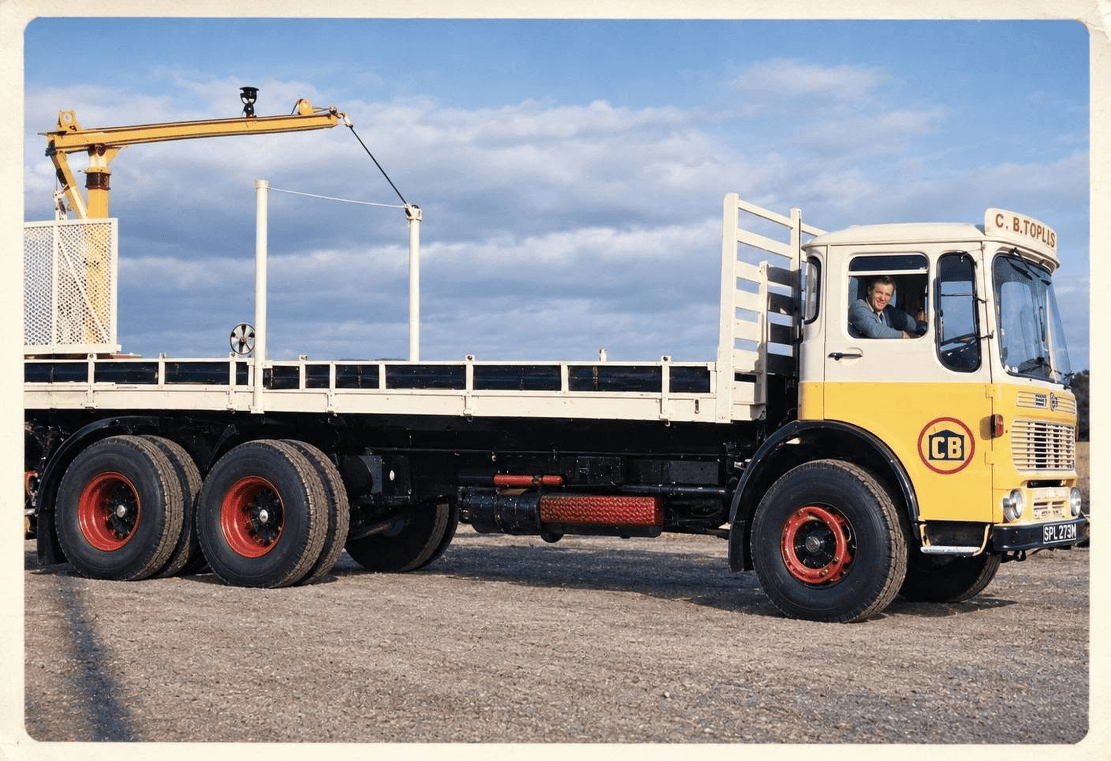
Sandy Ritchie worked for most of his adult life at Cruden Bay Brickwork, rising to the position of General Manager. Sandy is pictured here in one of the works latest additions to their fleet of vehicles.
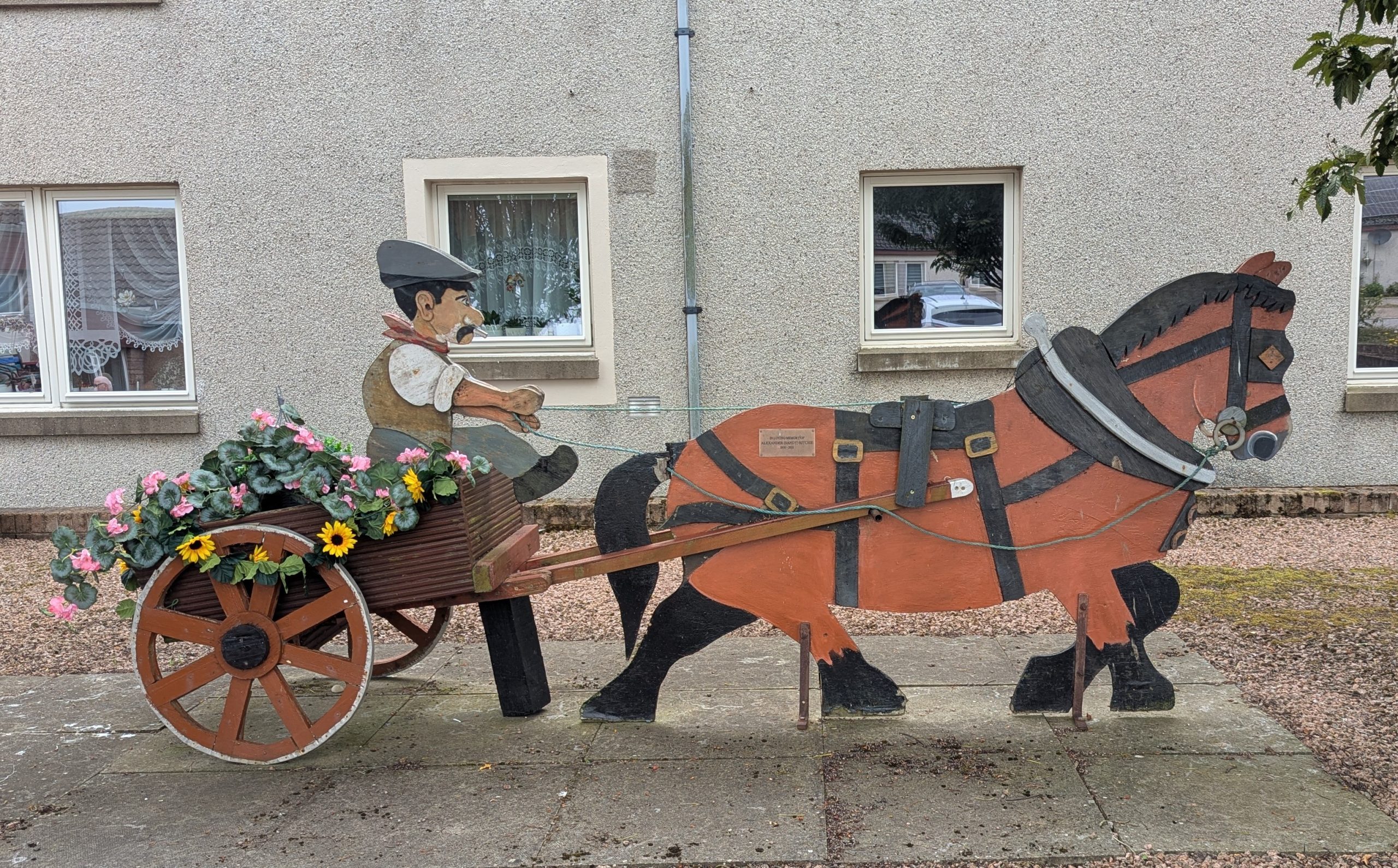
This garden ornament stood for many years in the garden of Sandy Ritchie, who lived in one of the four Bricker Houses on Errolston Road (2nd from left below).
Following Sandy’s death, the ornament had fallen into disrepair and was about to be scrapped. However, after local villagers appealed for it to be saved, it was carefully restored and relocated to Cantlay Court in the village, where Sandy’s son, Gavin, now lives. A commemorative plaque accompanies the ornament and reads: “In Loving Memory of Alexander (Sandy) Ritchie 1930–2022.”
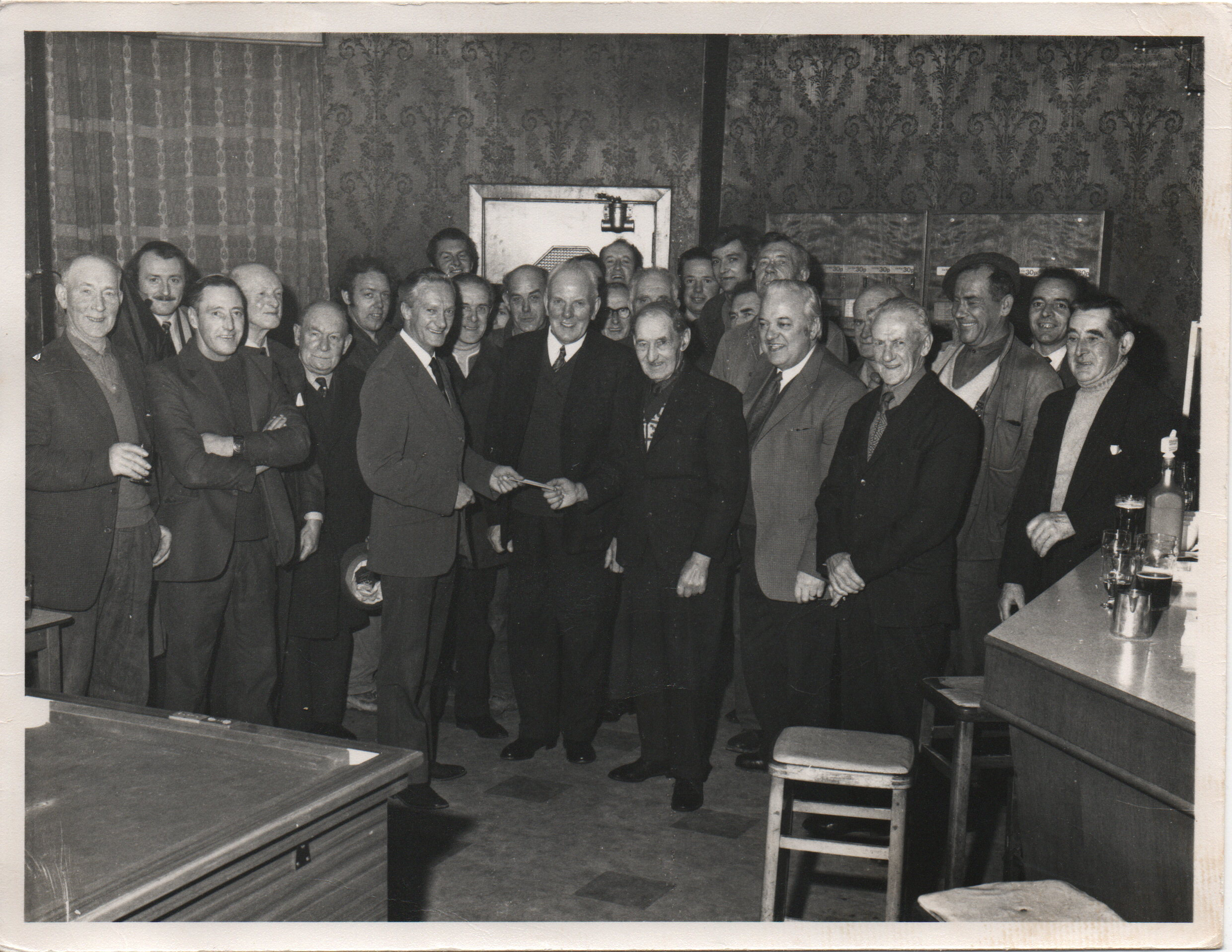
A joint retirement presentation circa 1986 was pictured in the bar of the Kilmarnock Arms Hotel, where several of the workers, having served the better part of 50 years in employment there, each received a TV as part of their retirement presentation. We have been able to identify most of the men present; can you help fill the gaps? Click here →
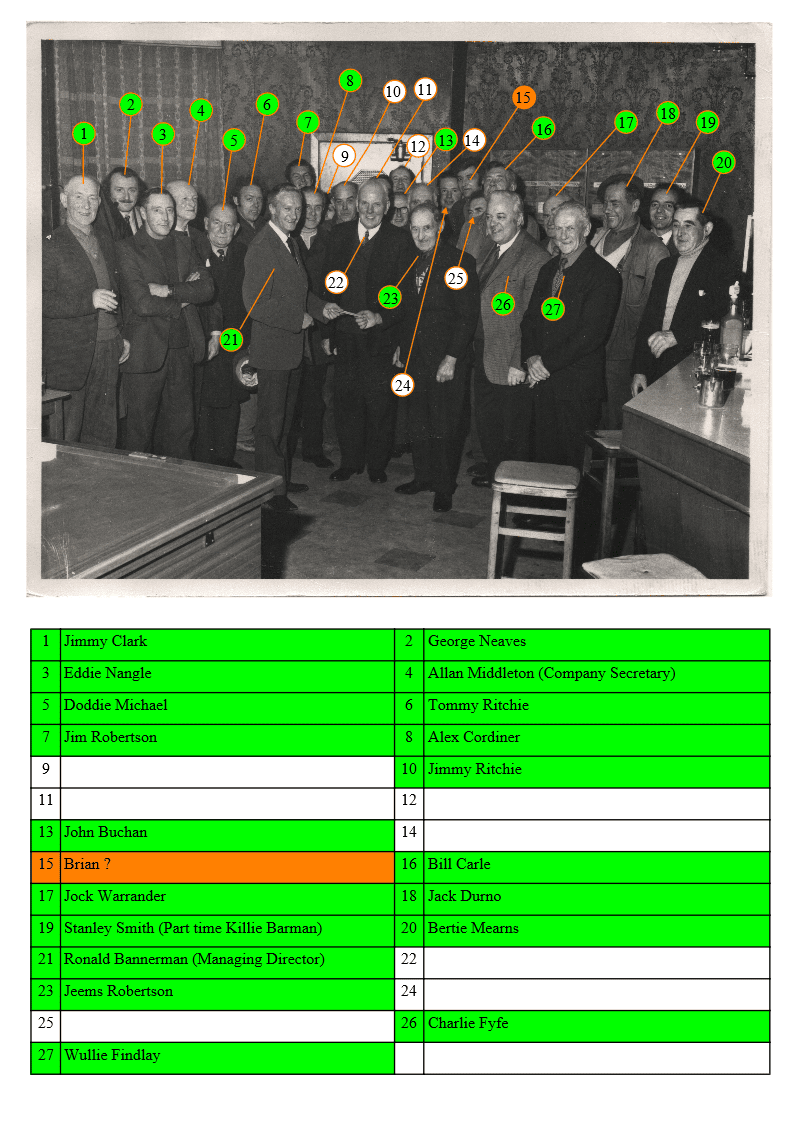
Please send any additional information to info@crudenbay.life, or at this link in our facebook page Click here →

The Bricker Houses
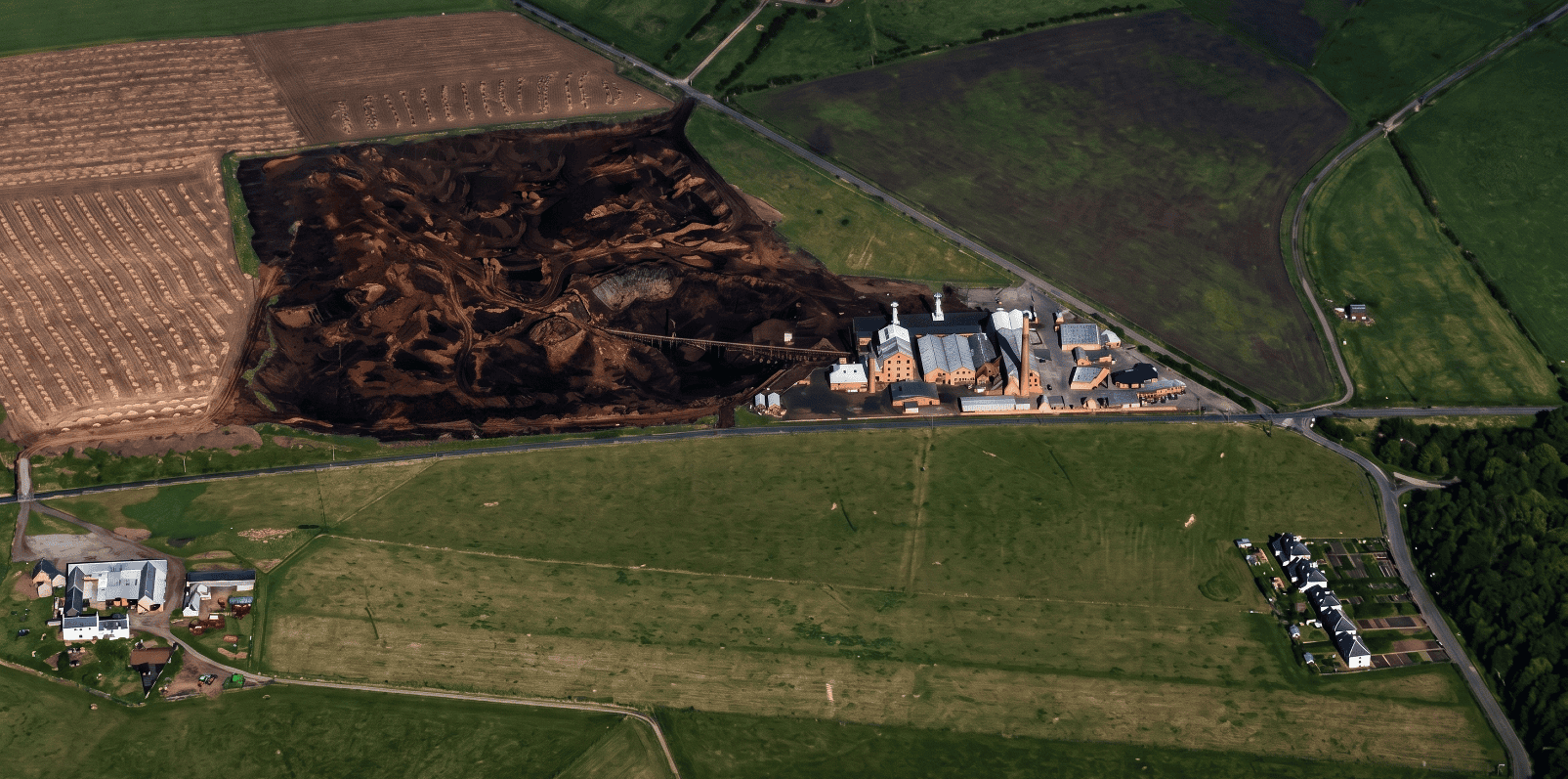
Long before the development of Cruden Bay village as we know it today, brickmaking was already an established industry in the area.
The image above shows the extent of the third and final brickworks site. The only housing visible included the 4 ‘Bricker Houses’ on Errolston Road (the 4 semi-detached houses in the row of 10 nearest to the brickworks), which were built to accommodate the company’s employees, long before the development of the Braehead housing estate. The farm buildings in the bottom left are Braehead Farm.
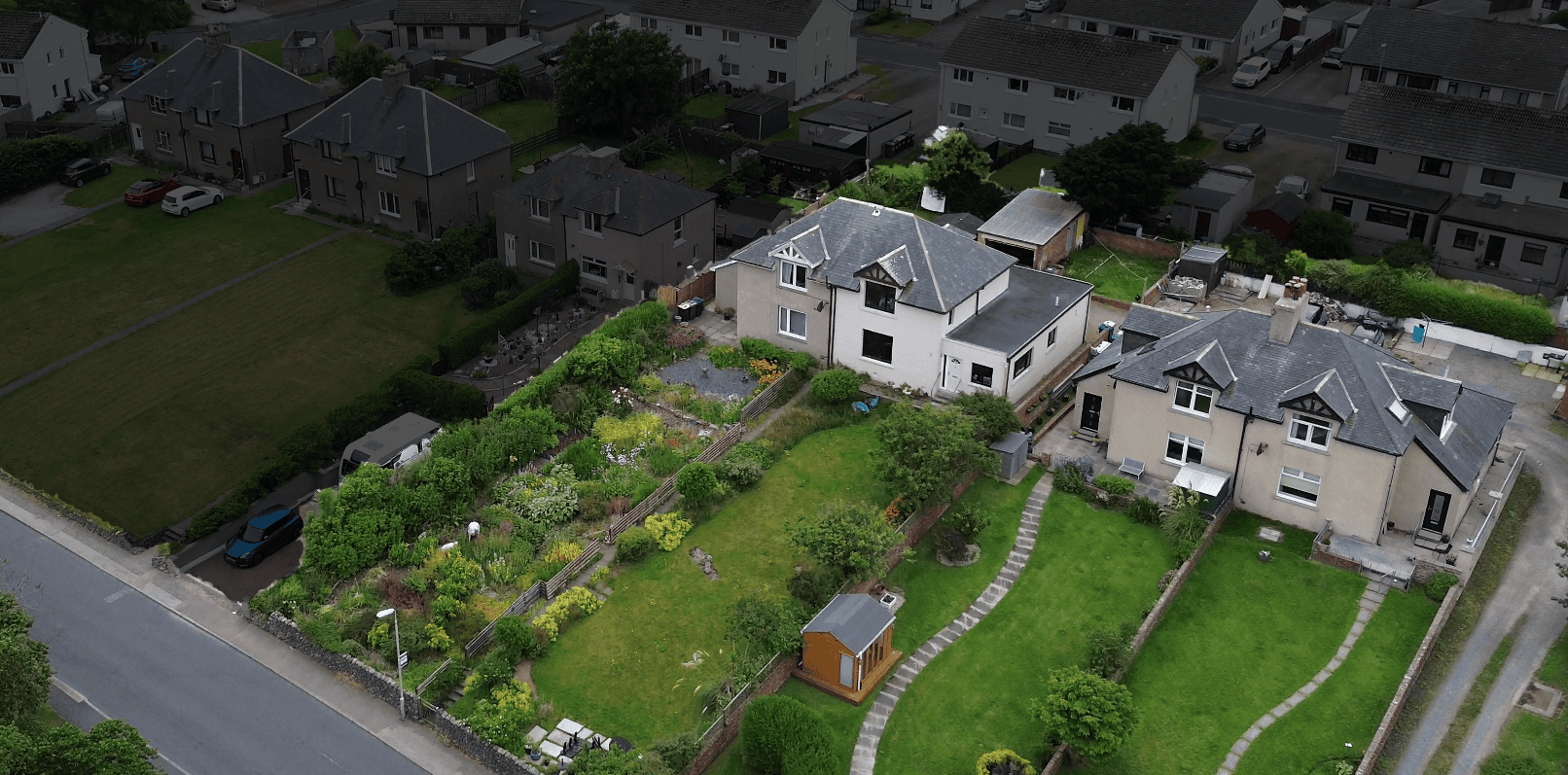
The 4 semi-detached ‘Bricker Houses’ highlighted in this image, are now all in private ownership, the property to the far left of the group is the only one still occupied by a former brickworks employee.
The video above celebrates the lives of the Brickworks employees who once lived in the Bricker Houses. It features archive photographs, imagined scenes, and recent drone footage that showcases the scale of the former Brickworks site and how nature has reclaimed it since its closure in 1990, before it was demolished a few years later.
The video is set to The Bricker Houses, another original Cruden Bay Life soundtrack created to help preserve and share the stories of our village.
Decline and Demolition
By the late 20th century, changing industrial demands and economic pressures signaled the decline of Cruden Bay Brickworks. Advances in building materials, competition from larger manufacturers, and shifts in agricultural infrastructure gradually reduced the need for the traditional products that had sustained the works for decades. Workforce numbers dwindled as operations scaled back, and by the 1980s, the brickworks’ once-bustling kilns were largely silent.
Despite its industrial importance, the site could not escape the broader trend of deindustrialization affecting many rural Scottish enterprises. Eventually, the brickworks closed its doors, leaving a landscape marked by abandoned kilns, clay pits, and the quiet echoes of decades of labor.
Demolition followed in stages; most buildings were removed by the early 2000’s, leaving only traces of foundations and the earthworks where kilns and drying sheds had once stood. Machinery was dismantled or scrapped, and the physical presence of the brickworks faded from the village.
Yet while the industrial structures disappeared, their imprint on the community remained. The Bricker Houses, once rented or owned by employees, continued to provide homes, now largely in private hands. Memories of the work, the camaraderie, and the vital role the brickworks played in sustaining local livelihoods lingered in the oral history of Cruden Bay. Though the brickworks itself no longer existed, its legacy remained woven into the fabric of the village and the surrounding landscape.

Reclaimed by Nature
With the closure and demolition of the brickworks, the surrounding site slowly began to revert to a more natural state. Clay quarries, once the source of labor and industry, filled with water, creating ponds and habitats that attracted swans, birds, and other wildlife. Grasses, reeds, and shrubs gradually colonized the former industrial ground, softening the memory of kilns and clay pits with the calm persistence of nature. Paths and embankments, once carefully maintained for industrial use, became overgrown, blending into the rolling coastal hills and giving the landscape a peaceful, reclaimed quality.
This transformation illustrates the resilience of both nature and memory: while human activity once dominated the area, ecological processes quietly restored balance, creating a sanctuary for wildlife and a reflective space for visitors. The Bricker Houses stand nearby as a living reminder of the village’s industrial past.
Though the brickworks are gone, the houses are still occupied, linking past and present, labor and home. The site today tells a layered story—of human ingenuity, community, labor, and the quiet reclamation of the land. It is a testament to how history and nature intertwine, preserving the memory of a once-thriving enterprise while allowing the landscape to breathe and flourish anew.


Legacy and Community Today
Though the kilns are long silent and the brickworks gone, Cruden Bay Brickworks’ legacy endures in the community and landscape. The Bricker Houses remain as private homes, cherished by families who continue to live in a village shaped by the industry that once defined it. Local residents recall stories passed down through generations of workers, keeping alive the memory of the dedication, camaraderie, and craftsmanship that sustained the region.
Beyond personal histories, the bricks and tiles themselves—once hidden underground as field drains and infrastructure—remain a quiet, enduring testament to the skill and labor of those who produced them. The reclaimed quarry ponds, teeming with wildlife, provide a living, natural reminder of the site’s transformation and resilience.
Today, Cruden Bay celebrates its heritage through these subtle markers: the preserved houses, the ponds, and the enduring stories of a community built around hard work, ingenuity, and mutual support. The brickworks may be gone physically, but its impact on local culture, landscape, and collective memory continues to shape the identity of Cruden Bay, offering both residents and visitors a window into a century of industrial history and its lasting human and environmental echoes.
The Walk of D.R.A.C.U.L.A.
In nineteen-ninety, the usually quiet residents of Cruden Bay united in protest against the expanding commercial ambitions of Cairds, a company dealing in domestic waste disposal. Cairds proposed depositing nearly a million tons of household refuse into the old clay quarries beside the abandoned brickworks. To villagers, the plan threatened not only the landscape surrounding their homes but also the character and heritage of the community itself.
Cruden Bay’s strong literary ties, especially its association with Bram Stoker and the creation of Dracula, inspired the villagers to frame their resistance with a touch of dark humour. They formed an action group with the pointed name “Determined Residents Against Cairds Unlawful Land Acquisition.” This title, knowingly dramatic, reflected both their creativity and their determination to resist an outside force seen as careless of local concerns.
At the time, a home video documented the event, and we have now incorporated much of that footage into this new piece, ‘The Walk of Dracula’, which celebrates a community march blending theatrical homage with genuine protest. The footage captured villagers, families, and supporters – moving together through the village in a symbolic assertion of unity and identity.
The Brickworks Project
The story of Cruden Bay Brickworks continues to inspire in unexpected ways. Local musician Davie Hay has drawn on that connection for The Brickworks Project, a musical venture named in tribute to the former brickworks where his father worked for 30 years.
Davie’s latest album, Isolation Street, combines punk energy, ska rhythms, indie rock influences and powerful bass-driven grooves, reflecting a lifetime spent performing and writing music. The ten-track release is also a deeply personal project, recorded entirely at home with Davie playing every instrument himself.
For Davie, the name The Brickworks Project represents more than a nod to local history. It is a way of keeping part of Cruden Bay’s heritage alive through creativity, transforming memories of an important local industry into something new for a modern audience.
While there are no plans to perform the album live, Davie remains active on the UK music circuit with local band Target5. Work has already begun on a second Brickworks Project album, this time with contributions from other local musicians.
Read the full story to discover how Cruden Bay’s industrial past continues to inspire new creative journeys. Read More →
Brickworks Images
Seen through a modern lensBrickwork Images – Seen Through a Modern Lens
Historic photographs of Cruden Bay Brickworks have been reimagined as striking graphic designs, inspired by the bold simplicity of traditional screen printing, linocut and mid-century poster design. Each image has been carefully distilled into clean lines, strong geometric forms and a limited colour palette, creating a fresh visual interpretation while preserving the character of the original scene. By transforming familiar views into contemporary illustrations, these artworks encourage us to look again at the people, buildings and landscapes that shaped the brickworks, revealing the site’s industrial heritage from a new and imaginative perspective.

So, have you been paying attention?
What have you learned from our journey into the century-long industrial legacy of the Cruden Bay Brickworks?
From its establishment in 1902 to supply vital drain tiles for the local agricultural economy, right through to the close-knit community of the Bricker Houses and the dramatic 1990 “Walk of D.R.A.C.U.L.A.” protest, there is a lot of extraordinary local history to uncover!
Why don’t you see how much you’ve remembered by taking part in the brand new Cruden Bay Life Quiz? Test your knowledge of this enduring Aberdeenshire enterprise and see if you are an ultimate local history buff.
Just click the button below to get started!
Principal Sources
- Local historical research relating to the Cruden Bay Brickworks and the industrial heritage of the surrounding area
- Historical maps, records and archive material documenting land use, industry and development around Cruden Bay
- Local knowledge and community contributions relating to the Brickworks site and its significance within the village
- Research material and interpretation provided through local heritage sources and community organisations
- Contemporary photographs, personal collections and historical images relating to Cruden Bay and the Brickworks area
- Published historical references covering the development of brickmaking, local industries and the wider Buchan landscape
- Information and community updates shared through Cruden Bay Life and associated local groups
- Gavin Ritchie, who provided some of the photographs kept by his father Sandy, the former General Manager of the Brickworks
- Noman Ovens for original News clippings
Image References
Unless otherwise stated, images featured in this article are sourced from contemporary photography, historical collections, community contributions or original creative interpretations produced for Cruden Bay Life.
Where historical photographs or illustrations are unavailable, images may be digitally created or enhanced to help visualise the people, places and industries described within the story. These images are intended to support understanding and engagement with local history rather than represent exact historical records.
We are grateful to everyone who has shared photographs, memories and information that help preserve the story of Cruden Bay’s industrial past.
About Cruden Bay Life
Cruden Bay Life celebrates the history, people, places and stories that have shaped our village and the surrounding Buchan coast.
Every article begins with research drawn from historical publications, archives, maps, newspapers, photographs and local knowledge before being developed into an engaging narrative. For stories such as The Brickworks, where industrial heritage and community memory play an important role, we recognise that local knowledge is an invaluable part of preserving the past.
Alongside traditional research methods, we make thoughtful use of modern creative tools—including artificial intelligence—to assist with research, editing, illustration, music composition and visual presentation. These tools help us bring forgotten stories to life and make local heritage accessible to new audiences, while historical evidence, editorial judgement and respect for our sources remain central to everything we publish.
Researched by people. Enhanced with modern creative tools. Inspired by history. Created for today’s audiences.
Learn more about how we research and create our stories. Click here →