
Cruden Bay Golf Course & Club
Welcome to the Eternal Links: Stories from Cruden Bay Golf Club
Nestled along the rugged, picturesque Aberdeenshire coastline, Cruden Bay Golf Course is widely celebrated as one of Scotland’s true hidden gems. Regularly ranked among the finest links courses in the world, it stretches across a dramatic landscape of towering dunes and rolling fairways, with the ever-changing North Sea providing a breathtaking backdrop. Beyond its challenging layout, Cruden Bay retains an atmosphere of timeless authenticity, isolation, and charm that sets it apart from Scotland’s more crowded golfing destinations.
Before you tee off into the tales below, a quick word on what you will—and won’t—find here.
This page is not intended to replicate the practical content found on the Golf Club’s official website. If you are looking to book a tee time, check green fees, browse the pro shop, or read the latest club newsletters, we highly encourage you to visit the official Cruden Bay Golf Club website, where a wealth of outstanding information is readily available.
Instead, this page is designed to be entirely in keeping with the storytelling heart of Cruden Bay Life. Rather than a standard directory, we wanted to celebrate this landscape where tradition, nature, and the spirit of the game converge—uncovering the layers of history, eccentric design, and human spirit that make this place a living legend.
These stories have been carefully fashioned from a rich combination of historical documents, archival research, and the vivid folklore and local legends that have been whispered across these dunes for generations.
The Ghosts of Ward Hill (Pre-1894)
Long before the modern championship fairways were carved into the towering dunes, a different kind of golf was played on the rugged coast of Cruden Bay. To many modern visitors, the club is synonymous with the late Victorian railway boom, but the true spirit of golf here is far older, whispered on the coastal winds that sweep past the clifftop ruins of Slains Castle.
Local history and tangible artifacts suggest that the game was played on this spectacular linksland as early as 1791. The most compelling piece of evidence is an ancient ballot box inscribed Cruden Golf Club 1791. This remarkable relic suggests that a nine-hole golf course existed here long before the layout of today’s links course.
Where did these pioneering golfers play? The historical evidence suggests that this early nine-hole course may have been located at Ward Hill, situated close to the dramatic clifftop ruins of Slains Castle. Long before the formal fairways of today were engineered, early players navigated the natural contours of this coastal landscape under the watchful shadow of the castle.
The physical proof of this forgotten era is not limited to the ballot box. The modern Cruden Bay Golf Club also has in its possession an extraordinary artifact: a winner’s medal from a competition played on Ward Hill, dated 1883.
For locals walking the modern course and visitors gazing out from the clubhouse, these relics are a reminder that golf at Cruden Bay is not just a game; it is an ancient lineage.
Centuries ago, beneath the same sweeping skies, the early golfers on Ward Hill were already chasing their balls through the marram grass, setting the stage for one of the greatest golf stories ever told.
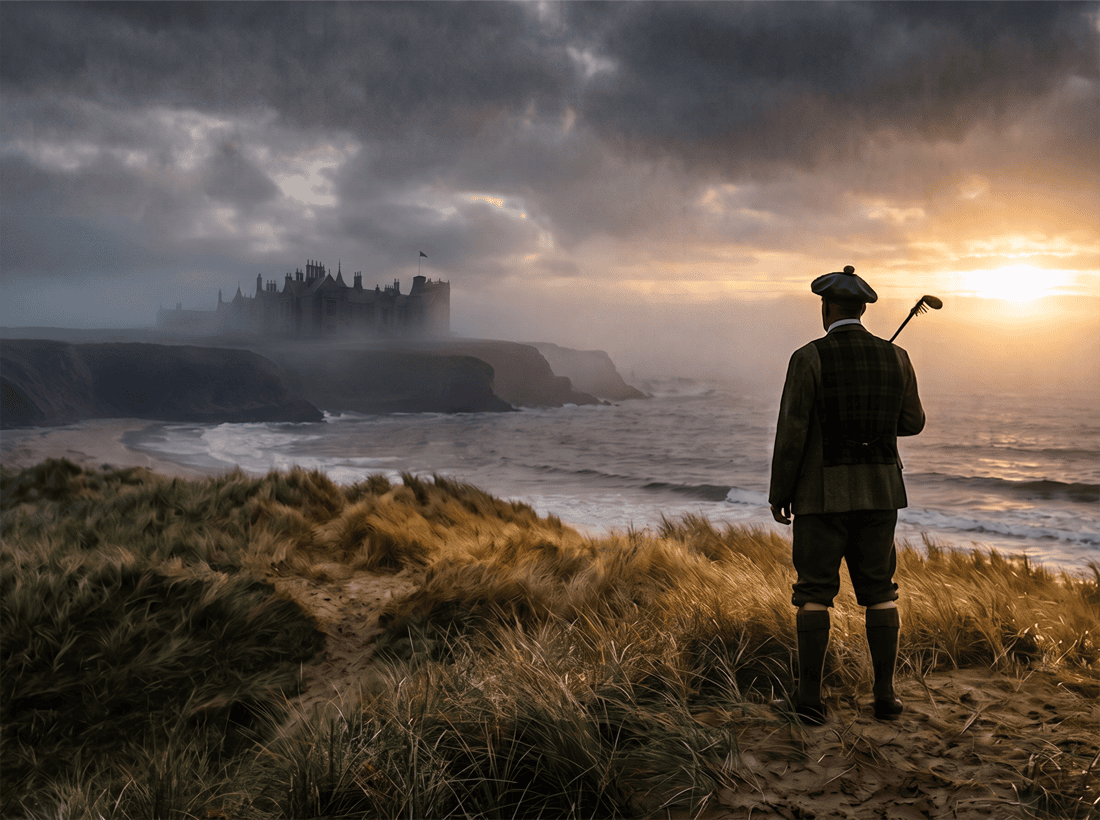
Image created by Cruden Bay Life
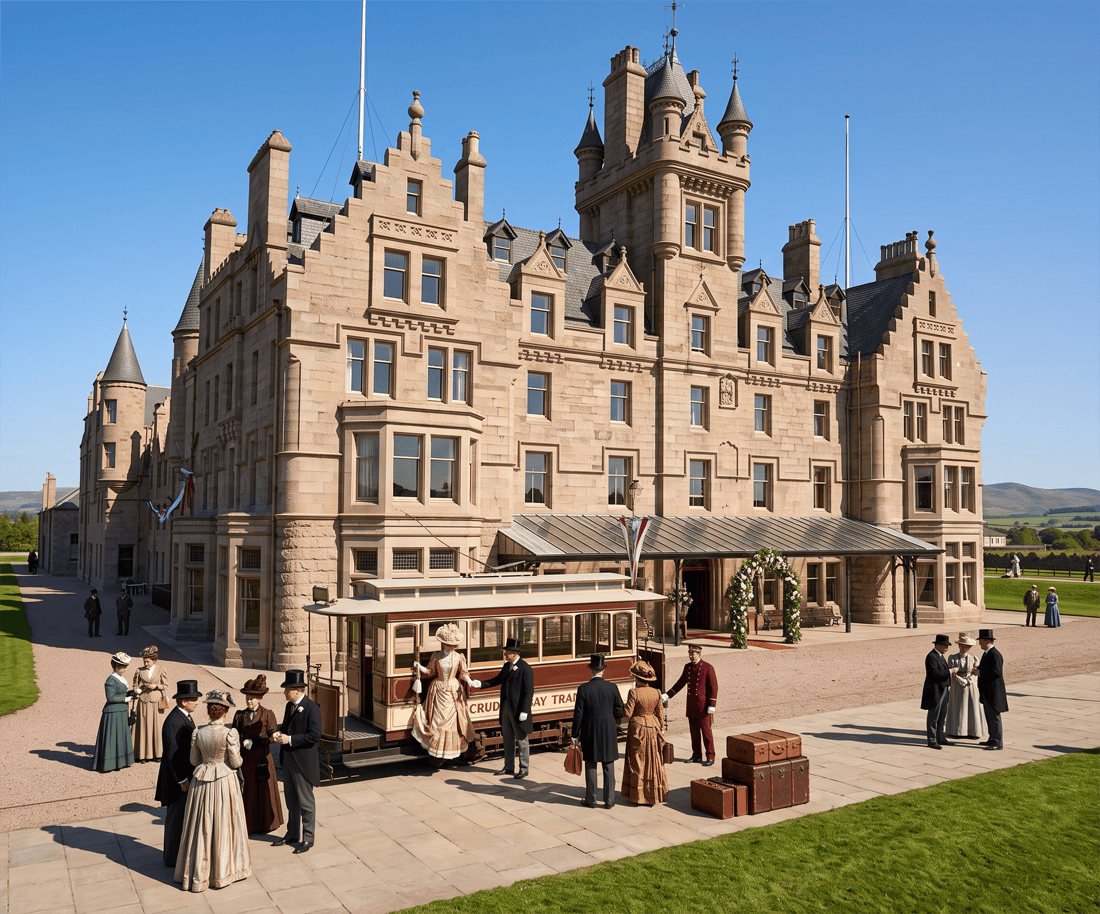
Image created by Cruden Bay Life
Iron Rails and Grand Ambitions (1894–1899)
In the late nineteenth century, the sleepy coastal setting of Cruden Bay underwent a breathtaking transformation, driven not by golfers, but by the iron-willed directors of the Great North of Scotland Railway Company. Commissioned in 1894, this ambitious project sought to create a premium seaside destination that would entice wealthy travellers north of Aberdeen. The crown jewel of this vision was the grand Cruden Bay Hotel, which opened in March 1899. It was a palatial, turrets-and-gables Victorian paradise designed specifically to promote railway tourism, promising high society the ultimate escape.
To complement this spectacular hotel, the railway company set out to build recreational facilities of unmatched quality, laying out a world-class championship golf course alongside an inner nine-hole ladies’ course. This was a massive engineering feat for the 1890s, turning wild, rugged sand dunes into a manicured sporting wonderland. The railway brought unprecedented luxury, running trains directly to the coast and offering visitors an elite, self-contained paradise.
Though the magnificent railway hotel has sadly been demolished, its legacy of hospitality and grand ambition remains woven into the very fabric of the landscape.
Locals still remember its imposing historic silhouette on the clifftops, and modern visitors can step straight back into that golden age of travel. For a taste of this rich Victorian heritage, you can explore the incredible archive room housed in the original club house – a historic building that dates back to the 1890s, standing as a living witness to the era when the iron rails first brought the world to Cruden Bay.
Old Tom’s Canvas: The Inaugural Clash (April 1899)
In the mid-1890s, the great Old Tom Morris of St Andrews arrived in Cruden Bay, tasked with transforming a wild expanse of towering sand dunes into a golfing masterpiece. Working alongside Archie Simpson, Morris carved an initial 18-hole championship routing of 5,290 yards directly out of the rugged Aberdeenshire coastline. It was a canvas shaped by nature itself, where the wind and dunes dictated the path of play.
The grand opening of this unique links course was celebrated in spectacular fashion on April 14–15, 1899, with an inaugural professional two-day open tournament. For a sleepy northern fishing village, the event was a monumental occasion, attracting a stellar field of the era’s greatest golfing giants to compete for an impressive prize purse of £120. Among those fighting through the sea breeze were the legendary James Braid and Ben Sayers.
At the end of the first day’s play, the formidable Harry Vardon of Ganton sat at the top of the leaderboard with a score of 162. He was closely pursued by J. Kinnell of Prestwick at 163, Archie Simpson himself representing Aberdeen at 164, and St Andrews’ own Andrew Kirkaldy at 165.
On the second day, the drama intensified as these leading four qualifiers entered a tense matchplay format. In the grand final, Vardon showcased the legendary skill that would define his career, defeating Kinnell by 3 and 2 to claim the inaugural crown.
Today, though Tom Simpson and Herbert Fowler redesigned the layout in 1926, many of Old Tom’s original greens and basic routing remain beautifully preserved. For locals and visiting golfers alike, walking these fairways means walking the exact footsteps of Vardon and Braid, where Scotland’s golden age of golf first found its northern home.
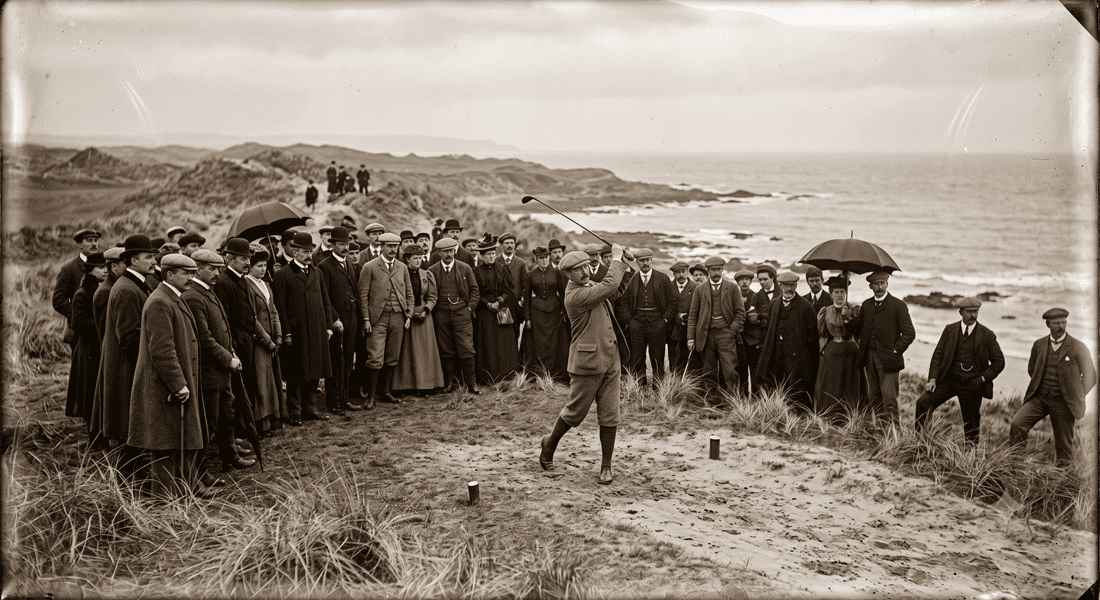
Image created by Cruden Bay Life
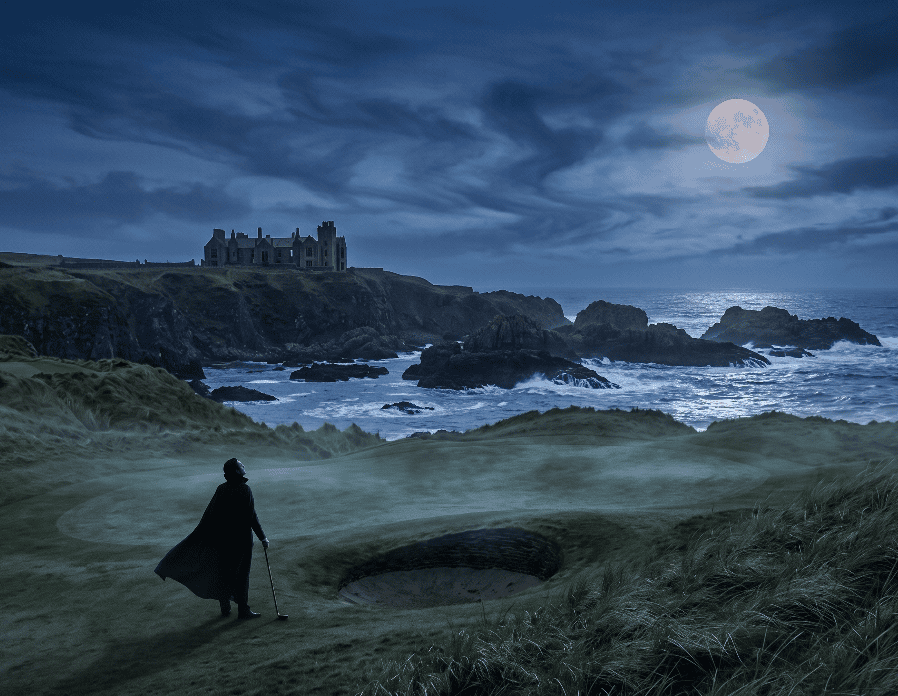
Image created by Cruden Bay Life
Acknowledgement: This article makes use of material from When Brave Men Shudder: The Scottish Origins of Dracula, by Mike Shepherd, published in 2018; and Slains Castle’s Secret History, by Mike Shepherd and Dacre Stoker, published in 2021.
Dracula’s Shadow on the Fairway (1895–1897)
For golfers teeing off at Cruden Bay Golf Club, the dramatic clifftop ruins of Slains Castle are an ever-present companion, casting a long, haunting silhouette across several holes and adding an unforgettable sense of gothic mystery to the links. This spectacular fortress is not just a beautiful backdrop; it is also the legendary inspiration for one of literature’s most terrifying figures.
Between 1882 and 1910, the celebrated author Bram Stoker spent a month every single year holidaying in Cruden Bay. He found deep inspiration in the rugged coastline, the crashing waves of the North Sea, and the dark, gothic atmosphere of the area, which captured his imagination and inspired the settings of his books. Most famously, while staying at the Kilmarnock Arms Hotel, Stoker sat down in 1895 and began writing his immortal masterpiece, Dracula. Local legend has long maintained that the castle’s striking interior directly inspired the Count’s forbidding lair—specifically, the castle’s central octagonal hall, which is vividly echoed in the description of the vampire’s eerie home.
But the spookiest tale in the club’s history belongs to the links itself. On October 31st, 1897—a night fittingly reserved for Halloween—a mysterious figure matching the description of Count Dracula himself was reportedly spotted playing a round of golf on the layout. This otherworldly sighting occurred at the Port Erroll Golf Club (as the course was then known), a full two years before it was officially opened to the public. Today, as golfers play past the clifftops under a darkening sky, they can look up at the ruins of Slains Castle and wonder if the Count is still watching them from the shadows, waiting for his turn to tee off.
The Architects of Mischief (1926 Redesign)
By the mid-1920s, the original layout had matured, but the club sought to modernise and heighten the strategic challenge of the links. Enter the legendary design partnership of Tom Simpson and Herbert Fowler. In 1926, they oversaw a major redevelopment of the course, establishing the highly strategic layout that delights and confounds golfers today. At the same time, they redesigned the club’s nine-hole sibling, the St Olaf course.
Simpson, in particular, was an artist of architectural mischief. He believed a great golf course should tease, provoke, and occasionally demand a bit of old-fashioned luck. Nowhere is this design philosophy more perfectly expressed than on the 8th hole. Measuring 250 yards, this drivable par-4 is considered by many to be the physical and spiritual heart of the entire links. Simpson himself famously called the 8th “an outstanding jewel of a hole, mischievous, subtle and provocative, the element of luck with the tee shot being very high”. Nestled like a gem at the base of towering, gorse-covered hills, its green slopes aggressively from back to front, punishing greed while rewarding precise, position-first play.
While Simpson and Fowler introduced these playful eccentricities, they wisely left many of Old Tom Morris’s original greens and basic routing intact.
This beautiful marriage of Victorian scale and 1920s strategy is what gives Cruden Bay its distinctive soul. It remains a course that does not just test your swing; it tests your imagination, inviting you to play a delightful game of chess with the landscape itself.
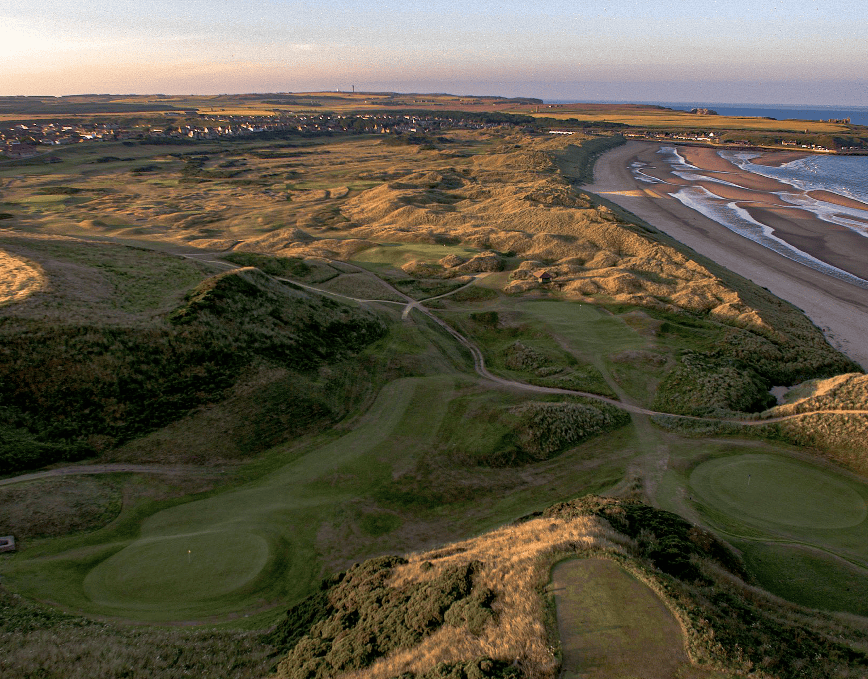
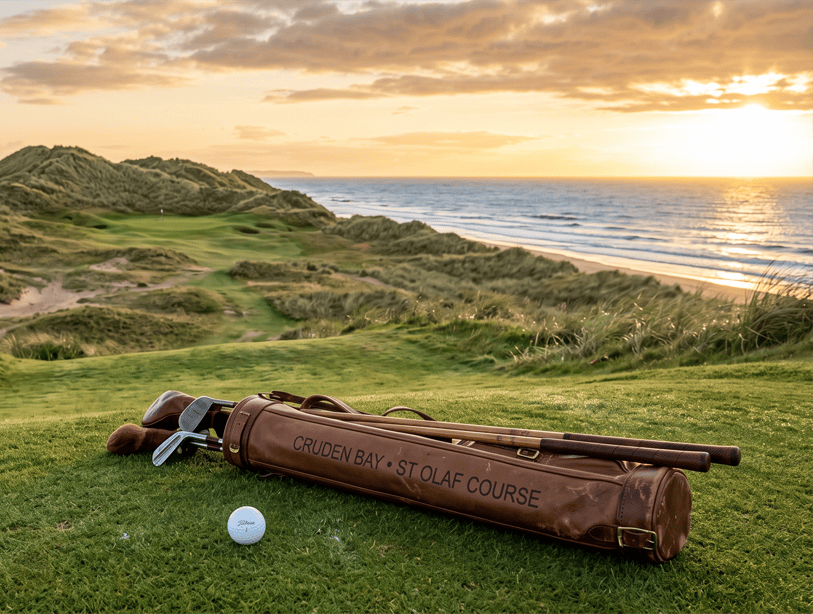
Image created by Cruden Bay Life
The St Olaf Sibling (The Original Ladies Course)
Every golf pilgrim travelling north of Aberdeen has their eyes set on Cruden Bay’s legendary 18-hole championship course. Yet, sitting quietly right in the middle of those towering, majestic sand dunes is a nine-hole masterpiece that is too often overlooked: the St Olaf Course. Far from a mere afterthought, this delightful layout is a historic treasure in its own right.
The St Olaf was born in 1899, originally laid out by Old Tom Morris as the club’s inner nine-hole “ladies’ course”. When the Great North of Scotland Railway Company first opened the resort, they wanted women to experience the same coastal thrill as the men, albeit on a slightly shorter scale. In 1926, when the brilliant Tom Simpson and Herbert Fowler arrived to reshape the main links, they also completely redesigned the St Olaf, opening both courses to the public in unison.
Because it occupies the same physical landscape as its world-famous big brother, St Olaf shares the exact same extraordinary links topography. Golfers here navigate the same rumbling, tight turf, steep elevation shifts, and dramatic dune-framed fairways. In just under an hour and fifteen minutes, a player can experience a pure, concentrated dose of strategic Scottish golf.
To this day, the club honours this sibling bond: anyone booking a summer or shoulder round on the Championship course receives a complimentary round on the St Olaf. Playing it late in the afternoon is the ultimate insider secret to acclimatise your swing and ground game to the North Sea winds. While the world chases the trophy layouts, locals know the St Olaf is where the real, uncrowded magic of the links is kept.
Viking Soil and Caddie Lore (The Myths of the Fairway)
For centuries, the wild coast of Aberdeenshire has been a theatre of high drama, and nowhere is this more tangible than on the fairways of Cruden Bay. The links are steeped in a rich tapestry of local myths and caddie lore, where the natural quirks of the landscape are inseparable from the ghosts of Scotland’s history.
The most legendary of these tales awaits golfers on the formidable par-4 17th hole. Sitting right in the center of the fairway is a prominent, unusual grass-covered mound. For generations, local caddies have whispered the same chilling origin story: this mound is an ancient Viking burial ground. It is said to mark the final resting place of the Scots and Norse Danes who fell during the historic Battle of Cruden in the year 1012. Whether it is historical truth or a tall tale, avoiding this ancient mound is a must to keep your ball on the short grass.
But the playful folklore of the links is not limited to ancient battles. At the 14th hole, appropriately named “Whins,” golfers encounter what may be the ultimate piece of glorious strategic madness on the course. It was famously Tom Watson’s favorite hole when he visited in the 1980s. After navigating the fairway, players are confronted with a completely blind second shot. Aiming blindly over a massive dune at a solitary white marker post, you must trust the winds. Below lies the legendary “bathtub” green—an almost rectangular putting surface nestled in a sunken pit at least 15 feet below the surrounding grade. Landing your ball here is a sublime experience, a reminder that at Cruden Bay, you aren’t just playing golf—you are playing through a living archive of coastal myth.

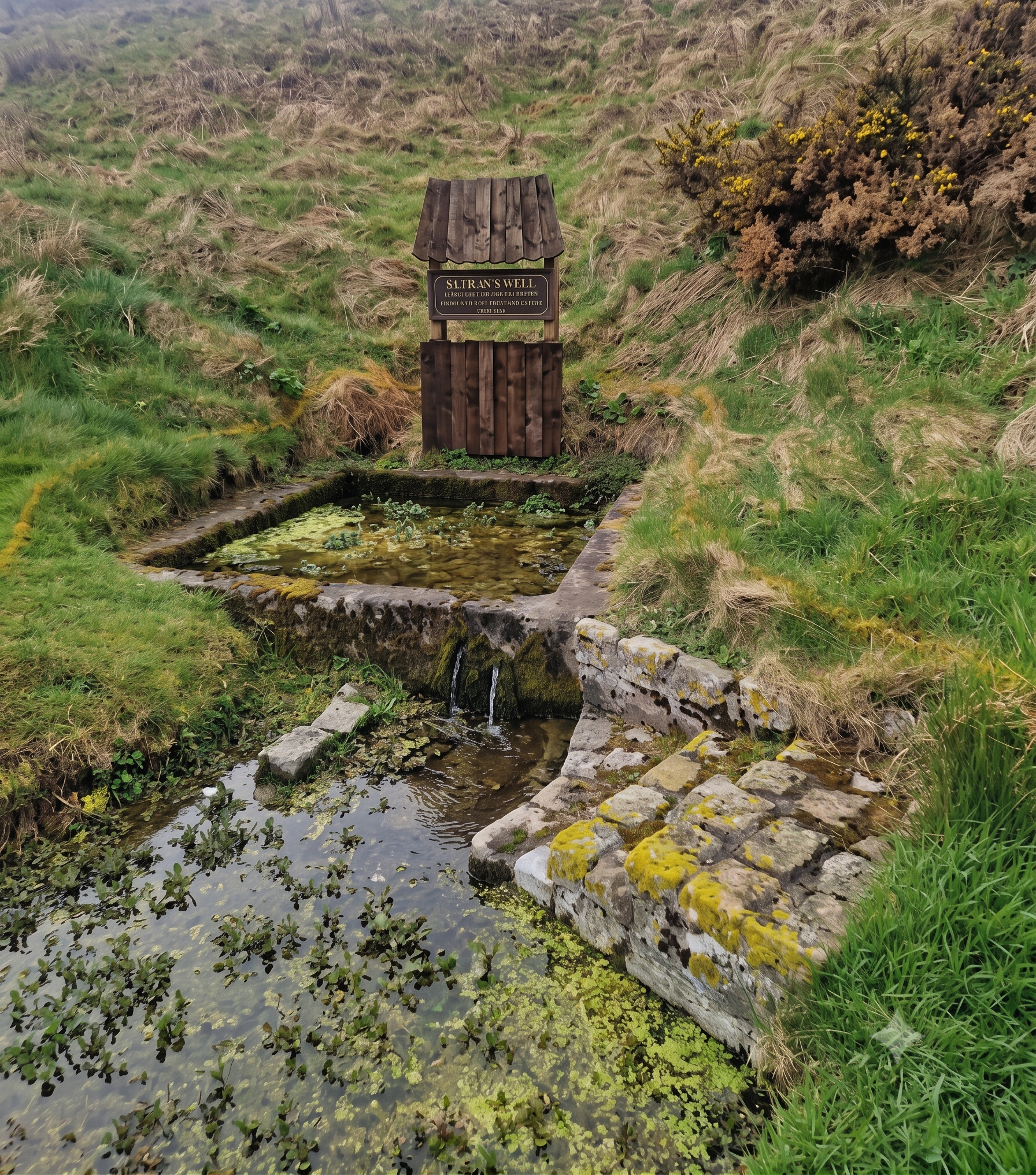
A Legendary Hazard: St Olaf’s Well on the 17th Fairway
For those playing a round on the world-class links of Cruden Bay Golf Club, the course offers more than just rolling dunes, sea breezes, and challenging fairways. It offers a walk through history. Nestled quietly beside the 17th fairway lies St Olaf’s Well, a humble, stone-lined natural spring carrying a millennium of rich history.
Long before the legendary designers Tom Simpson and Herbert Fowler reshaped these dunes in the 1920s, this spring was a sacred site of pilgrimage. Local folklore imbued its mineral-rich waters with miraculous healing properties, celebrated in the traditional verse: “St Olave’s well, low by the sea, / Where pest nor plague shall ever be.” Physically, the spring is now enclosed within a rectangular concrete wall (2.5 m x 2 m), with waters flowing eastward into the coastal sands.
The well’s lore runs deeper still, reaching back to the bloody Battle of Crochdane in 1012. Following King Malcolm II’s legendary victory over the Danes, a chapel dedicated to St Olaf was built nearby to commemorate the fallen, forever intertwining this spring with the Viking Age. Centuries later, Bram Stoker found inspiration in these sands. He cast the well in his 1902 Gothic novel The Mystery of the Sea as the final, haunting destination where a spectral procession of shipwrecked Viking and Celtic souls vanishes back into the earth.
Today, the well stands as a silent witness to a thousand years of faith, folklore, and sport, even lending its name to our shorter St Olaf Course. If you wish to uncover the full history of this sacred spring, discover the legends of its healing waters, or read about the spectacular 2012 millennium commemorations, featuring an open-air service led by the Episcopal Bishop, visit our dedicated St Olaf’s Well page.
From Hidden Gem to Cult Classic (The Modern Era)
In the early 1990s, Cruden Bay Golf Club was a quiet, sleepy secret, largely overlooked by international travellers who rarely ventured north of St Andrews. The club’s low profile shifted when author Michael Bamberger published his classic 1992 novel, To the Linksland, capturing the sense of adventure and discovery waiting on these wild dunes for a wider audience.
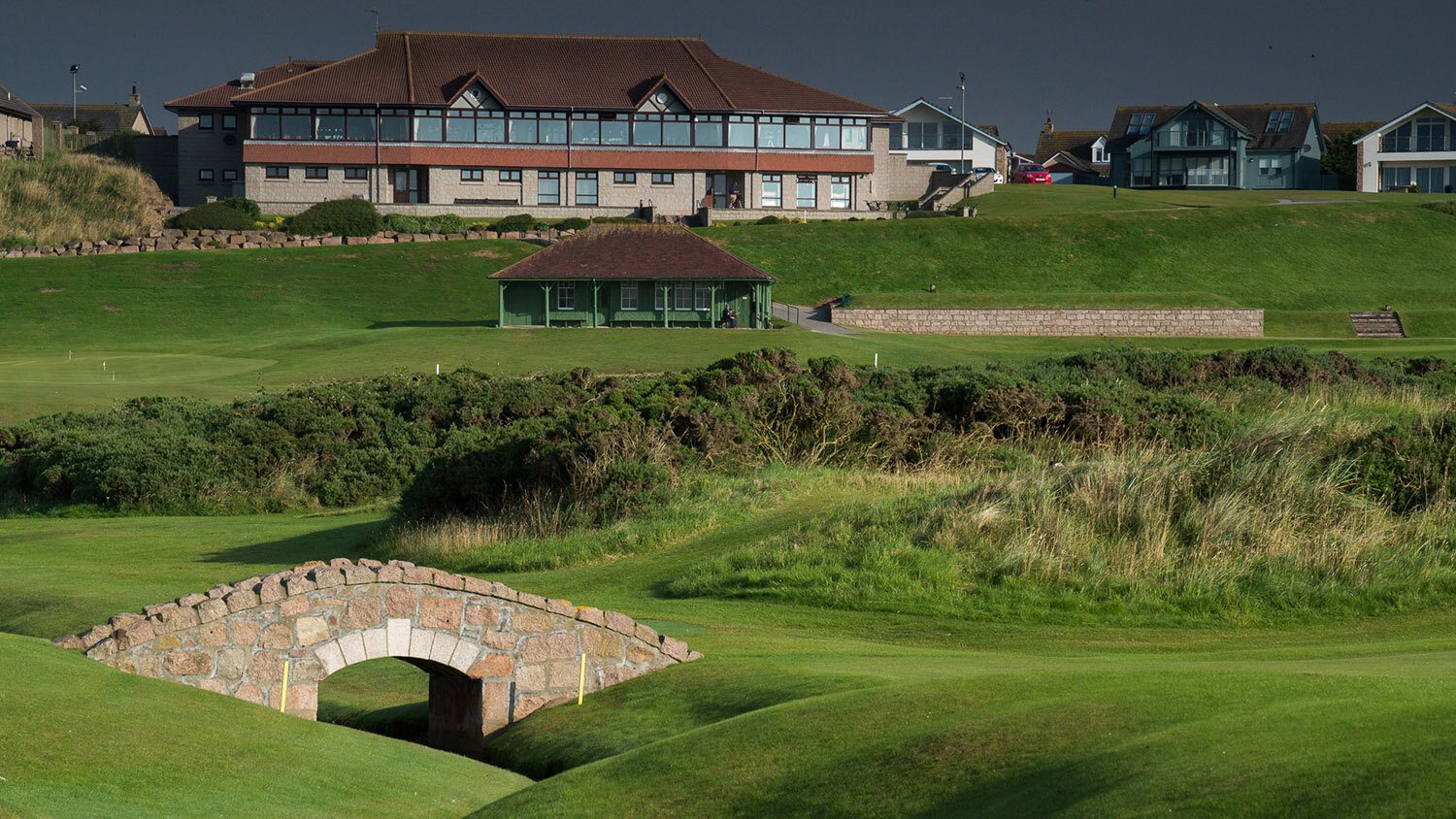
In the decades since, the course has climbed high in the global rankings, graduating from a “hidden gem” to an undisputed, world-ranked cult classic. Yet, despite the addition of the A90 Aberdeen bypass making the pilgrimage much easier, and the rise of a stunning modern clubhouse to replace the old utilitarian white clubhouse, the club has never lost its down-to-earth soul.
The warm Aberdeenshire hospitality remains the absolute heartbeat of the experience. Whether you are a local or a visitor stepping off the 18th green, the staff greets you like family. You might still find yourself being treated to a celebratory slice of birthday cake, enjoying an excellent clubhouse lunch with unmatched panoramic views of the sea, or sipping a complimentary dram of local whisky to toast your battle with the dunes. Cruden Bay has conquered the modern world by simply staying true to itself.

Image created by Cruden Bay Life
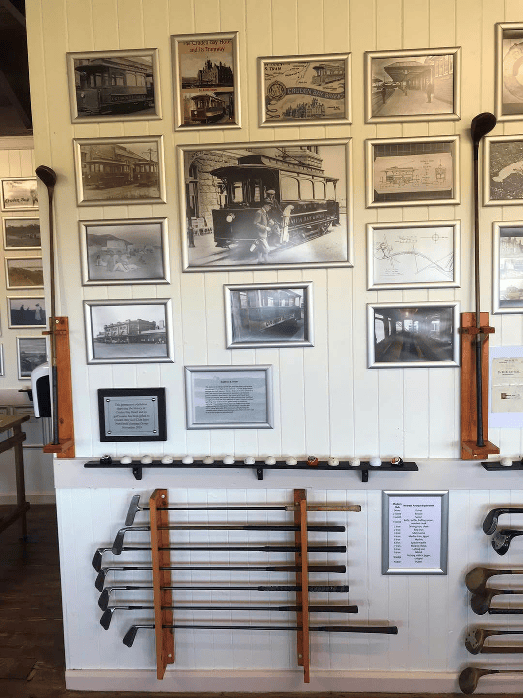
Preserving the Legend: The Cruden Bay Golf Club Museum
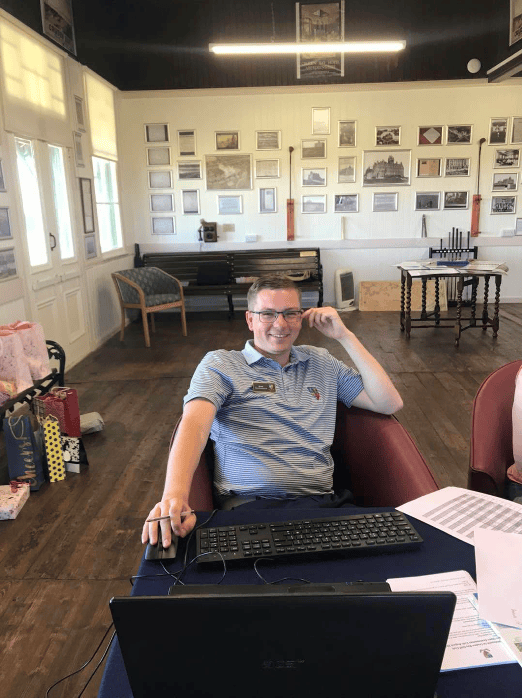
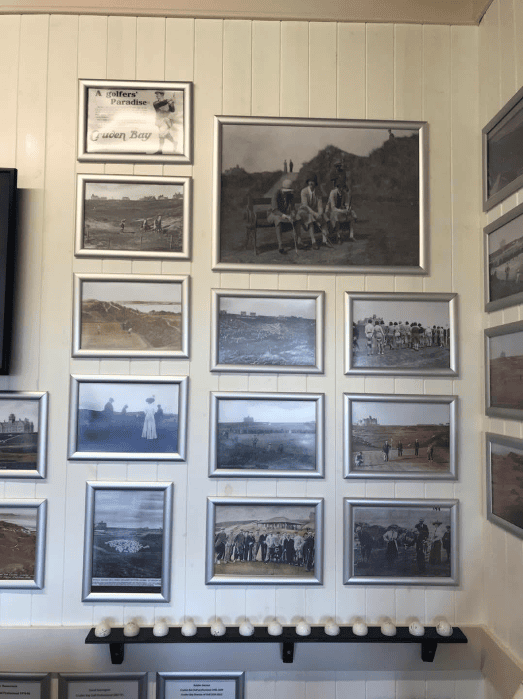
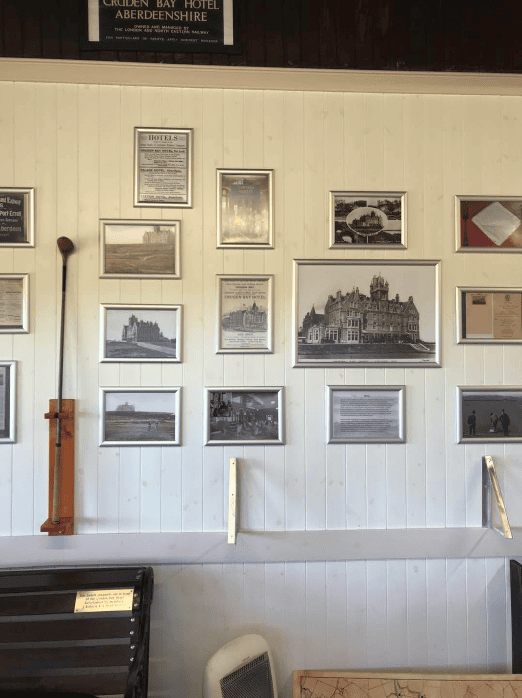
While golfers from around the world make the pilgrimage to Aberdeenshire to play the stunning links of Cruden Bay, they also have a unique opportunity to step back in time. Housed in the club’s original 1890s clubhouse – which now serves as the starter’s cottage and a historic archive room is an extraordinary museum that preserves the deep, colorful heritage of this legendary coastal landscape. This cozy, memorabilia-packed cottage is well worth exploring before your round.
When the club’s modern, panoramic clubhouse was erected in 1999 to capture the sweeping sea views, the historic Victorian clubhouse was lovingly repurposed to safeguard a treasure trove of memorabilia. Today, this quaint building stands as a living witness to the golden age of travel. Inside, visitors are greeted by a cozy space packed with relics demonstrating that golf in Cruden Bay is an ancient lineage, stretching far deeper than the late Victorian railway boom.
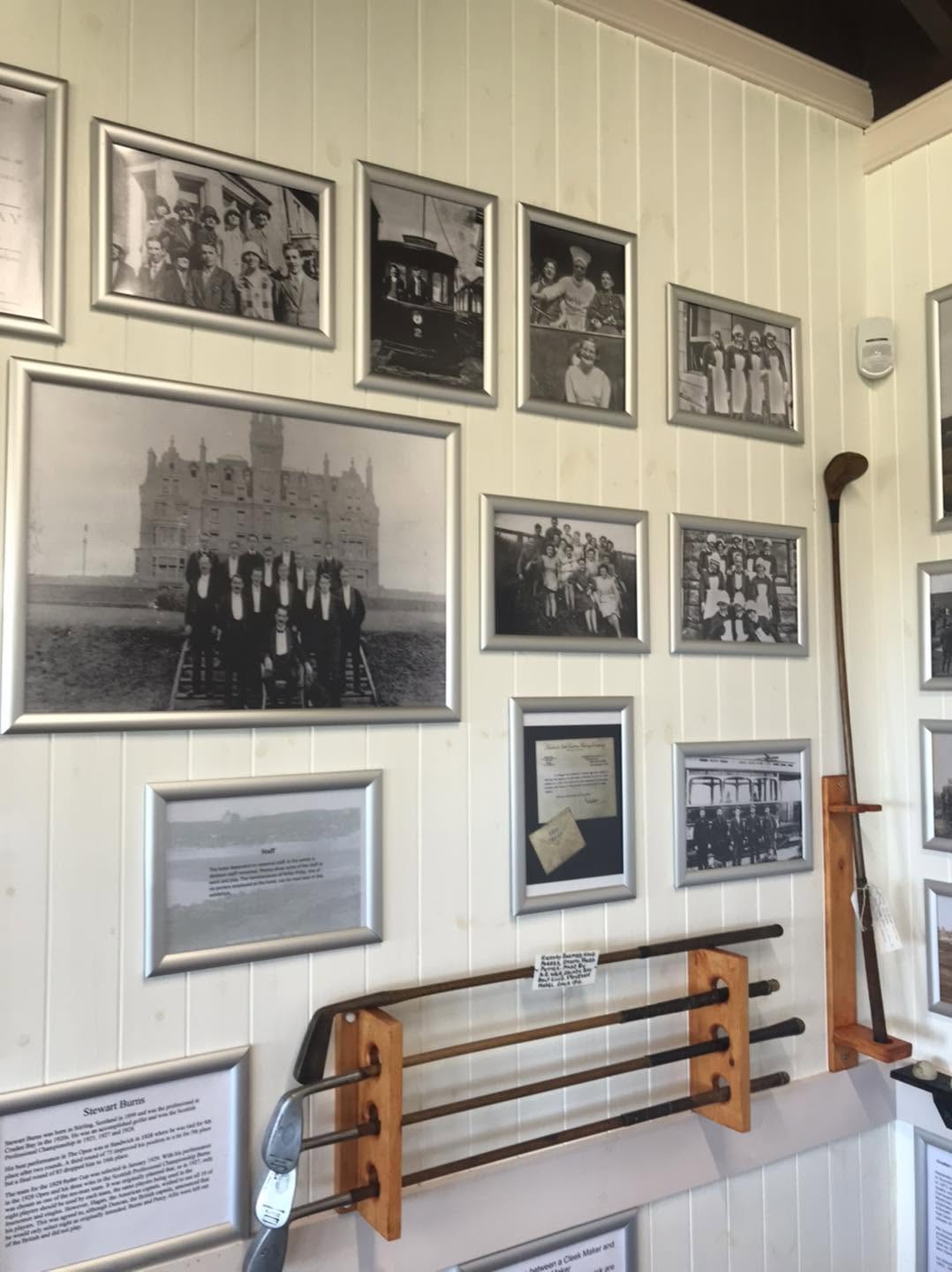
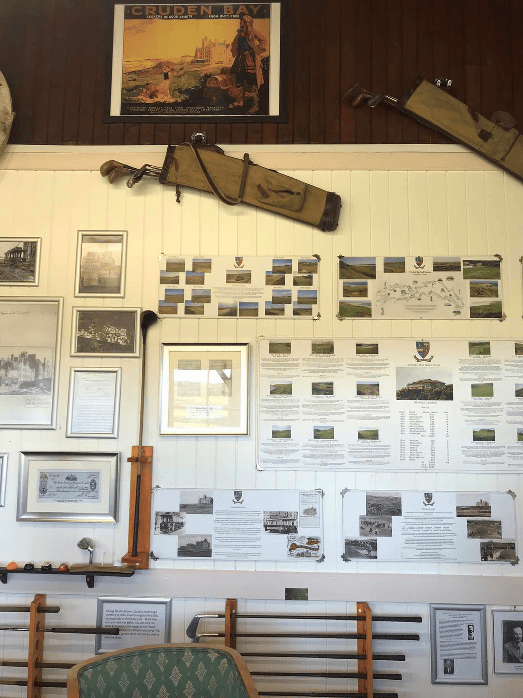
The museum’s most prized possession is an ancient ballot box inscribed “Cruden Golf Club 1791”. This remarkable relic, along with a winner’s medal from an 1883 competition played on nearby Ward Hill , proves that structured golf was enjoyed among these rugged dunes long before the modern course was formally commissioned.
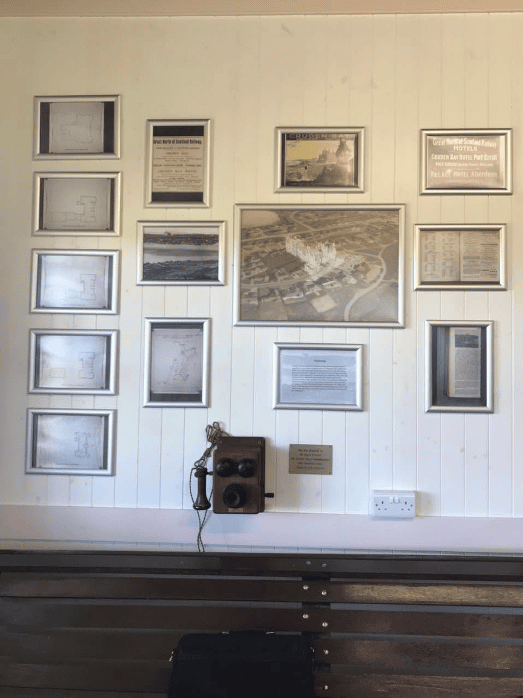
Other exhibits celebrate the rise of the original links, designed with the help of the legendary Old Tom Morris and Archie Simpson, and the grand Cruden Bay Hotel. The hotel was opened in March 1899 by the Great North of Scotland Railway Company to attract wealthy travellers and titans of Victorian industry. Quirky hotel artifacts on display include a vintage safety ring and an original telephone that once connected the palatial clifftop hotel directly to its laundry room.
Additionally, the museum showcases a remarkable collection of antique golf clubs. Highlighting the village’s rich sporting craftsmanship, every single club in this archive was hand-crafted right in Cruden Bay, with the oldest specimen dating back to 1905. For any visiting player, exploring this atmospheric archive—while catching glimpses of the gothic Slains Castle ruins on the horizon is an essential ritual to connect with the ghosts of Scotland’s golfing pioneers before teeing off.
Membership & Visitor Information
Cruden Bay Golf Club is proud to balance its reputation as a world-class golfing destination with its role as a welcoming community hub. The course regularly draws players from across the globe, yet it retains the charm and warmth of a local club where friendliness and tradition are at the heart of every visit.
Visitors are warmly encouraged and will find it easy to arrange a round. Tee times can be booked online in advance, with flexible options available, from a single round of golf to a full day ticket that provides the opportunity to experience 36 holes on the links. The playing season typically runs from early spring through late autumn, with the long days of summer offering the best chance of calm conditions and breathtaking sunsets over the North Sea.
Facilities at the club are designed to enhance the overall experience. A fully equipped clubhouse offers spacious locker rooms, a professional shop stocked with the latest equipment and apparel, and a welcoming bar and restaurant. Guests can enjoy hearty meals and refreshments while overlooking panoramic views of the course.
For those considering membership, categories include local, national, and overseas options. This flexibility allows golfers everywhere to feel part of the Cruden Bay family.


Beyond the Course: Cruden Bay Village & Surroundings
A round at Cruden Bay is only part of what makes a visit here so memorable. The village itself offers a warm and genuine welcome, with its quiet streets, friendly locals, and a relaxed pace of life that perfectly complements the drama of the golf course. A wide, sweeping beach of golden sand stretches along the bay, inviting visitors to stroll, swim, or simply pause to take in the ever-changing moods of the North Sea. Coastal walks lead to dramatic cliffs and hidden coves, while birdwatchers are treated to sightings of seabirds that thrive in this unspoiled environment.
History is never far away. Just beyond the course stand the atmospheric ruins of Slains Castle, perched on the headland and long believed to have inspired Bram Stoker’s Dracula. Exploring these remnants connects visitors to a past where legend and landscape intertwine. The nearby fishing village of Port Erroll adds further charm, with its sheltered harbor and an opportunity to sample a delicious coffee or a tasty meal in the Harbour Dunes Cafe with its unspoiled view across the bay.
Together, the golf, natural beauty, and cultural richness make Cruden Bay far more than a sporting destination — it is a place of discovery, relaxation, and unforgettable character.
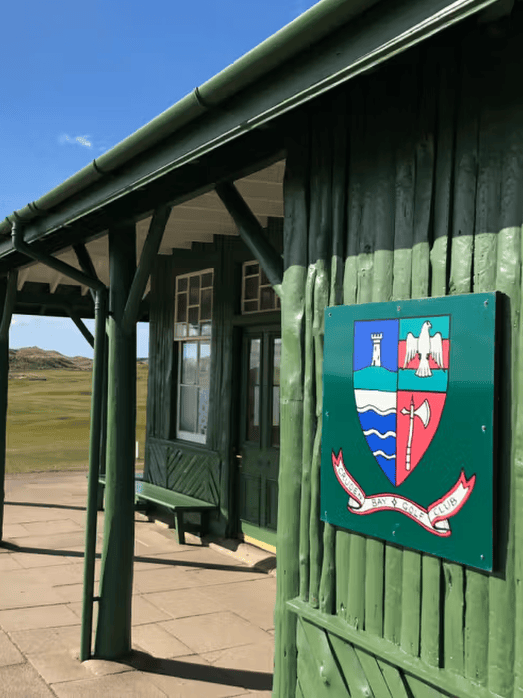
The crest of Cruden Bay Golf Club is more than just an emblem – it is a celebration of the heritage, landscape, and character that define our famous links. Every element within the shield tells part of the story of Cruden Bay and its unique setting on Scotland’s rugged northeast coast.
In the top left, the tower represents the ruins of Slains Castle, a historic stronghold that has watched over the shoreline for centuries. This landmark is woven into local history and even inspired literary legends such as Bram Stoker’s Dracula. Opposite, in the top right, the golden bird – often interpreted as a falcon or eagle – stands for strength, vision, and the wildlife that thrives along our coastline.
The lower half of the crest reflects the dramatic natural setting of the course itself. To the left, the golden sands and rolling blue waves depict the North Sea and the vast dunes that make Cruden Bay one of the world’s most breathtaking links. On the right, the battle axe recalls the area’s Viking and medieval past, including the fierce battle fought nearby in 1012 between the Scots and invading Danes, from which Cruden Bay takes its name.
Together, these symbols embody the enduring spirit of Cruden Bay Golf Club – a course where history, nature, and the challenge of links golf meet in harmony. The scroll that frames the crest proudly carries our name, uniting tradition with the unforgettable golfing experience we offer today.
