
St James (The Less) Church
The Story of St James’s Church, Cruden Bay
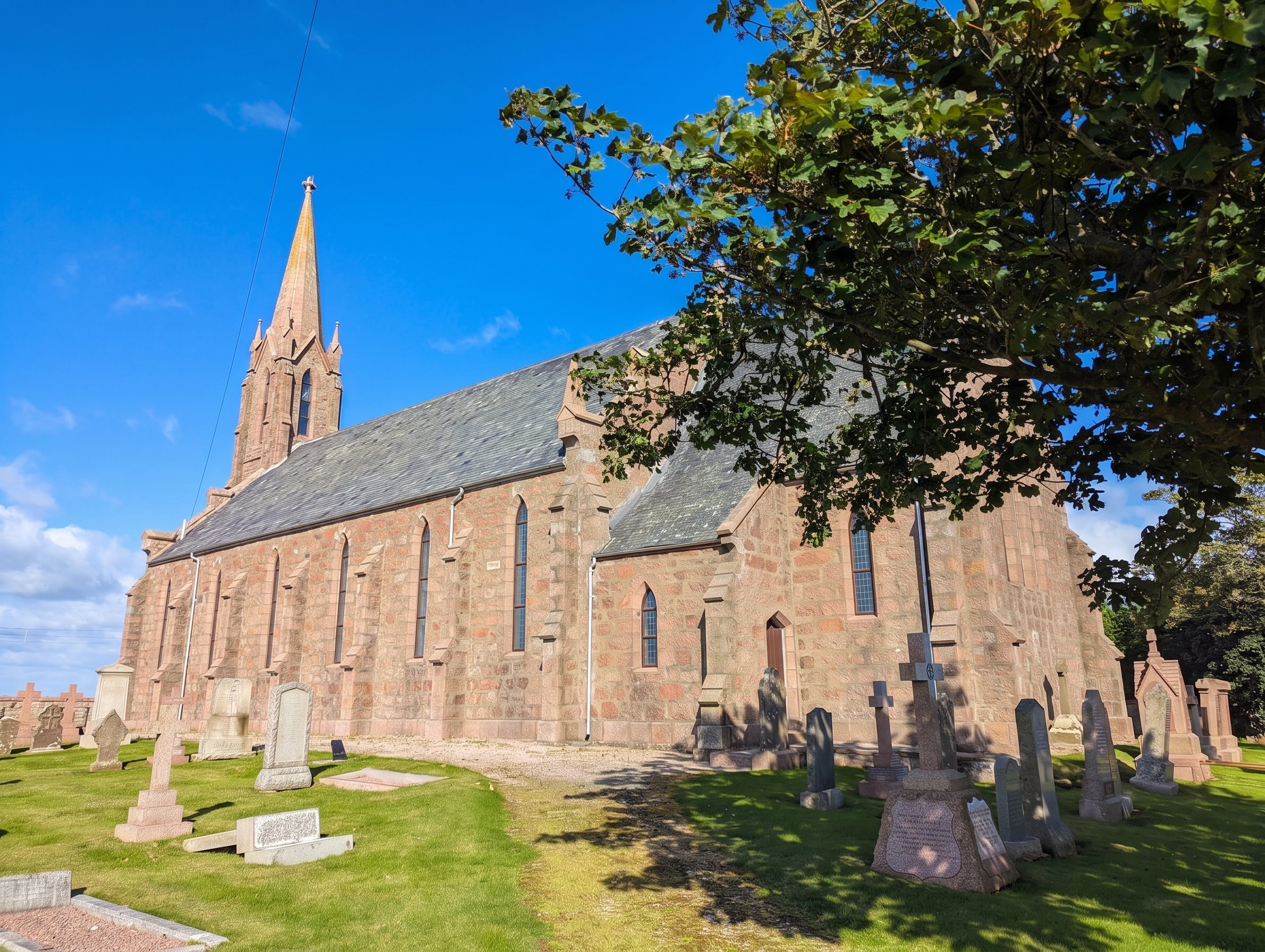
St James’s Church, also known as St James the Less, is an active Scottish Episcopal church situated prominently on Chapel Hill, about a mile outside the coastal village of Cruden Bay in Aberdeenshire. Marked by its iconic ninety-foot spire, which serves as a visible landmark from both land and sea, St James’s represents a distinct and ancient tradition. Unlike the nearby Presbyterian Cruden Old Parish Church, St James’s is part of the United Diocese of Aberdeen and Orkney within the Scottish Episcopal Church, representing the Anglican Communion in the region.
The roots of St James’s stretch back over a millennium, originating with a chantry chapel founded in 1012 to commemorate a historic battle between the Scots and the Vikings. Despite centuries of religious upheaval, Jacobite conflicts, and government persecution that forced the congregation to worship secretly in coastal sand dunes, the community’s devotion endured. Today, sharing its ministry with St Mary-on-the-Rock in Ellon, the church remains a vibrant house of worship. Its story is one of resilience, preserving ancient relics like its eleven-century-old baptismal font while remaining a welcoming sanctuary for all seekers, regardless of their background. The present pink granite church stands proudly as a beacon of faith, rich history, and continuing communal witness in Aberdeenshire.
Contacting the Rector
e-mail: rector@stmarystjames.org.uk
Tel: 07717 804481
General enquiries
e-mail: parish@stmarystjames.org.uk
Tel: 01358 720366
Website: StMaryStJames.co.uk
Address: Chapel Hill, Cruden Bay, AB42 0SF


2018: The 175th Anniversary
In 2018, the active congregation of Saint James the Less celebrated the historic milestone of the 175th anniversary of their present pink granite building atop Chapel Hill. Set in the scenic Aberdeenshire countryside about a mile outside the coastal village of Cruden Bay, this anniversary was a moment of profound thanksgiving for nearly two centuries of continuous worship in the William Hay-designed church.
Under the leadership of the Rector, the Revd Dr Dennis B. A. Berk, the joint charges of St James’s and St Mary-on-the-Rock in Ellon have looked toward the future while honoring their deep heritage. This forward-looking commitment is exemplified by recent environmental initiatives.
In 2024, the parish successfully completed its first major rectory sustainability project under the Provincial Rectory Green Fund, receiving match funding from the Diocese of Aberdeen and Orkney to install under-floor and roof insulation.
This project lowered carbon emissions and reduced heating costs, showcasing how this ancient congregation actively adapts to modern 21st-century standards of ecological stewardship. St James’s remains an active registered charity, where dedicated vestry trustees and congregational volunteers work alongside the Rector to develop the ministry of all members, encouraging them to find what God is asking of them and to use their diverse spiritual gifts to serve others.
Today, St James’s continues to offer a weekly Sunday Eucharist at 9:30 AM, maintaining its doors open daily to welcome tourists and spiritual seekers of all denominations or none.
1982–1983: Internal Redesign
Between 1982 and 1983, the interior of St James the Less underwent a major, transformative redesign and refurbishment to modernize its worship and community facilities. The project involved extensive structural repairs, the removal of older pews, and the creation of a dedicated parish hall space within the nave to host social gatherings.
In order to accommodate the growing number of worshippers traveling by car from outlying districts, an adjacent field was also converted into a spacious car park. During the disruptive renovation period, the Scottish Episcopal congregation experienced warm ecumenical hospitality from the nearby Cruden Parish Church. The Presbyterian parish church generously opened its doors, hosting the Episcopalians so they could conduct their weekly Eucharistic services without interruption.
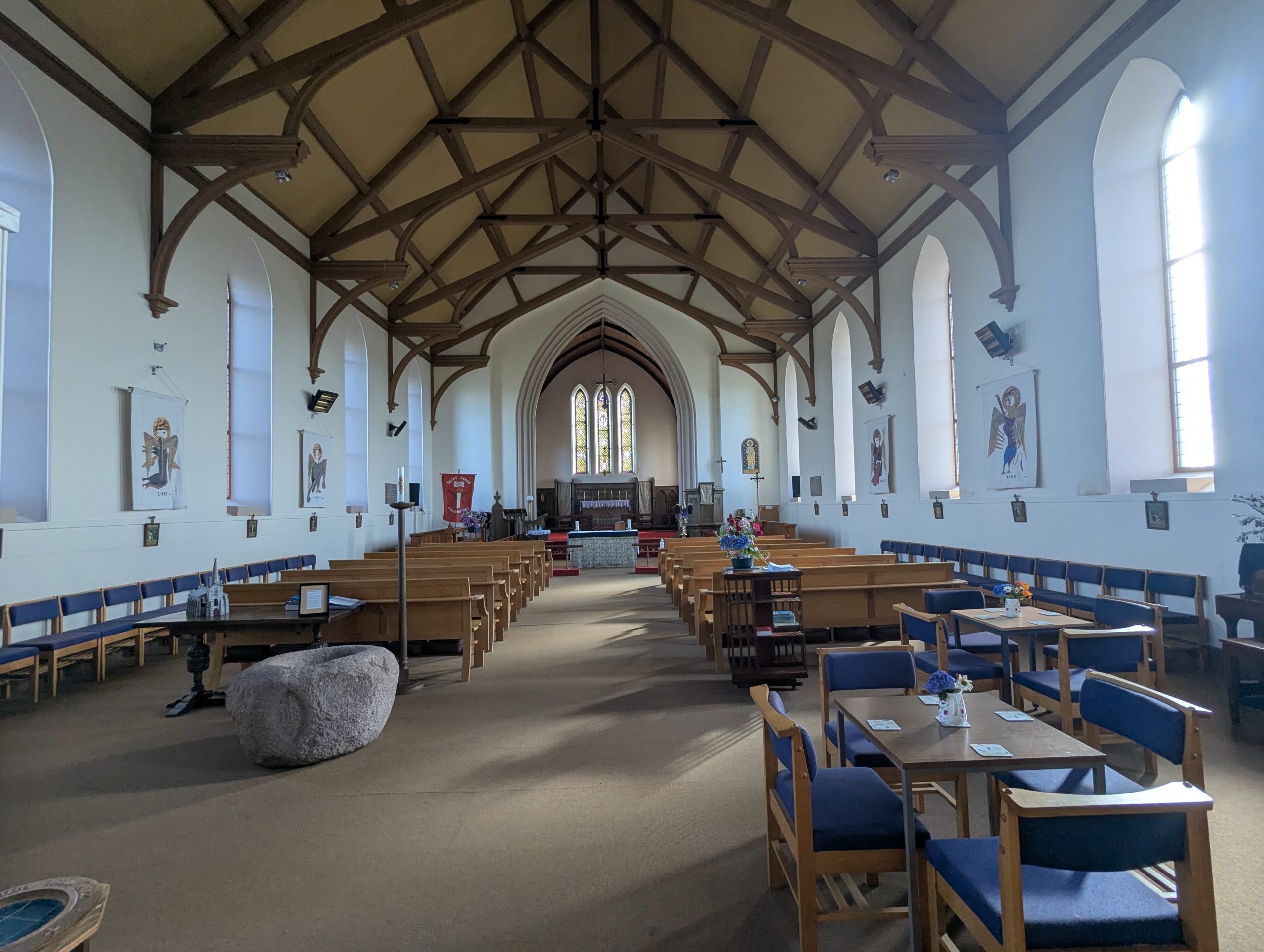
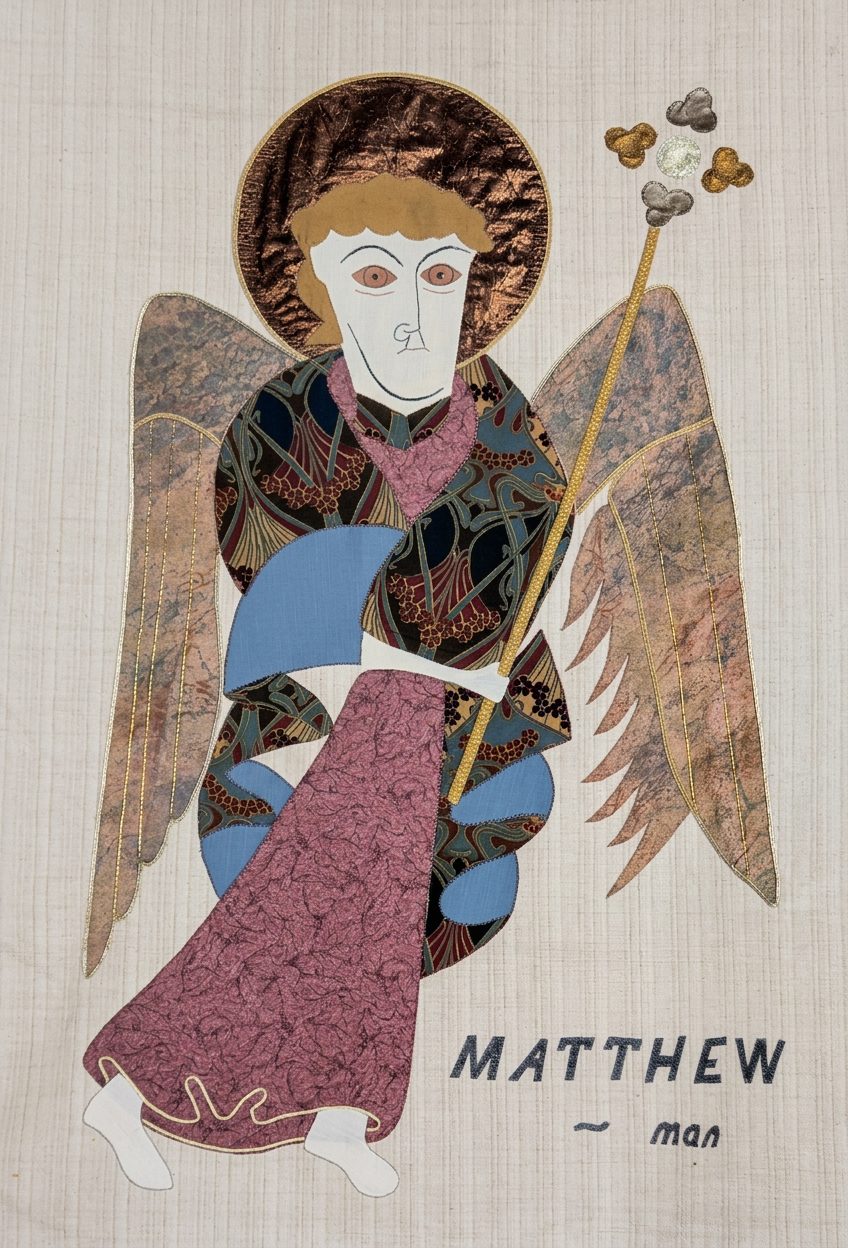
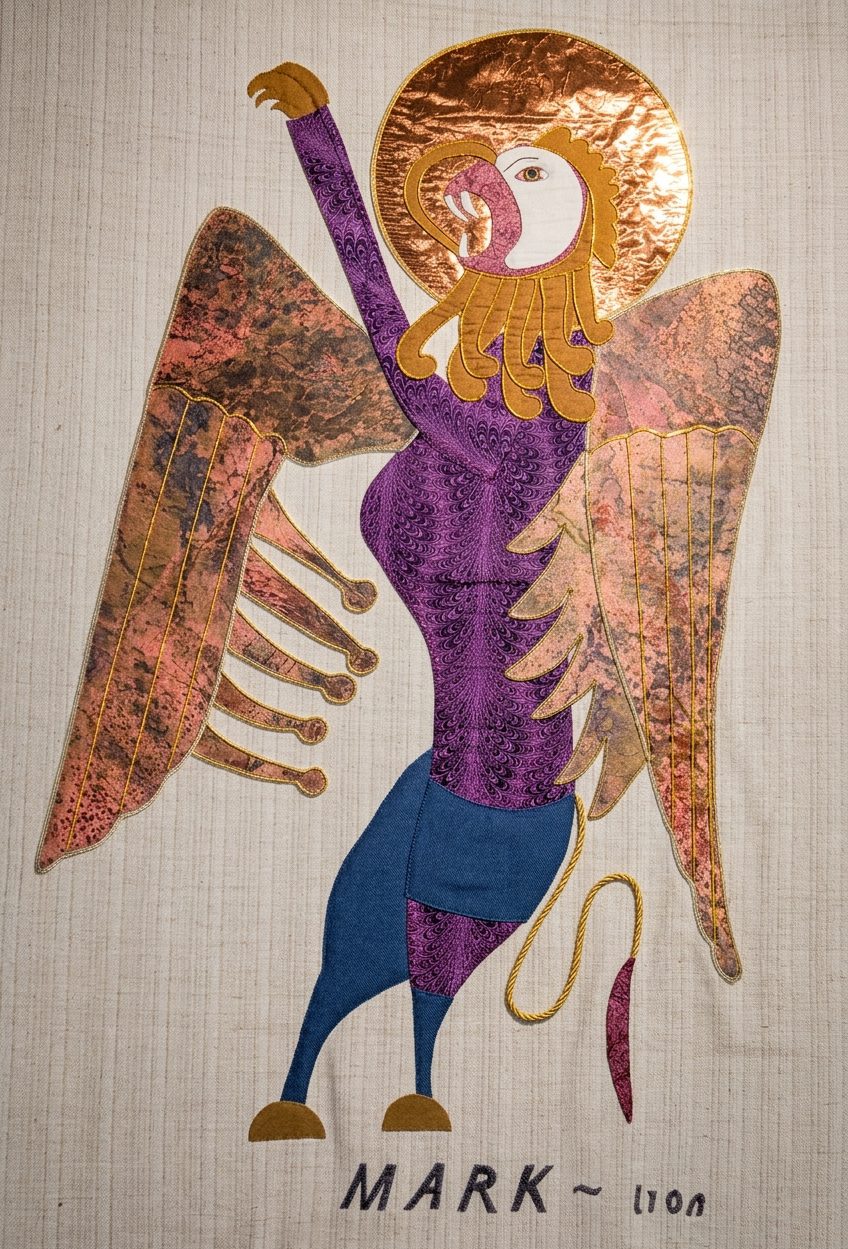
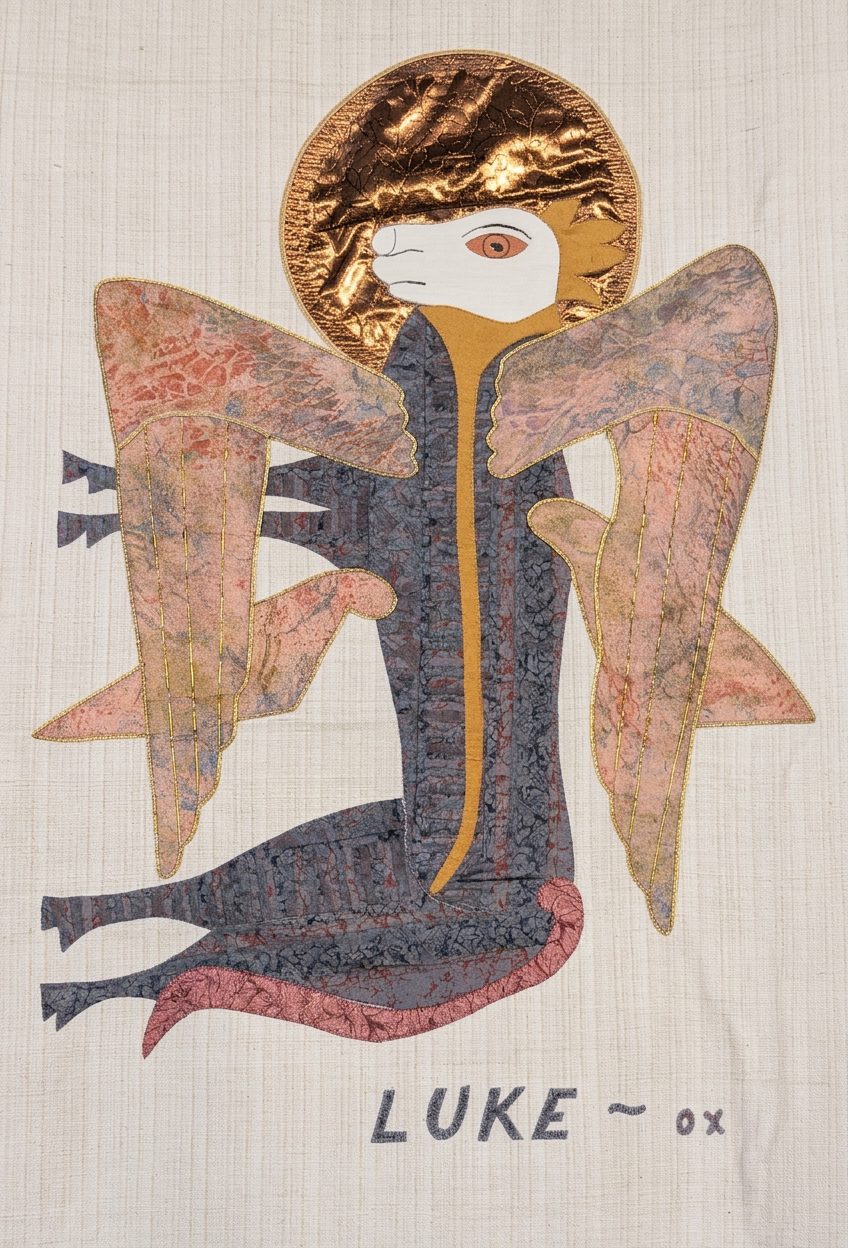
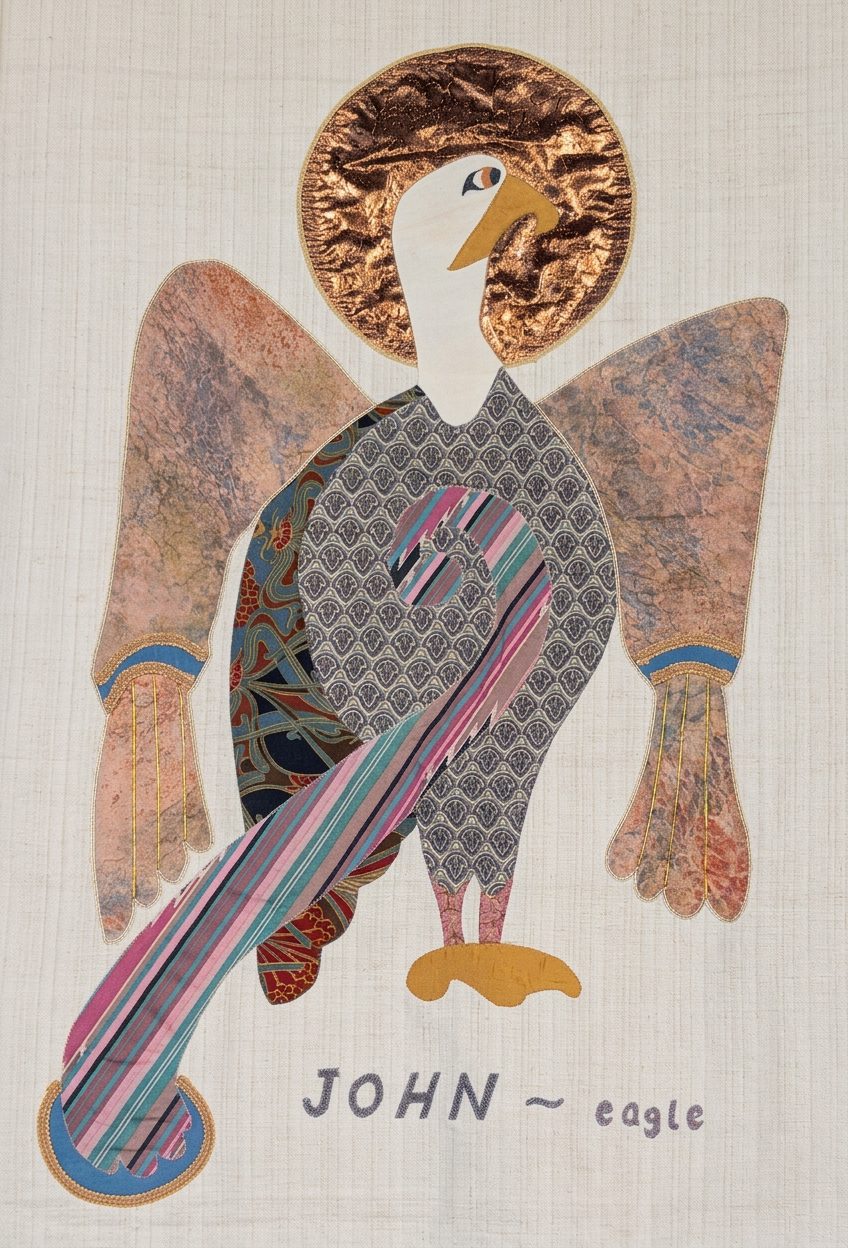
When the congregation returned to their newly refurbished sanctuary, they were greeted by a large, bright, and welcoming space characterized by beautiful exposed wooden roof trusses. To decorate the renewed walls, local artist Pam Whalley designed and installed four striking fabric hangings depicting the Evangelists—Matthew, Mark, Luke, and John—as mystical symbols based on illustrations in the Book of Kells.
These intricate textile wall hangings have become a focal point of beauty inside the church, with each piece capturing a unique mystic character that reflects the detailed style of ancient Celtic Christianity. This physical renewal coincided with structural lay leadership changes; in 1983, the first parish Elders were commissioned under Bishop Fred Darwent to assist with pastoral care and administer Holy Communion.
1970: Linking with Ellon
In 1970, the Charge of Cruden—which spans a vast coastal territory encompassing the rural villages of Hatton, Longhaven, Bullers, Whinneyfold, Slains, Collieston, and Cruden Bay—was formally linked with St Mary-on-the-Rock in Ellon under a shared rector.
This union was solidified in 1972 with the arrival of the Very Revd Gerald Stranraer-Mull, who led both congregations for thirty-six years until his retirement in 2008. Initially, both rural charges had very small congregations and felt isolated, often described as being “aff the earth and doon tae Buchan”. However, the discovery of oil under the North Sea in the early 1970s triggered a massive population boom in Aberdeenshire, bringing a flood of newcomers to the parish. Rather than waiting, the church immediately integrated these newcomers, which revitalized congregation life.
A highly successful Sunday Club was launched in the village primary school, and an ecumenical children’s group in Collieston gathered eighty children each week. The parish’s outreach also extended to the community through parent and toddler meetings, youth groups, and a teenager drama club, Dramatize, alongside active school chaplaincy in nine local schools. Attendance at the Sunday Eucharist in Cruden Bay rapidly escalated from under ten to over fifty regular worshippers.
The church put its finances on a sound footing through thoughtful stewardship campaigns, pledging at least 10% of parish income to external charities. Global companion relationships were also established with parishes in Woodbury, Connecticut, and Engcobo, South Africa, cementing St James’s transition from a quiet country chapel into a globally-minded, ecumenical parish.
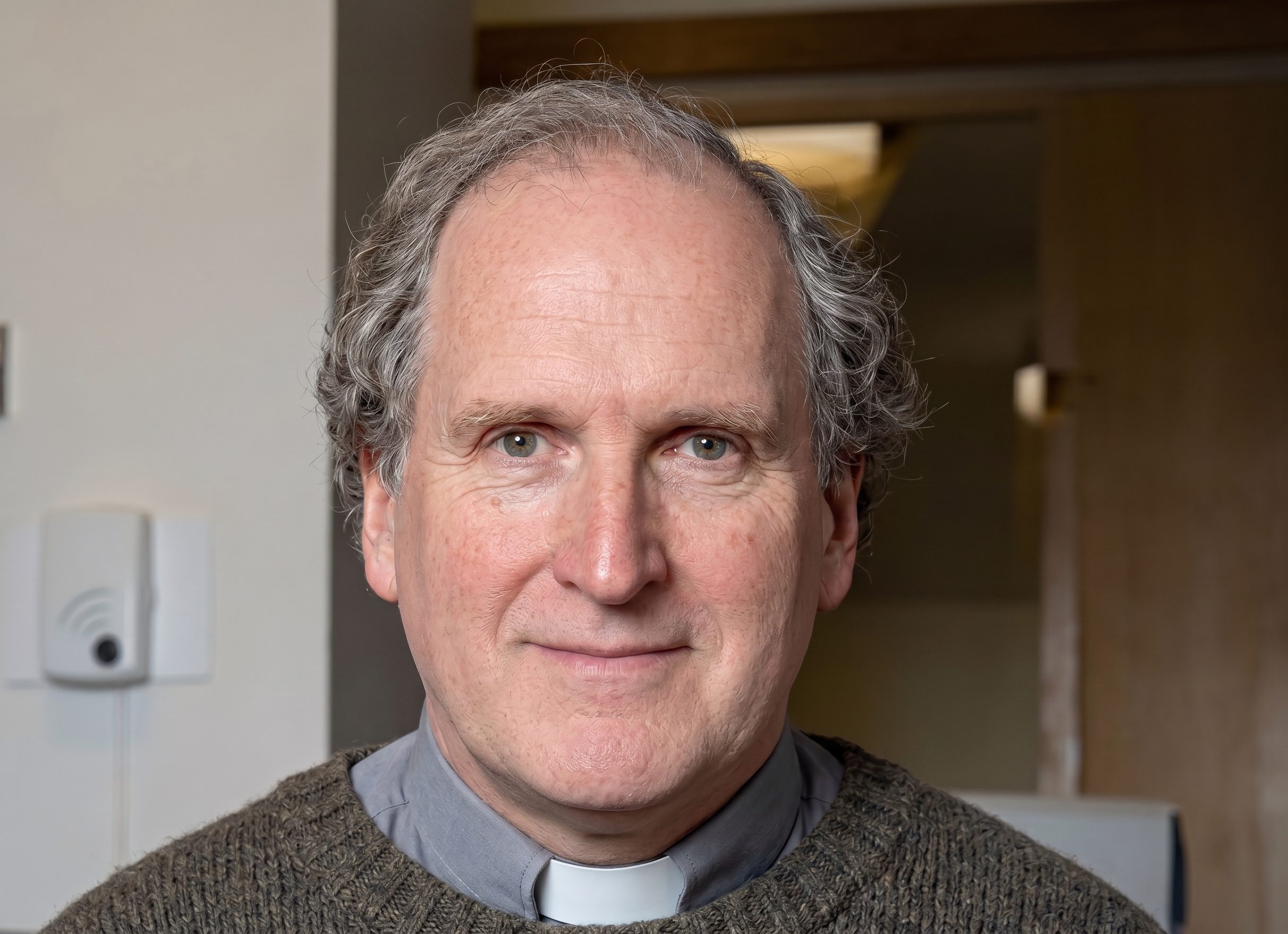
The Very Revd Gerald Stranraer-Mull
1920: Post-War Memorial
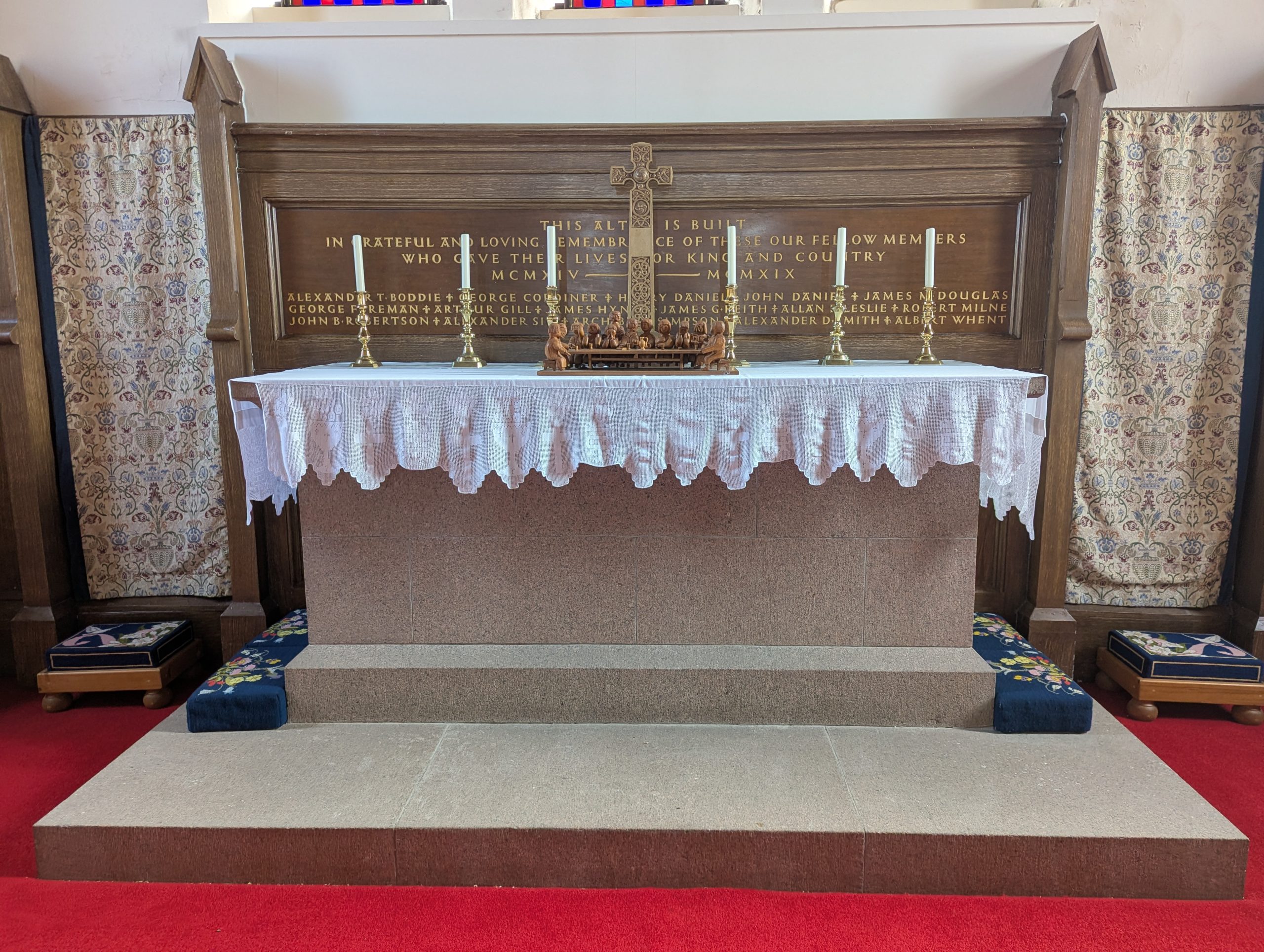
Following the conclusion of the First World War in 1918, a deep cloud of grief and bereavement settled over many local families in the Cruden Bay district who had lost loved ones. To honor the fallen and provide a permanent sanctuary for collective mourning, a beautiful war memorial plaque was erected in 1920 behind a newly installed altar crafted of local pink granite.
The altar’s pink granite mirrored the rugged Aberdeenshire stone of the church itself, representing the solid and enduring memory of the community’s sacrifice. The quiet, rectangular churchyard surrounding St James’s also became the final resting place for two Commonwealth war graves, further connecting the sacred site to the global conflict. These two Commonwealth war graves located in the churchyard are meticulously maintained, providing a quiet, physical reminder of the global scale of the conflict and the deep local impacts felt in the coastal parish of Cruden.
This era of remembrance coincided with structural developments for the congregation; on 17th October 1914, St James was formally registered as a charity. The placing of the memorial plaque and the granite altar added a poignant layer of dignity to the otherwise plain, lancet-lit interior of the church, bridging personal losses with the hope of the liturgy.
The plaque was later officially recorded by the Royal Commission on the Ancient and Historical Monuments of Scotland (RCAHMS) in 2014, ensuring that the names of these local men remain preserved in national records.
1843: The Consecration of the Modern Church
On 16th November 1843, the Bishop of Aberdeen consecrated the present St James the Less building on Chapel Hill, replacing a smaller chapel built in 1765. This grand structure was the very first commission of the notable Scottish architect William Hay, who was born locally in Cruden in 1818. William Hay, who designed this impressive Gothic Revival structure, went on to establish a distinguished international career, making his local debut on Chapel Hill a source of great pride for the parish. Hay designed the church in the elegant Early English style, constructing it of pinned granite rubble. The rectangular six-bay nave is flanked by narrow lancet windows and features a west tower with gablets and a pinnacled spire rising ninety feet high.
Positioned on the high crest of Chapel Hill, this spire became an immediate landmark visible for miles across land and sea, acting as a spiritual beacon and maritime guide.
In 1845, a rectory was built nearby for the Revd J.B. Pratt, who served as rector for forty-four years (1821–1869) and was a renowned local historian. Over the following decades, the building was enriched with key architectural and musical features.
A pipe organ designed by Rust of Chelmsford was installed in the gallery in 1849, and a church bell cast by J. Taylor was hung in 1864. To accommodate a growing choir and add liturgical grandeur, a slightly narrower chancel with a three-lancet east window was added to the building in 1876, finalizing the beautiful outline of the church.
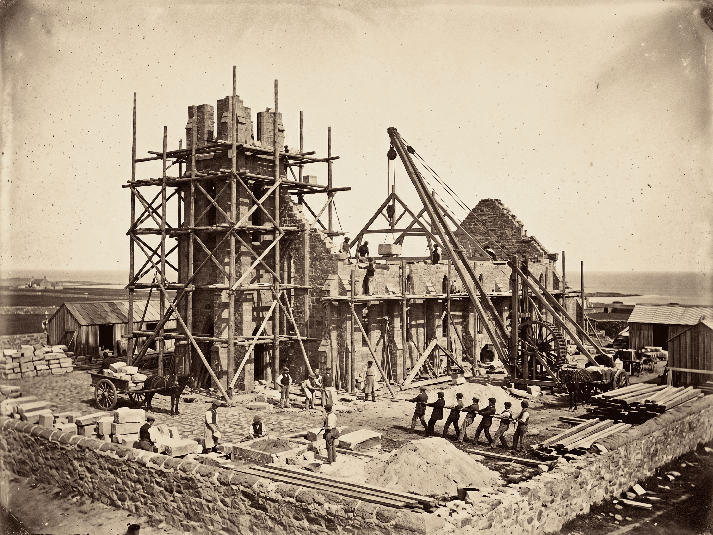
Image created by Cruden Bay Life
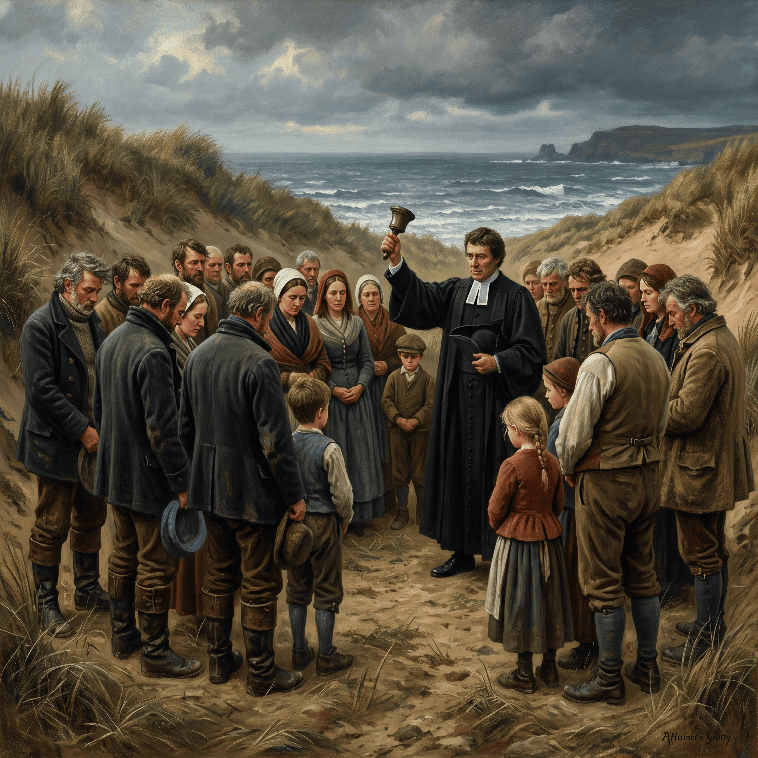
Image created by Cruden Bay Life
1765: The First Chapel Hill Church
In 1765, the first chapel was erected on Chapel Hill through the generosity of the Earl of Erroll, who appointed his own chaplain to minister to the local Episcopalians.
This building marked a crucial return to public worship for a congregation that had suffered severe government persecution following the Jacobite Risings. After the defeat of the Stuart cause at Culloden in 1746, the congregation’s meeting-house—a granary near Slains Castle provided by the sympathetic Countess of Erroll—was burned to the ground by the Hanoverian Government army.
For nearly twenty years, local Episcopalians were forced to meet secretly for worship among the windswept sand dunes of the Cruden beach, using a small handbell inscribed “Crwden 1737” to quietly call the flock together. The 1765 chapel was built as a “qualified chapel,” meaning that the rector swore allegiance to and prayed for the Hanoverian monarchs. This compromise was highly controversial; many traditionalist non-juring Episcopalians in the area refused to attend out of loyalty to the exiled Stuart dynasty, choosing instead to walk miles to attend non-juring services in Ellon or Longside.
The chapel served the community for decades until the arrival of the Revd J.B. Pratt in 1821, who was ordained by Aberdeen’s Bishop Skinner—renowned for consecrating Samuel Seabury, the first bishop of the American Episcopal Church, thereby linking Scottish and American Episcopalians. Despite these political tensions, the 1765 chapel re-established a visible Episcopalian presence on Chapel Hill, preserving the congregation’s continuity through the dark penal years.
1012: The Battle and Ancient Origins
The roots of St James the Less go back over a millennium to a legendary battle fought in 1012 between the Scots and invading Danish Vikings. Led by King Malcolm II, the Scottish forces won a decisive victory on the beaches of Cruden Bay, which effectively marked the end of Viking military incursions on the north-east coast of Scotland.
This historic event is immortalized in the name “Cruden” itself, which is derived from the Gaelic “Croch Dain,” meaning “Slaughter of Danes”. To commemorate the fallen soldiers and establish a place of perpetual prayer, King Malcolm II built a chantry chapel dedicated to Saint Olaf, the patron saint of Norway and Denmark, on the high ground of Chapel Hill.
The chapel was built near St. Olaf’s well, and its dedicatee, Saint Olaf, reflected the deep Scandinavian ties of the area. A priceless physical connection to this original 1012 chapel is preserved within St James’s today: the ancient, roughly-carved granite baptismal font has survived for eleven centuries and is still used for baptisms.
In 1157, Pope Adrian IV officially confirmed that the Cruden church belonged to the Diocese of Aberdeen, cementing its ancient Catholic heritage. Throughout the middle ages, several priests of Cruden served as canons of St Machar’s Cathedral in Aberdeen, illustrating the historic prestige of this parish. This ancient foundation represents the very dawn of Christian worship on Chapel Hill, anchoring the modern church’s sacred ministry in a thousand years of Scottish history.

Principal Sources
- A History of Saint James the Less in Cruden Bay
- Funding: First Rectory Green Fund Project Completed – Net Zero Portal
- MAB29213 – ST JAMES’S CHURCH, CHAPEL HILL, CRUDEN BAY – Aberdeenshire Council Historic Environment Record
- Scots’ Church – 20th Century – Scottish Episcopal Church History
- Scottish Episcopal Church, Diocese of Aberdeen and Orkney – Record View | Archive Collections | University of Aberdeen
- St James Episcopal Church Cruden – OSCR | Charity Details
- St James the Less Church – Undiscovered Scotland
- St James the Less, Cruden Bay
- St James the Less, Cruden Bay – The Scottish Episcopal Church
- St James’s Church – Cruden Bay Life
- St Mary-on-the-Rock and St James the Less – Episcopal Communities in Ellon and Cruden Bay
Image References
Unless otherwise stated, images featured in this article are sourced from contemporary photography, community contributions or original creative material produced for Cruden Bay Life.
The historic sanctuary, churchyard, and surrounding landscapes of Chapel Hill are captured across different seasons and light. Images are intended to capture the unique architectural character, solemn atmosphere, and heritage of these sacred spaces, from the iconic ninety-foot pinnacled spire and historic graveyard to the quiet, commanding setting overlooking the Aberdeenshire countryside and the North Sea.
Where digital artwork, historical reconstructions, or creative interpretations are used—such as the dramatic illustrations depicting the 1012 Battle of Cruden and the founding of the ancient chantry chapel—these images are intended to complement the storytelling experience, helping to visualize the congregation’s legendary origins and convey the deep relationship between the landscape, the community, and its shared memory.
We are grateful to local photographers, historical contributors, residents and visitors who share their images, artwork, and personal archives, helping to celebrate and preserve the continuing, visual story of St James’s Church (St James the Less).
About Cruden Bay Life
Cruden Bay Life celebrates the history, heritage, people and stories that make Cruden Bay and the surrounding Buchan coast unique.
This detailed chronicle of St James’s Church (St James the Less) began with curiosity, extensive research, and a deep desire to capture the enduring character of this historic congregation. Our goal is to explore the pivotal events and historical figures that shaped our distinct Scottish Episcopal heritage, while celebrating the physical landmarks, ancient relics, and everyday spaces that continue to define community life today.
Stories such as this history of St James’s remind us that heritage is not only found in archives and historical records—it is also found in the sacred spaces we care for, the pink granite stones of the church, and the quiet, natural surroundings on the high ridge of Chapel Hill that connect generations of residents, worshippers, and visitors.
Alongside traditional research methods and historical archives, we make thoughtful use of modern creative tools—including artificial intelligence—to assist with historical research, text editing, period-accurate digital illustration, and visual presentation. These tools allow us to explore new, immersive ways of sharing local stories and visualizing monumental moments like the 1012 Battle of Cruden, while geographical accuracy, rigorous editorial judgment, and respect for our community remain central to everything we publish.
Researched by people. Enhanced with modern creative tools. Inspired by history. Created for today’s audiences.
Learn more about how we research and create our stories. Click here →