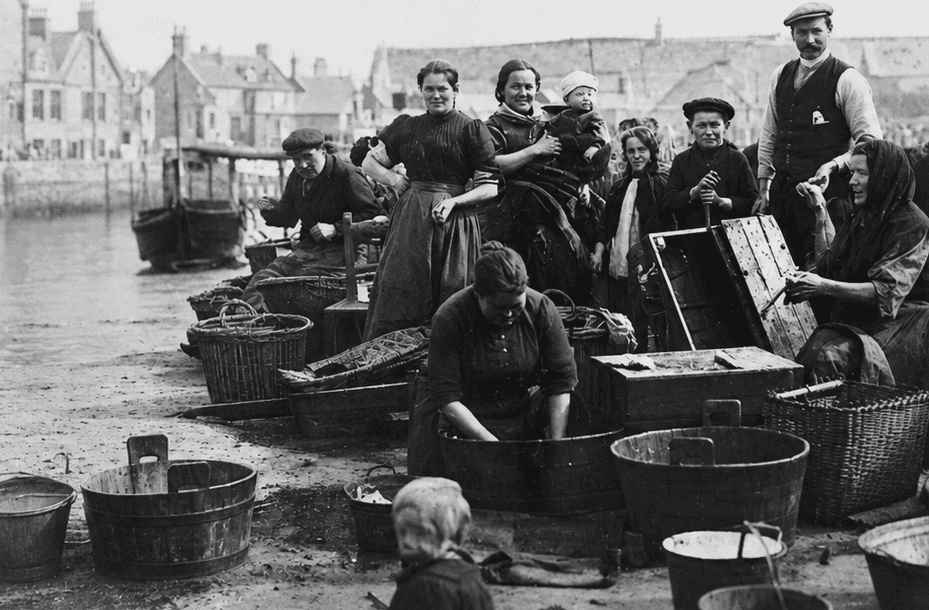
A VERITABLE treasure trove of old photographs and documents showing life at Cruden Bay earlier this century has recently been uncovered. Hundreds of photographs, newspaper cuttings, postcards, post office records and old letters provide a unique glimpse into the history of the coastal hamlet.
Perched on the edge of the Buchan coast, Cruden Bay is probably best known for Slains Castle, reckoned to be the inspiration for Bram Stoker’s Dracula.
As recently as 1962, elderly locals could remember the red-bearded Irishman striding along the clifftops or sitting for hours on a rock “like some great sea bird” with a note book on his knee.
Bram Stoker published Dracula two years after first visiting Cruden Bay. He and his wife and young son were constantly drawn back until two years before his death in 1912.
If Cruden Bay’s jagged coastline has been an inspiration for authors it has also been a graveyard for many a poor mariner and proud ship.
Between 1875 and 1912, at least 25 were wrecked on its lethal rocks. In January, 1912, two ships were lost in the space of two days.
On the 17th, the Aberdeen steamer Frederick Snowden went down with all hands.
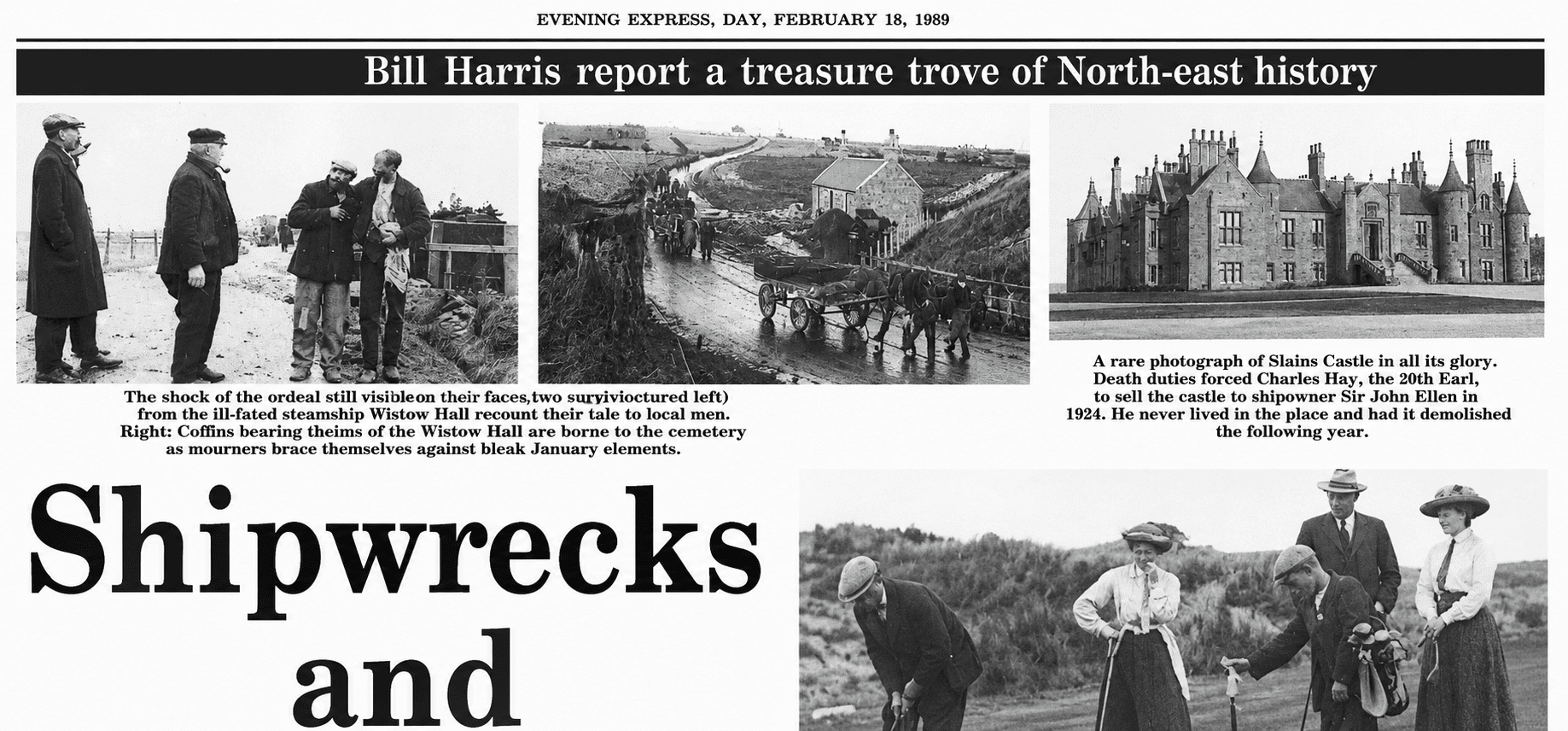
The following night, it was the turn of the Liverpool steamship Wistow Hall to feel the fatal caress of the Tempion Rock.
After drifting powerless for 36 hours with her funnel and bridge washed away, she was driven relentlessly on by a storm to be skewered then bludgeoned on the Tempion.
Only four of the 58 men on board were rescued. Among them was the Wistow Hall’s injured master. He owed his life to the strong arms and stout heart of William Tate, coxwain of the Cruden Bay lifeboat, who plucked him from the foaming sea.
The bay had a fairer face too. The Great North of Scotland Railway was opened in 1896, heralding “the era of the millionaires”.
The Cruden Bay Hotel followed in 1899 and with the opening of the golf course around the same time, Cruden Bay became a bracing golfing mecca for visitors with a few bob to spend.
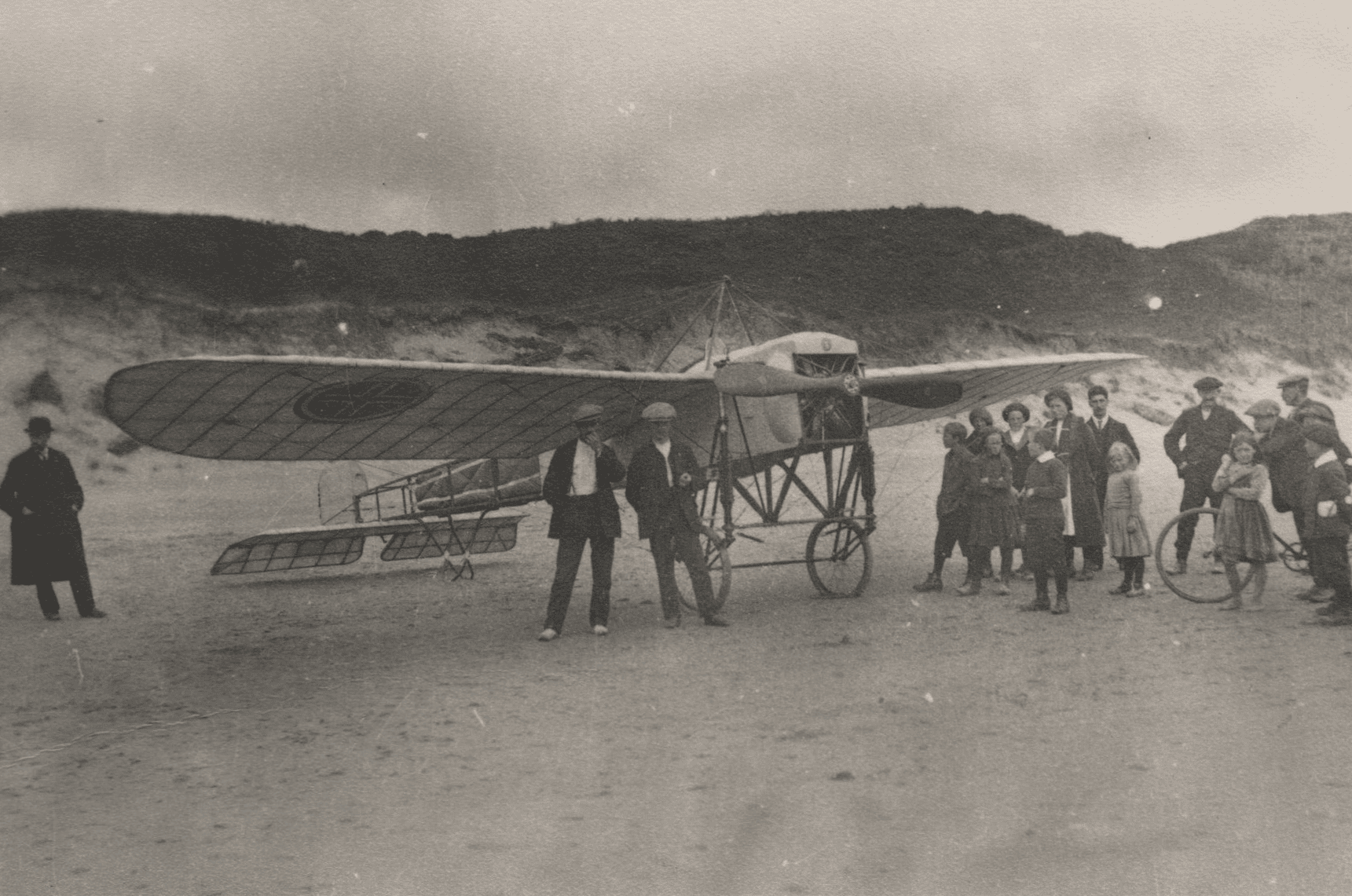
Aviation history was made there, too. The intrepid Norwegian explorer-airman Lt Trygve Gran left from Cruden Bay beach on July 30, 1914, to fly to Stavanger and become the first airman to fly the North Sea.
The 26-year-old Norwegian took off after two friends had travelled to Fraserburgh to buy 55 gallons of petrol and a compass!
Flying Circus lands at Erroll School Cruden Bay
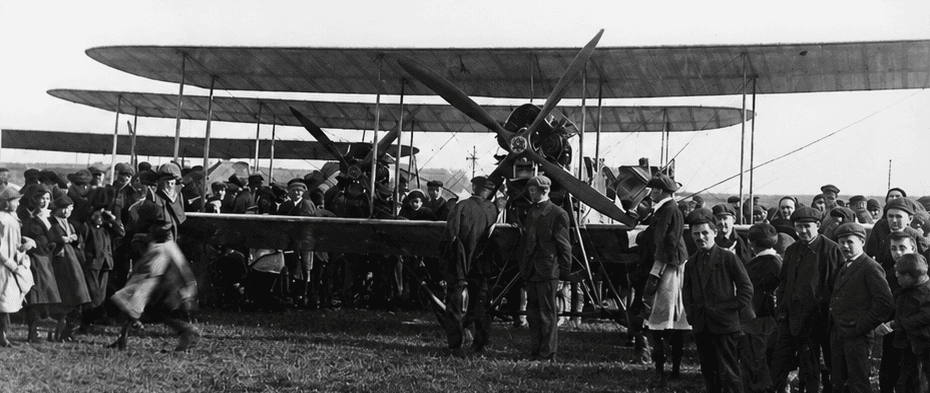
The historic Original Erroll School, built in 1834 by the Earl and Countess of Erroll, was situated on a stretch of land midway between the village and Saint James’s Episcopal Church. With its surrounding open pastures, it would have provided the perfect makeshift airfield for an itinerant “flying circus” touring Scotland in the early 1920s.
The photograph captures the thrilling moment when a touring fleet of three war-surplus Avro 504K bi-planes touched down in the school’s vicinity. These aircraft, unmistakable with their central “toothpick” landing skids positioned between the wheels, had recently been purchased by demobilized military pilots and converted into three-seaters for public use.
The deafening roar of the rotary engines and the heavy smell of lubricating oil would have been a massive spectacle for the rural community, drawing an excited crowd of villagers and farmers out to the meadow. As seen in the image, locals in flat caps and children in winter coats swarmed the machines, eagerly crowding the fabric-and-wood marvels.
The pilots were touring the country offering “joyrides” or “flips” to the general public to make a living after the war. For a fee typically ranging from 5 shillings for a standard flight up to a guinea (or 30 shillings for a full program of stunts), the brave residents of Cruden Bay were offered the chance to experience the magic of flight for the very first time, creating a bustling, carnival-like atmosphere right outside the old schoolhouse.
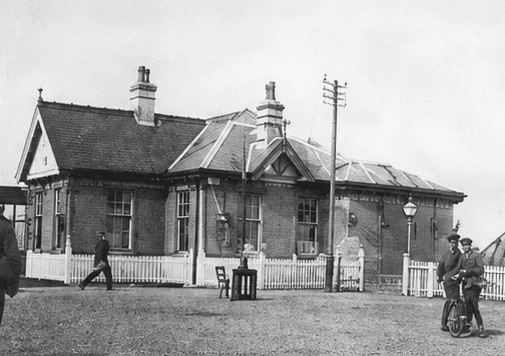
While Cruden Bay’s railway station blazed in April, 1931, two of the watching locals turn their curiosity towards the camera.