
Storytelling
Storytelling
Welcome to the Cruden Bay Life Storytelling page, a dedicated space where local voices, memories, and folklore come alive. Over time, we have accumulated a rich variety of tales—some created by ourselves, and many generously contributed by others.
Our aim has always been simple: to be the Storyteller rather than the historian. Others delve into history far more impressively than we ever could, and we are deeply grateful for their ongoing support and the material they share, allowing us to pass these narratives on to you.
The links below highlight just a small selection of the fantastic stories we have curated. To explore the full collection of stories across the website, simply head over to our main navigation bar menu. We hope you enjoy reading them, and if they inspire you to share a story of your own, please do not hesitate to get in touch.
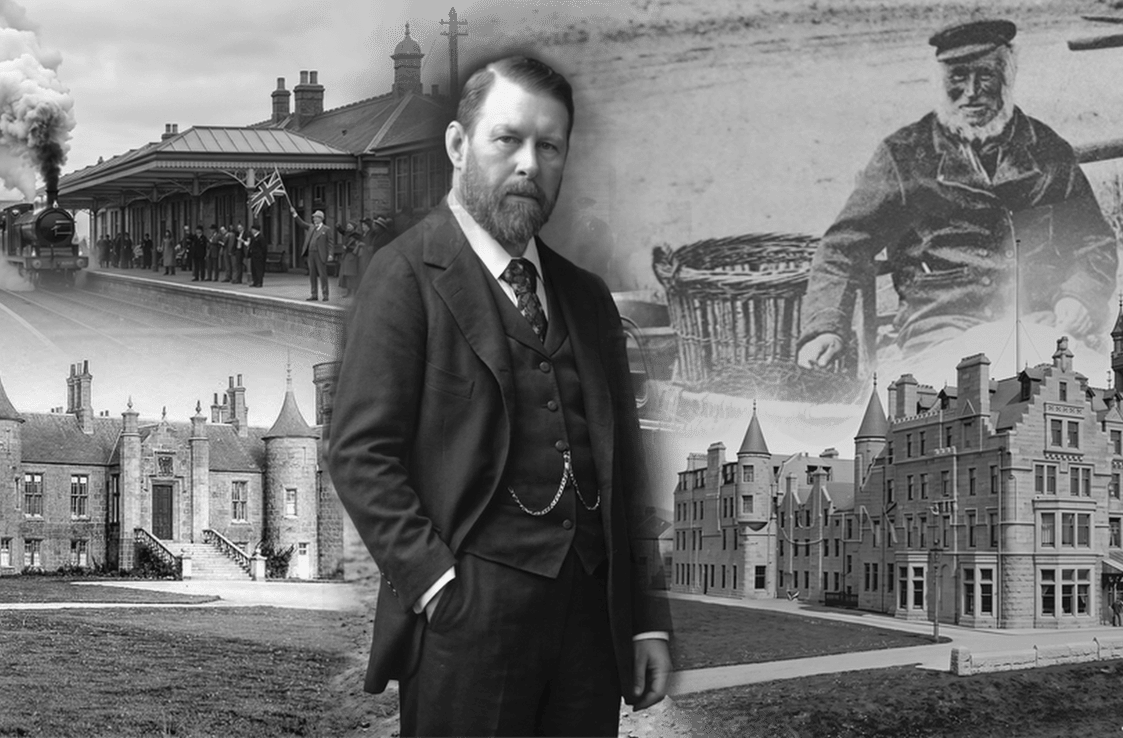
Bram Stoker & Cruden Bay: The Scottish Roots of Dracula
Long before Dracula became a defining masterpiece of Gothic horror, author Bram Stoker found vital creative sanctuary on the windswept Aberdeenshire coast. Beginning in the 1890s, Stoker fell in love with the rugged coastal beauty of Cruden Bay, escaping the bustling London theatre scene to holiday regularly at the Kilmarnock Arms Hotel—where his signature remains preserved in the historic guestbook.
The village’s dramatic atmosphere left an indelible imprint on Stoker’s imagination. Perched atop the rocky cliffs overlooking the churning North Sea, the imposing ruins of Slains Castle provided the direct physical and atmospheric blueprint for Count Dracula’s foreboding Transylvanian fortress, notably inspiring the castle’s isolated cliffside setting and distinct octagonal hall. Beyond drafting key chapters of Dracula during his Scottish stays, Stoker also drew upon local folklore, coves, and village life to set his 1902 adventure novel, The Mystery of the Sea, entirely in Cruden Bay.
Today, this quiet coastal village celebrates its profound link to world literature. From family heritage visits and commemorative plaques to original storytelling and atmospheric musical compositions like Shadow Over Slains, explore how Cruden Bay’s windswept shores shaped the eerie mystery of the world’s most famous vampire legend.

Cruden Bay Golf Course and Club
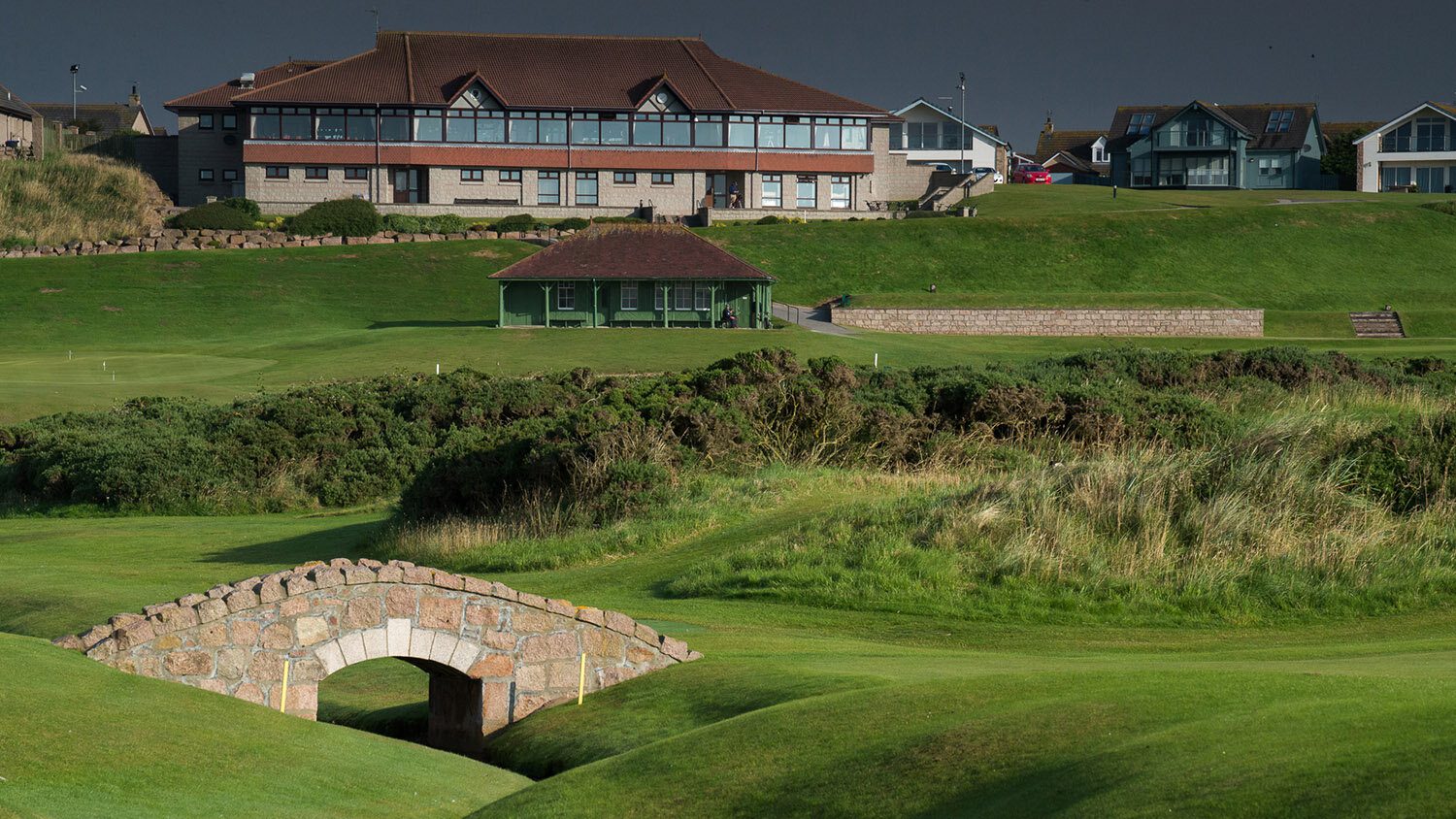
Set against the rugged, dramatic coastline of north-east Scotland, Cruden Bay Golf Club is a world-renowned links gem steeped in rich heritage and natural beauty. Originally commissioned in 1899 by the Great North of Scotland Railway Company to attract tourism to Aberdeenshire, the course was first laid out by legendary golfing figures Old Tom Morris and Archie Simpson. Conceived as an integral part of an ambitious luxury resort vision alongside the grand Cruden Bay Hotel, the layout was subsequently refined in the 1920s by celebrated architect Tom Simpson, creating the exhilarating and timeless routing that delights international golfers today.
Consistently ranked among the top 100 golf courses in the world, this 18-hole championship masterpiece is celebrated for its authentic links character, towering sand dunes, thrilling blind shots, and breathtaking panoramic vistas across the North Sea. Strategic, unforgettable holes like the iconic “Whins” and “Mickle Folds” showcase the dramatic natural terrain and test players of all skill levels. For those seeking a shorter round, the 9-hole St Olaf Course offers a delightful alternative across the same undulating coastal landscape. Combined with a welcoming modern clubhouse, exceptional hospitality, scenic dining overlooking the dunes, and a fully stocked Pro Shop team, Cruden Bay promises far more than just a game — it offers an unforgettable journey into the very soul of Scottish golf.
Cruden Bay Railway Hotel
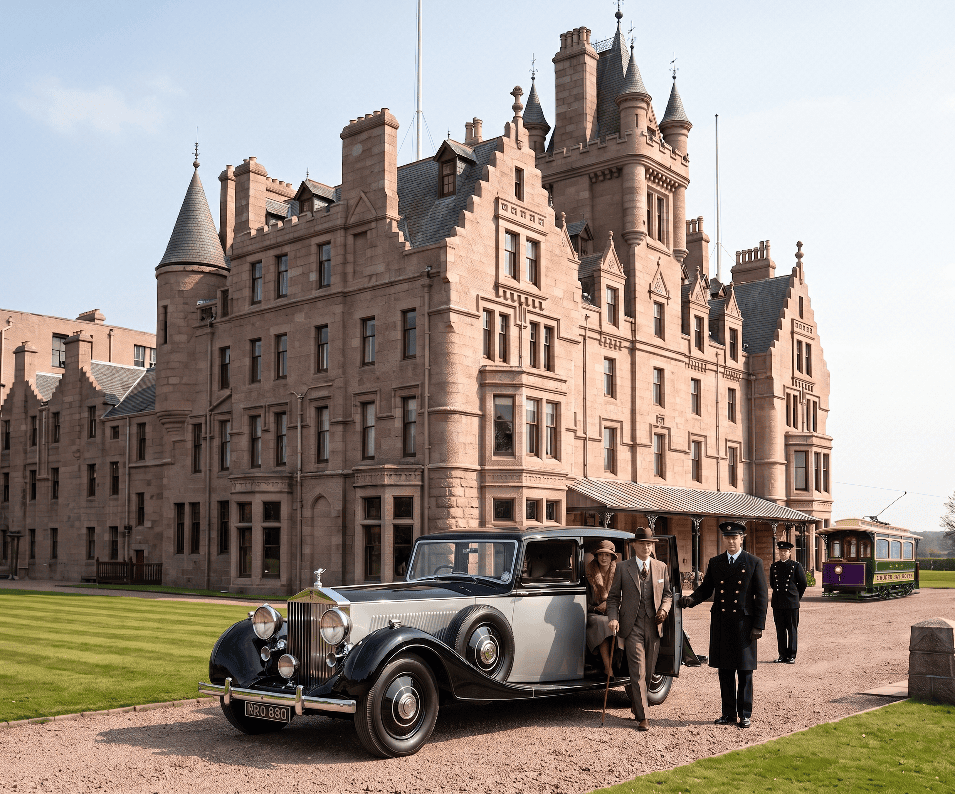
Perched on the rugged Aberdeenshire coast, the story of the Cruden Bay Railway Hotel is a captivating tale of grand Victorian ambition, supreme luxury, and eventual loss. Conceived in the late 19th century by the Great North of Scotland Railway as the “Brighton of Aberdeenshire,” this magnificent 55-bedroom palace of pink Peterhead granite opened in 1899. Featuring early electric lighting, hydraulic lifts, a championship links golf course co-designed by Old Tom Morris, and one of the most northerly electric tramways in the British Isles, the resort attracted high-profile figures, including Prime Minister Winston Churchill and author Bram Stoker, who drew local inspiration for Dracula.
Yet the lavish dream struggled against its remote location, high running costs, and short tourist seasons. Passenger trains ceased in 1932, and following wartime military requisition and severe neglect, the once-opulent pink granite hotel was stripped of assets and completely demolished by 1952.
Remarkably, the vision did not vanish entirely. In July 1950, Aberdeen stockbroker Quintin Murray struck a dramatic 2:00 AM handshake deal at a local pub, buying the course for £2,750 and saving it from being turned into sheep farming land. Today, the resort’s grand legacy proudly survives through a world-ranked championship links course and a meticulously restored tramcar at the Grampian Transport Museum. Explore the full, fascinating history of this lost haven.
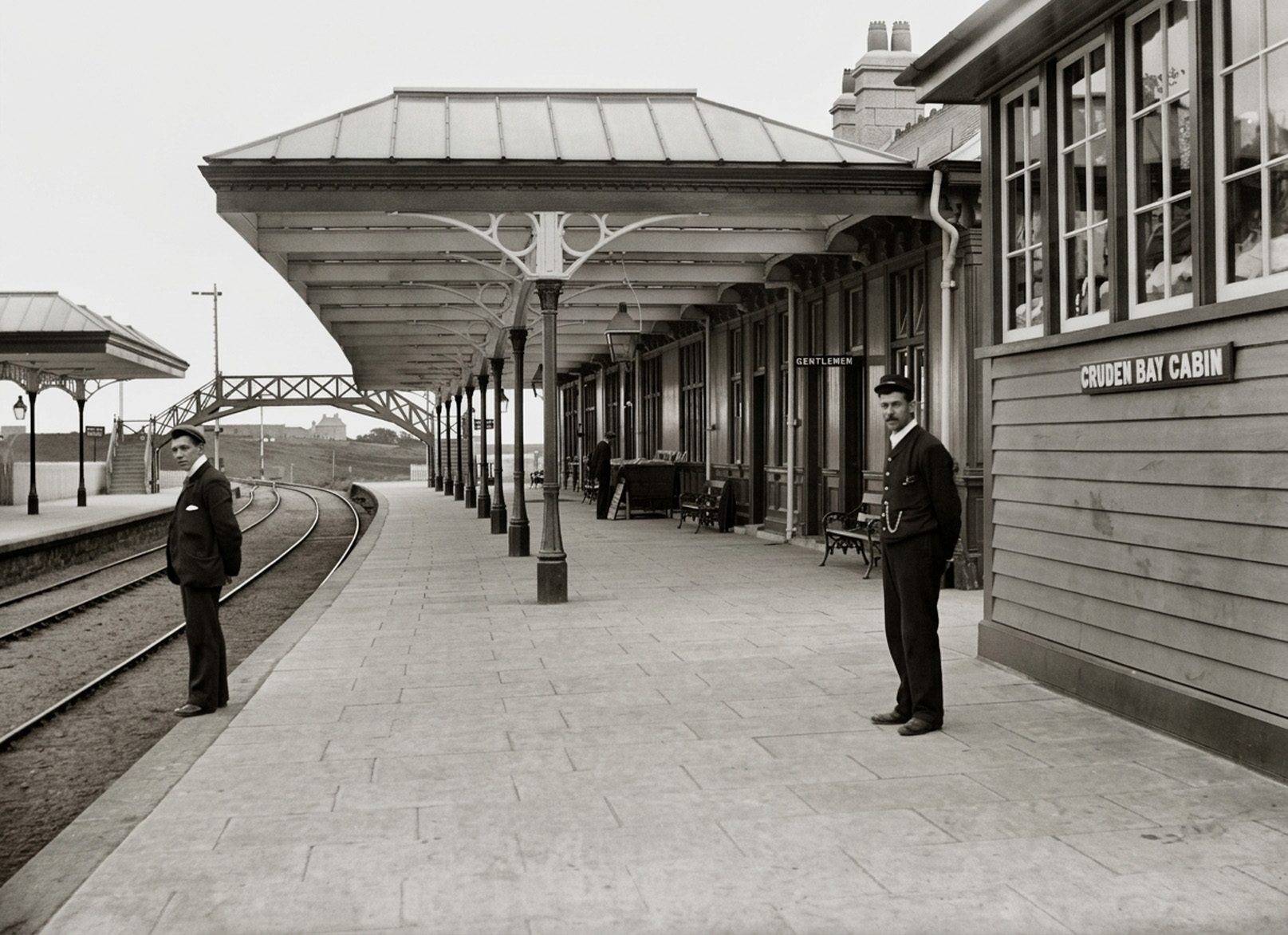
Cruden Bay Railway Station
Opened on August 2, 1897, by the Great North of Scotland Railway, Cruden Bay Railway Station was conceived to transform a quiet coastal fishing village into the luxurious “Brighton of the North.” The station quickly became a glamorous gateway for high society, avid golfers, and prominent political figures—including Winston Churchill and British Prime Ministers H. H. Asquith and David Lloyd George. From 1899, arriving passengers enjoyed seamless transit directly to the opulent 55-room Cruden Bay Hotel aboard a pioneering electric tramway, celebrated as the most northerly tram service in the United Kingdom.
However, the rise of private motor travel, coupled with steep operating costs along the Boddam branch line, soon threatened its survival. In April 1931, a devastating fire destroyed the station buildings and canopy, accelerating its decline. Regular passenger services ceased in October 1932, prompting the London and North Eastern Railway to transport remaining hotel guests from Aberdeen by Rolls-Royce.
During World War II, the hotel was requisitioned, the tram rails were scrapped for the war effort, and the line permanently closed to freight in 1945 before tracks were lifted in 1950. Today, while surviving platforms and a water tower base stand as monuments to this golden age, passionate modern campaigns are actively fighting to restore railway connections across the Buchan coast.
The Dardanelles
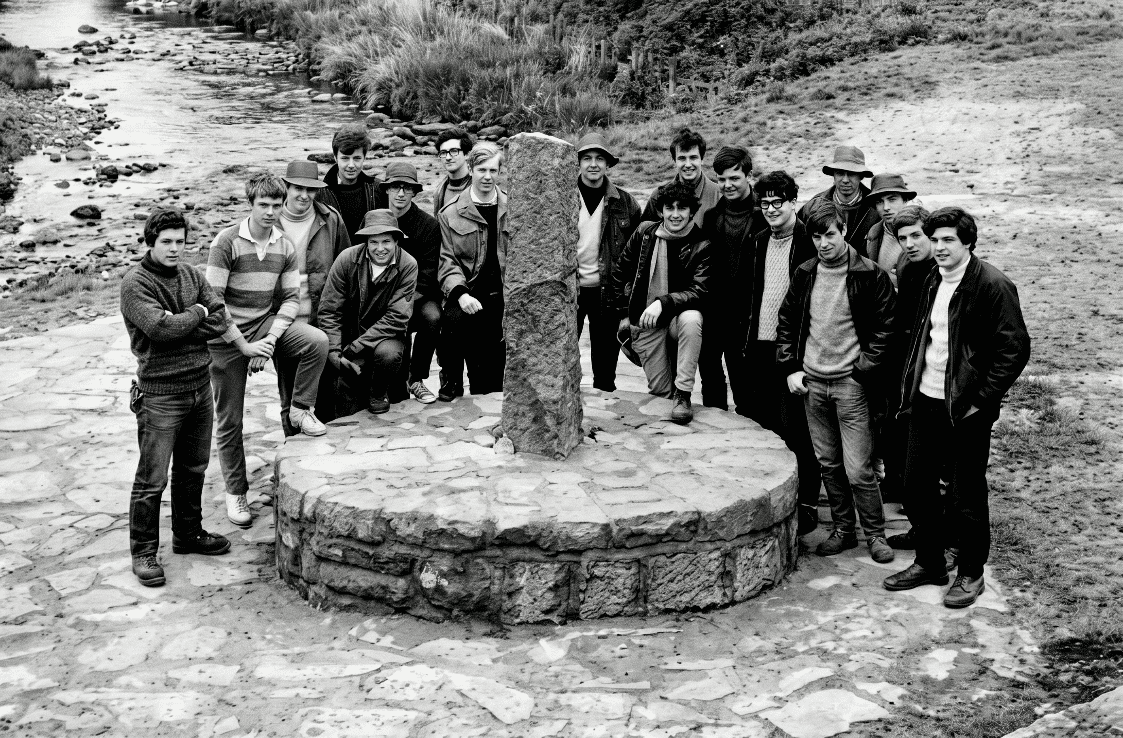
Nestled at the picturesque junction of Main Street and Harbour Street, The Dardanelles is one of Cruden Bay’s most enchanting and storied riverside corners. Today, visitors gather on its peaceful benches overlooking the Water of Cruden and the championship golf links, but beneath its tranquil setting lies a rich tapestry of history, aviation pioneering, and enduring heritage.
The area owes its memorable name to the First World War. Local soldiers returning from the Gallipoli Peninsula saw a distinct physical resemblance between this narrow, winding stretch of flowing water and the strategic Turkish strait where they fought. Naming the spot “The Dardanelles” served as a lasting, symbolic tribute to their fallen comrades and the hardships endured far from home. This legacy of resilience adds to the area’s deep history of conflict, which stretches back to the ancient Battle of Cruden in 1012 across the water.
Beyond wartime remembrance, the spot is home to the Tryggve Gran memorial. Here, in July 1914, the daring Norwegian aviator took off in his Blériot monoplane, Ca Flotte, to achieve the first successful flight across the North Sea to Norway. Explore the full story to uncover the remarkable events, wartime echoes, and fascinating history that shaped this unique Scottish riverside haven.

The Black Rain Of Slains
In the early 1860s, a baffling meteorological phenomenon cast an eerie shadow over the rugged coastal parish of Slains in Aberdeenshire. On multiple occasions between 1862 and 1866, daytime turned unnervingly into darkness as brooding, ink-black clouds gathered over the North Sea, unleashing torrential downpours of jet-black rain. The mysterious deluge stained laundry, tainted water supplies, and left local villagers bewildered by the bizarre dark precipitation that coated the cliffs and surrounding countryside.
Adding to the deep enigma, vast deposits of lightweight pumice-like material and strange slag washed ashore along the Buchan coastline following the showers. The parish minister, the Reverend James Rust, became captivated by the extraordinary occurrences. Taking on the role of detective and scientist, Rust meticulously documented each storm, gathered rainwater samples, consulted prominent chemists and experts, and authored detailed treatises to record what had happened. He proposed that volcanic ash from distant eruptions like Mount Vesuvius caused the blackened skies, while others blamed industrial soot.
Yet, no conventional explanation ever fully accounted for the isolated showers or the sheer volume of coastal debris. Later highlighted by anomalous researcher Charles Fort in The Book of the Damned, the Black Rain of Slains endures today as one of north-east Scotland’s most fascinating and enduring unsolved weather legends—a haunting, forgotten episode when the heavens above Aberdeenshire literally rained black.
The Forgotten River
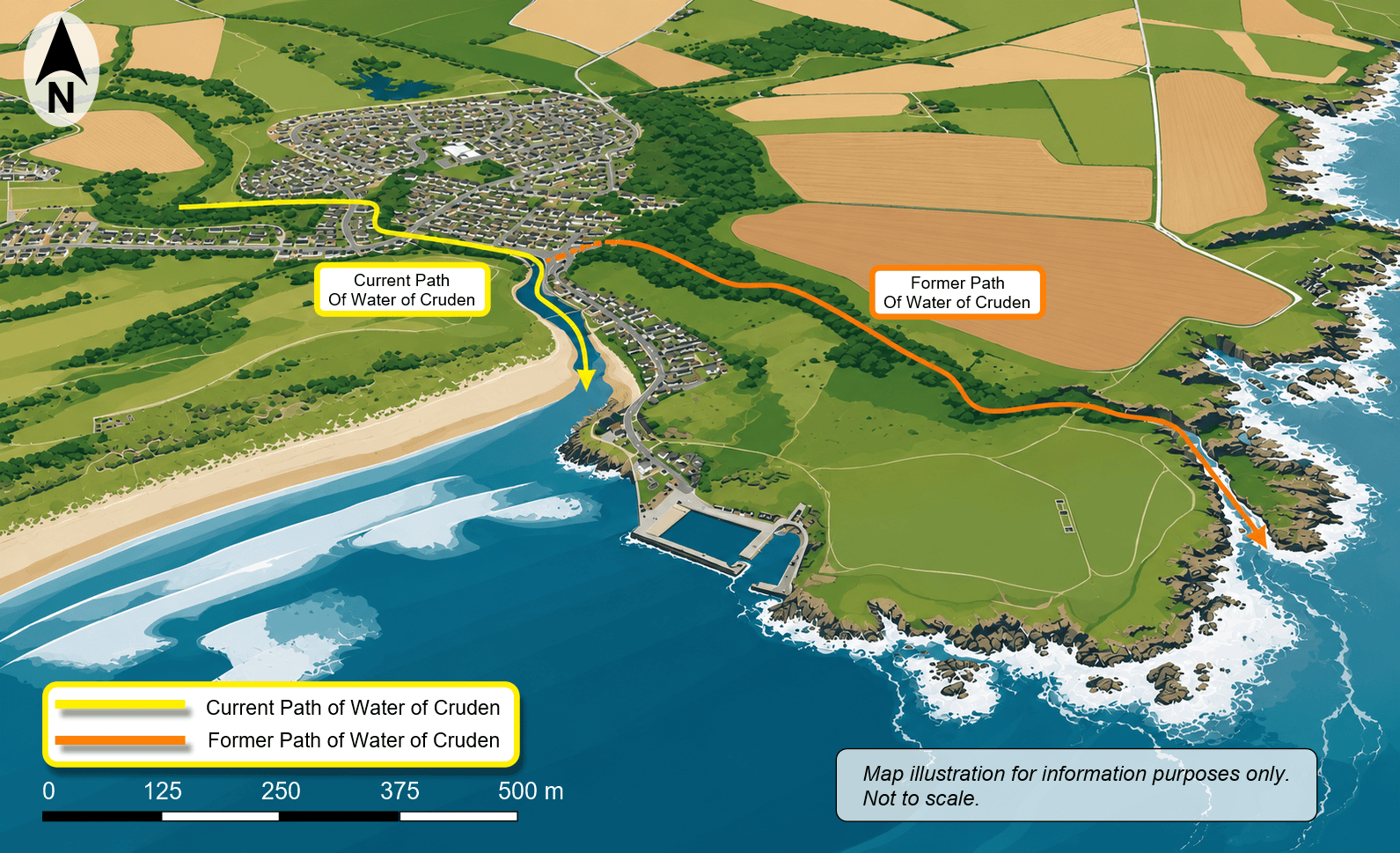
Today, the Water of Cruden flows peacefully beneath the Ladies Bridge beside Port Erroll Harbour before reaching the sea. To most visitors, this route feels timeless—yet the surrounding landscape preserves the intriguing memory of a very different journey.
A short walk along the coastal path toward Slains Castle reveals Old Water Moo’, where the modest Back Burn winds through a surprisingly broad valley and deep rocky gorge. The terrain is far too grand for such a gentle stream, hinting at an abandoned channel. Historic cartography—from William Roy’s 1750s Military Survey to maps by Robertson (1822) and Thomson (1832)—confirms that the Water of Cruden originally discharged into the sea here, well to the north of its familiar position.
Sometime between 1832 and the 1870s, the river was deliberately diverted. Victorian Ordnance Survey surveyors recorded firsthand testimony from local residents who still remembered the old mouth. Why undertake such an immense engineering feat? In the mid-19th century, Port Erroll was rapidly developing into a thriving fishing hub plagued by shifting sands. Harnessing the river’s freshwater flow offered an ingenious natural solution to scour the harbour mouth clear for fishing boats.
Though human ingenuity redirected its waters over a century ago, the land itself has never forgotten where the river once ran.
Port Erroll Harbour
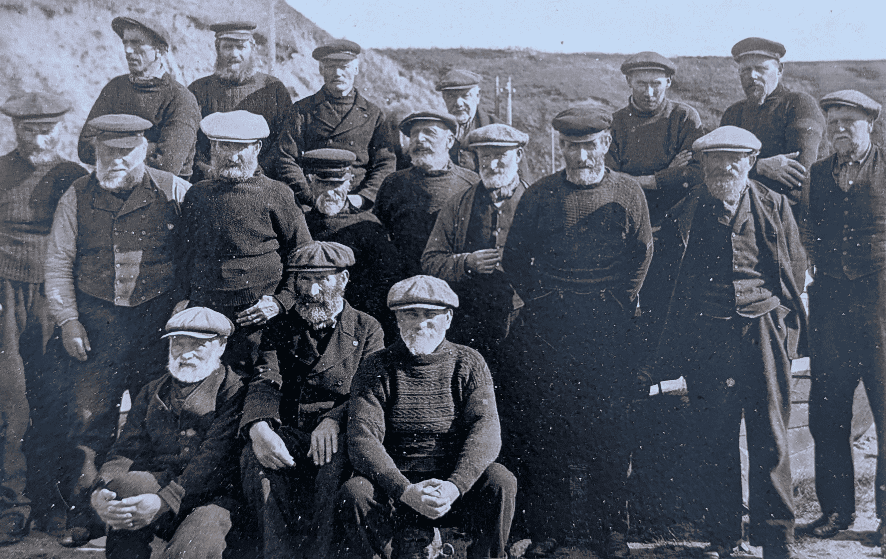
Tucked along Aberdeenshire’s rugged coastline, Port Erroll Harbour is a cherished cornerstone of Cruden Bay’s rich maritime heritage. Originally built as a tidal haven for a booming 19th-century herring fleet, the harbour served for generations as the industrious lifeblood of the coastal village. As fishing vessels modernized into deeper steam drifters, commercial fleets gradually relocated to larger ports, prompting the area to reinvent its identity. The arrival of the Great North of Scotland Railway in 1897 ushered in a golden era of luxury tourism, headlined by the opulent Cruden Bay Hotel, a grand electric tramway, and world-class championship golf links.
Today, this historic harbour thrives as a vibrant, community-led haven managed entirely by the non-profit Port Erroll Harbour Cruden Bay Trust. Dedicated volunteers, local donations, and essential grant awards protect its traditional stone quays against the relentless power of the North Sea, completing critical structural repairs while upgrading public amenities. Alongside traditional working vessels, the harbour warmly welcomes leisure sailors, wild swimmers, and campervan visitors, hosting spirited community celebrations such as the annual Harbour Gala. Immortalized through moving archive footage and original compositions like Farewell to Port Erroll, the harbour stands as an enduring emblem of local pride, resilience, and coastal charm.
Learn more about our history, community initiatives, and the rich multimedia content on our dedicated
Cruden Bay Brickworks
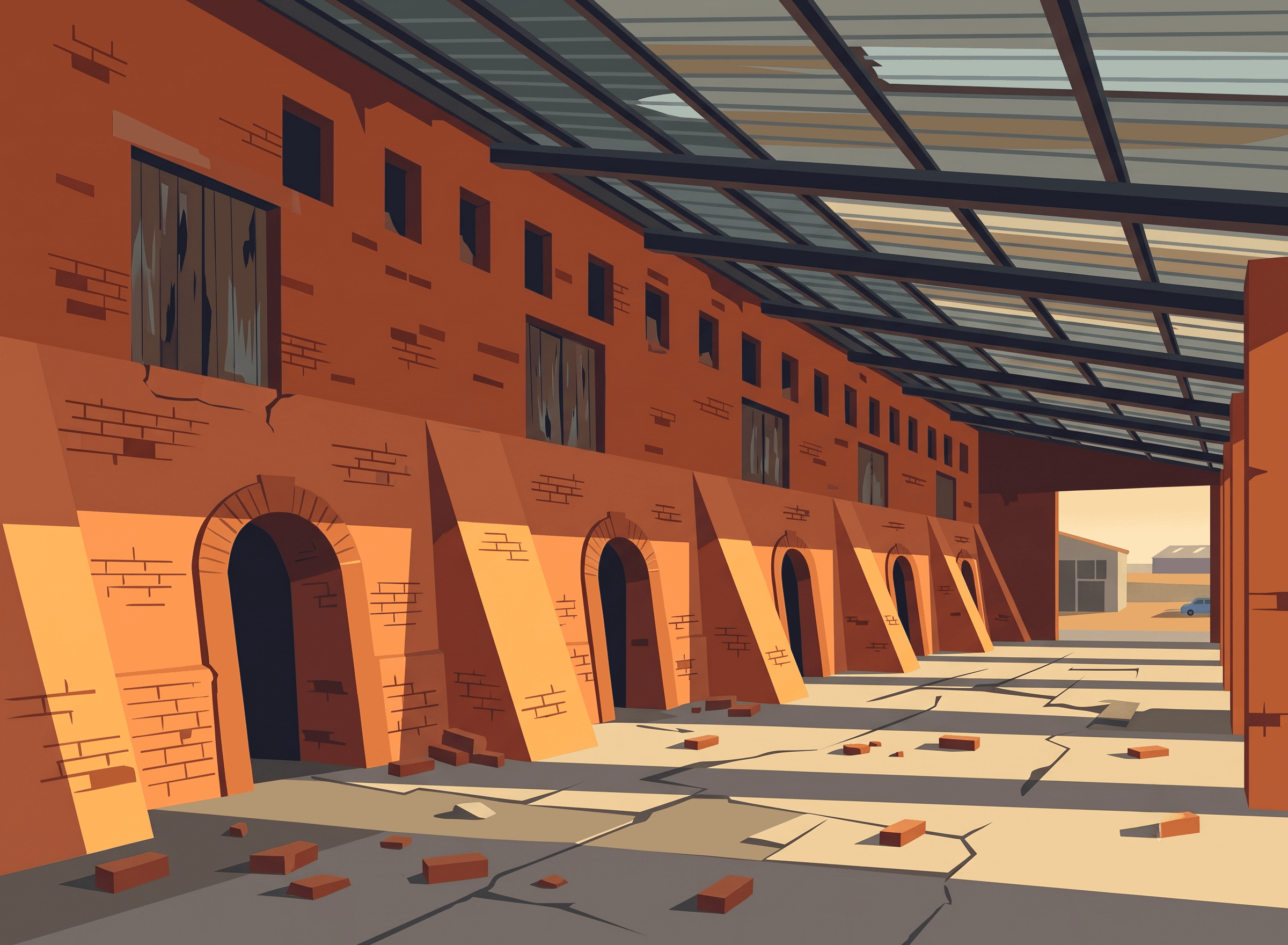
Today a peaceful natural habitat crossed by informal walking paths, the Cruden Bay Brick & Tile Works was once a vibrant cornerstone of local industry. Operating from 1902 until 1990, it was the third brickmaking enterprise in the coastal village—succeeding an 1879 venture which was abandoned due to drifting sand and an 1882 operation near the site of the modern St. Olaf Hotel.
Capitalising on the abundant, clay-rich quarries of Port Erroll, the works played a vital and enduring role in sustaining northeast Scotland’s rural economy. Although building bricks were made on site, its primary output consisted of field drain tiles—laying the crucial subterranean drainage systems that supported surrounding farms and infrastructure. Equipped with a large Hoffmann continuous kiln, the works manufactured thousands of bricks and tiles daily, establishing itself as one of the area’s most prominent employers.
Beyond industrial output, the brickworks fundamentally shaped village life. Many dedicated workmen spent their entire working careers here, while employees and their families lived in company cottages known as the ‘Bricker Houses,’ forging a close-knit community where home and work intertwined for generations.
Follow the link below to explore the fuller story, featuring fascinating restored archival photographs, historic newspaper clippings, detailed maps charting the evolution of all three sites, and the enduring, firsthand memories of those who powered Cruden Bay’s industrial heritage.
Port Erroll Past Times
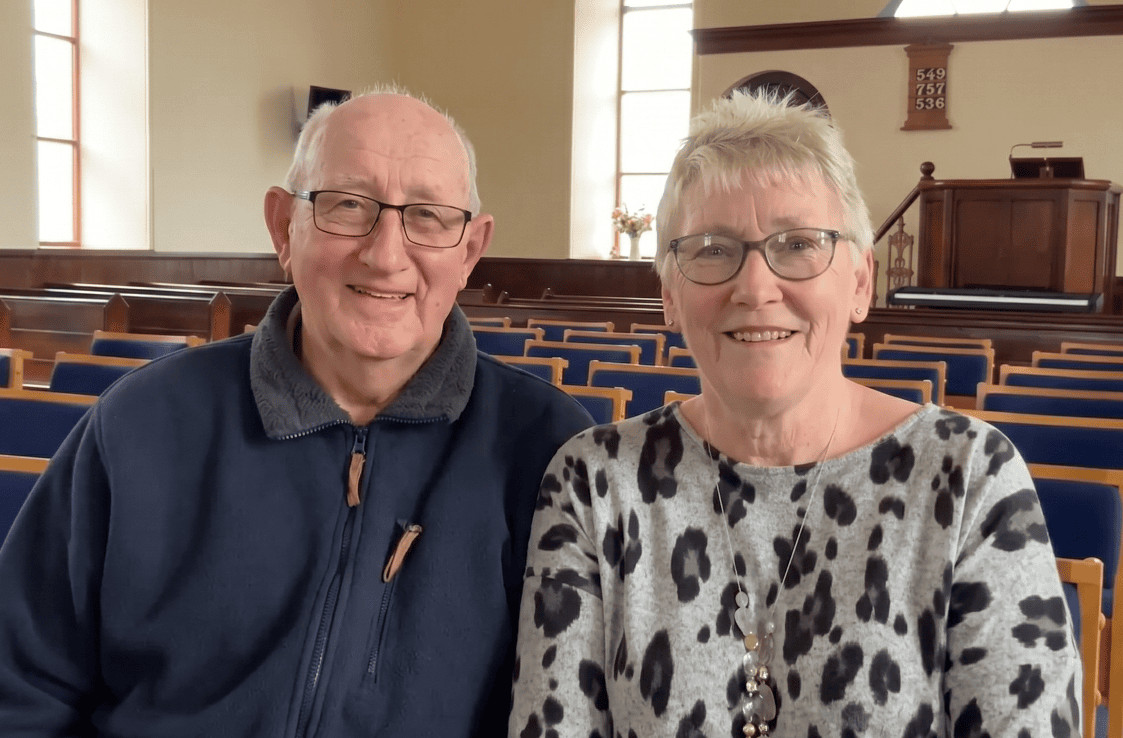
By Ann and Gordon Findlay
Step back into the rich social heritage of Scottish coastal life through Port Erroll Past Times, a captivating collection of village memories lovingly compiled by lifelong residents Ann and Gordon Findlay. Having spent their entire lives deeply woven into the local community, their shared reflections offer an authentic, heartfelt window into the trials, triumphs, and everyday character of old Port Erroll and Cruden Bay across decades of change.
Explore unforgettable stories and snapshots from the village’s vibrant history, ranging from dramatic maritime rescues to colourful daily traditions and working life. Discover the harrowing account of the 1914 Hilda Carnegie disaster—where a sudden collision in dense fog shattered fifty years of peace on the waters, inspiring an astonishing act of bravery through a steamer’s hawsepipe. Alongside legendary shipwreck tales like the Wistow Hall, meet a memorable cast of local characters, from pipe-smoking fishermen debating tides in wooden harbour sheds to quirky village personalities, bustling trade at the historic brickworks, traditional cobblers, bakeries, and the steadfast church community.
Brought vividly to life with video interviews recorded by Doric Future and featuring the complete, unabridged archive to read online in its entirety, this collection stands as an enduring tribute to North East coastal heritage. Follow the link below to fully explore the full stories, personal recollections, and the authentic, resilient spirit of Port Erroll.
Slains Castle
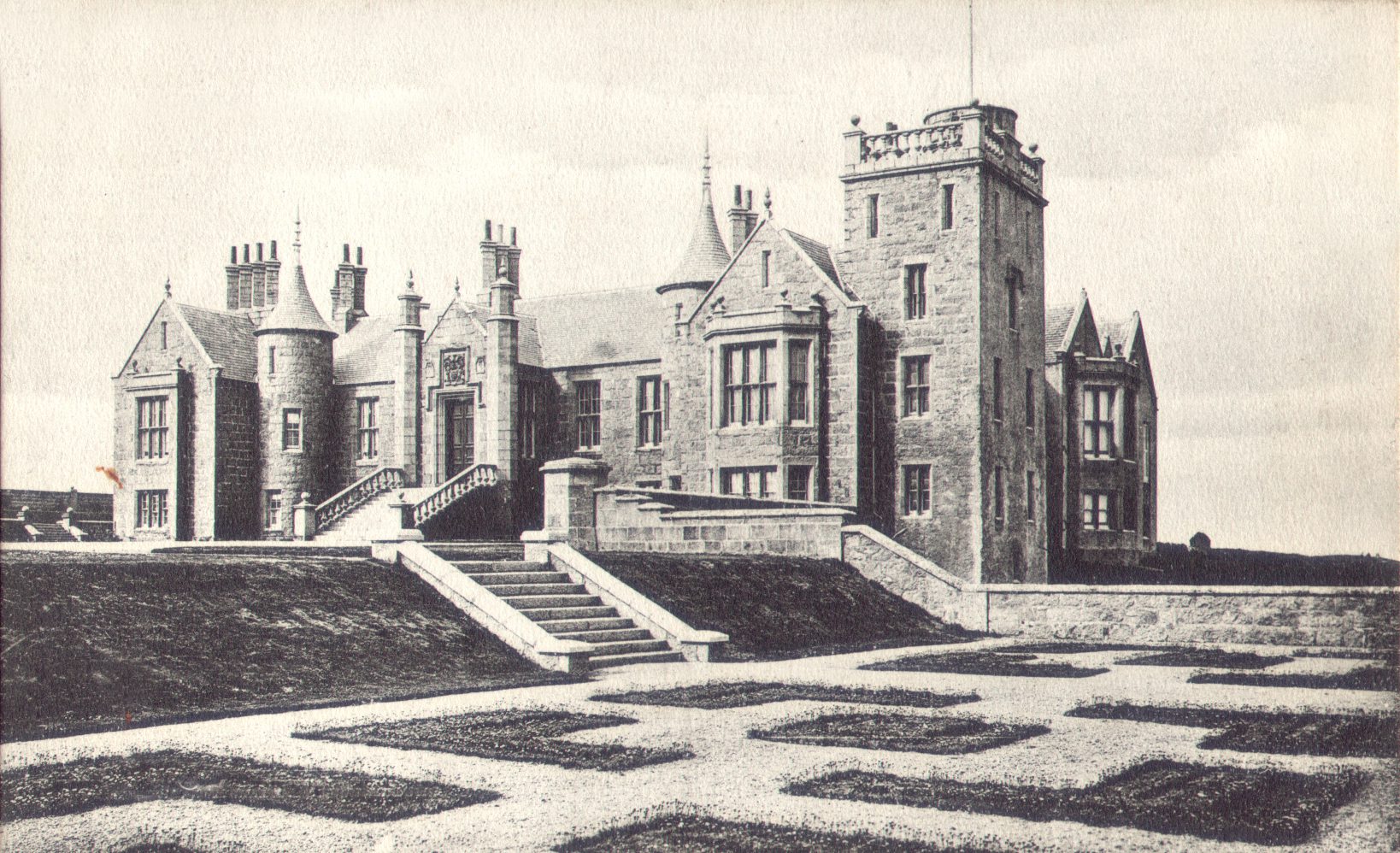
Perched dramatically atop the windswept coastal cliffs of Aberdeenshire, Slains Castle stands as one of Scotland’s most evocative ruins. Established in the late sixteenth century by Francis Hay, the 9th Earl of Erroll, following the destruction of Old Slains, the fortress was transformed during the 1830s into a grand Scots Baronial mansion faced with pink granite. For centuries, it served as a bustling stronghold of aristocratic power, high society, and Jacobite intrigue, welcoming distinguished historical guests such as Dr. Samuel Johnson and James Boswell.
Beyond its noble heritage, Slains Castle holds a celebrated place in world literature. While holidaying in nearby Cruden Bay throughout the 1890s, Irish author Bram Stoker drew profound inspiration from the castle’s sheer cliff drops and distinctive octagonal hall, adopting them as the architectural blueprint for Count Dracula’s Transylvanian fortress.
Mounting debts and heavy inheritance taxes eventually forced the Hay family to sell their ancestral seat in 1916. By 1925, the roof and valuable interior fittings were dismantled to avoid taxation, leaving the monumental shell exposed to the fierce North Sea elements.
Today, its roofless silhouette continues to captivate the imagination of visitors, artists, and storytellers from all around the world. Discover the complete history—spanning dark clan tales, the notorious Happy Valley murder, fascinating original music, and aerial drone footage—on our dedicated

St. Olaf’s Well
Tucked quietly beside the 17th fairway of Cruden Bay Golf Course, St Olaf’s Well is a tranquil, stone-lined spring steeped in over a thousand years of Scottish history, folklore, and faith. For centuries, this sacred natural spring was revered for its miraculous healing properties. Local tradition held that its waters shielded the faithful from pestilence and disease, a lore immortalised in the traditional rhyme: “St Olave’s well, low by the sea, / Where pest nor plague shall ever be.”
Yet its origins run far deeper than coastal folk belief. The well is intrinsically tied to the Battle of Crochdane in 1012, where King Malcolm II’s Scots clashed with invading Danish Vikings—a brutal encounter believed to have given Cruden Bay its name (Croch Dain, meaning “slaughter of the Danes”). Following the battle, a chapel and well were dedicated to St Olaf, patron saint of Norway, serving as enduring symbols of reconciliation, ritual cleansing, hope, and peace.
Today, this historic well forms a remarkable juxtaposition between ancient spiritual worship and world-renowned championship golf. Far from a forgotten relic, it remains a cherished touchstone of local coastal village identity, celebrated during millennium services with open-air worship and ceremonial Viking longship burnings. St Olaf’s Well stands as a poignant crossroads of myth, memory, and coastal landscape, bridging ten centuries of resilience and sacred heritage.
Cruden Bay Memories
The Cruden Bay Memories archive brings the rich history and living heritage of the village to life through an engaging collaboration between Crudenbay.life and the dedicated local Facebook group. Serving as a vibrant community hub for nostalgia and discovery, the collection preserves a wonderful treasure trove of historic photographs, personal recollections, vintage adverts, and well-researched local stories that celebrate the area’s unique coastal character.
Visitors can delve into fascinating glimpses of bygone eras, from the architectural grandeur and fate of Slains Castle—including royal visits from Princess Beatrice—to the golden age of golf travel featuring the Cruden Bay Hotel, its unique electric tramway, and the railway’s luxury Rolls-Royce shuttle. The archive also explores dramatic maritime heritage, documenting perilous shipwrecks along the Scaurs, visits from Winston Churchill’s Admiralty yacht HMS Enchantress, and evocative dialect poetry like James Ogston’s Lilts Frae Cruden Bay. Beyond famous milestones, it warmly captures everyday village life, recording post-war prefabs on Castle Road, sporting prize-givings, and cherished Sunday school picnics.
More than just a static historical record, the platform invites local residents, distant descendants, and history enthusiasts alike to actively participate—helping identify forgotten faces in vintage photographs, solving local mysteries, and contributing their own family lore. Discover the full collection of stories, historic imagery, and engaging community discussions on the


Cruden Bay 2000 | Doric TV
Cruden Bay 2000 is a captivating Millennium time capsule created by local filmmaker Jill MacWilliam, offering a heartfelt and vivid snapshot of village life at the dawn of the twenty-first century. Filmed throughout the year 2000, this community archive documents the cherished traditions, landscapes, and familiar faces that defined the era—from bustling scenes at Port Erroll Harbour Day and the Cruden Bay Gala Day to everyday life across local shops, schools, farms, and sports clubs. Originally selling over 700 copies on VHS to enthusiastic residents, the film stands as an invaluable historical record celebrating the enduring community spirit, shared memories, and heritage of the North East Scottish coast.
Alongside the complete two-part original footage, the feature page showcases a newly composed soundtrack song paired with edited video highlights, beautifully bridging past and present. The momentum and success of this project eventually inspired Jill to establish Doric Future and Doric TV, acclaimed cultural initiatives committed to recording local history and preserving the Doric dialect through digital storytelling, music, and folklore. Now formally integrated into the archives of the Elphinstone Institute at the University of Aberdeen, Jill’s creative work offers a priceless look into village life across the generations.
Explore the complete story, watch both original archival film segments, and experience the commemorative music tribute on our full
The Story So Far…
Cruden Bay is fortunate to have dedicated local historians and authors who have painstakingly documented the village’s rich heritage in remarkable detail. While their comprehensive books and research remain second to none, The Story So Far on CrudenBay.life offers a complementary, accessible approach—bringing the history, landscapes, folklore, and defining moments of our coastal community together in one place.
As we celebrate the vibrant attractions, local groups, and events that make Cruden Bay and Port Erroll special today, the past naturally weaves its way into the narrative. The Story So Far serves as a curated chronological journey and digital archive, charting the key milestones and timeless tales that have shaped our village over the centuries. From the dramatic coastal ruins of Slains Castle and historic shipwrecks to our world-renowned golf links, vintage postcards, and treasured community archives like the Findlay Collection, it captures the living spirit and evolution of the area.
Whether you are looking to explore forgotten local mysteries, delve into personal memories, or understand how centuries of coastal life continue to inspire the community today, this page brings everything together in an engaging, easy-to-browse timeline.