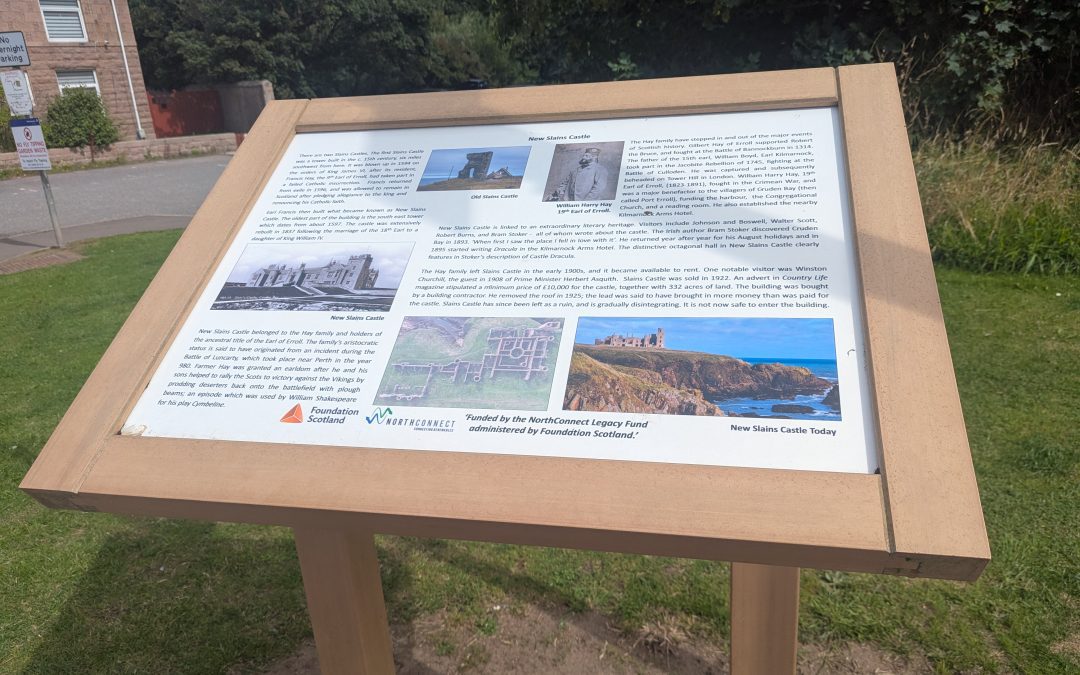
There are two Slains Castles. The first Slains Castle was a tower built in the c. 15th century, six miles southwest from here. It was blown up in 1594 on the orders of King James VI, after its resident, Francis Hay, the 9th Earl of Erroll, had taken part in a failed Catholic insurrection.
Francis returned from exile in 1596, and was allowed to remain in Scotland after pledging allegiance to the king and renouncing his Catholic faith.
Old Slains Castle
The Hay family have stepped in and out of the major events of Scottish history. Gilbert Hay of Erroll supported Robert the Bruce, and fought at the Battle of Bannockburn in 1314. The father of the 15th earl, William Boyd, Earl Kilmarnock, took part in the Jacobite Rebellion of 1745, fighting at the Battle of Culloden. He was captured and subsequently beheaded on Tower Hill in London. William Harry Hay, 19th Earl of Erroll, (1823-1891), fought in the Crimean War, and was a major benefactor to the villagers of Cruden Bay (then called Port Erroll), funding the harbour, the Congregational Church, and a reading room. He also established the nearby Kilmarnock Arms Hotel.
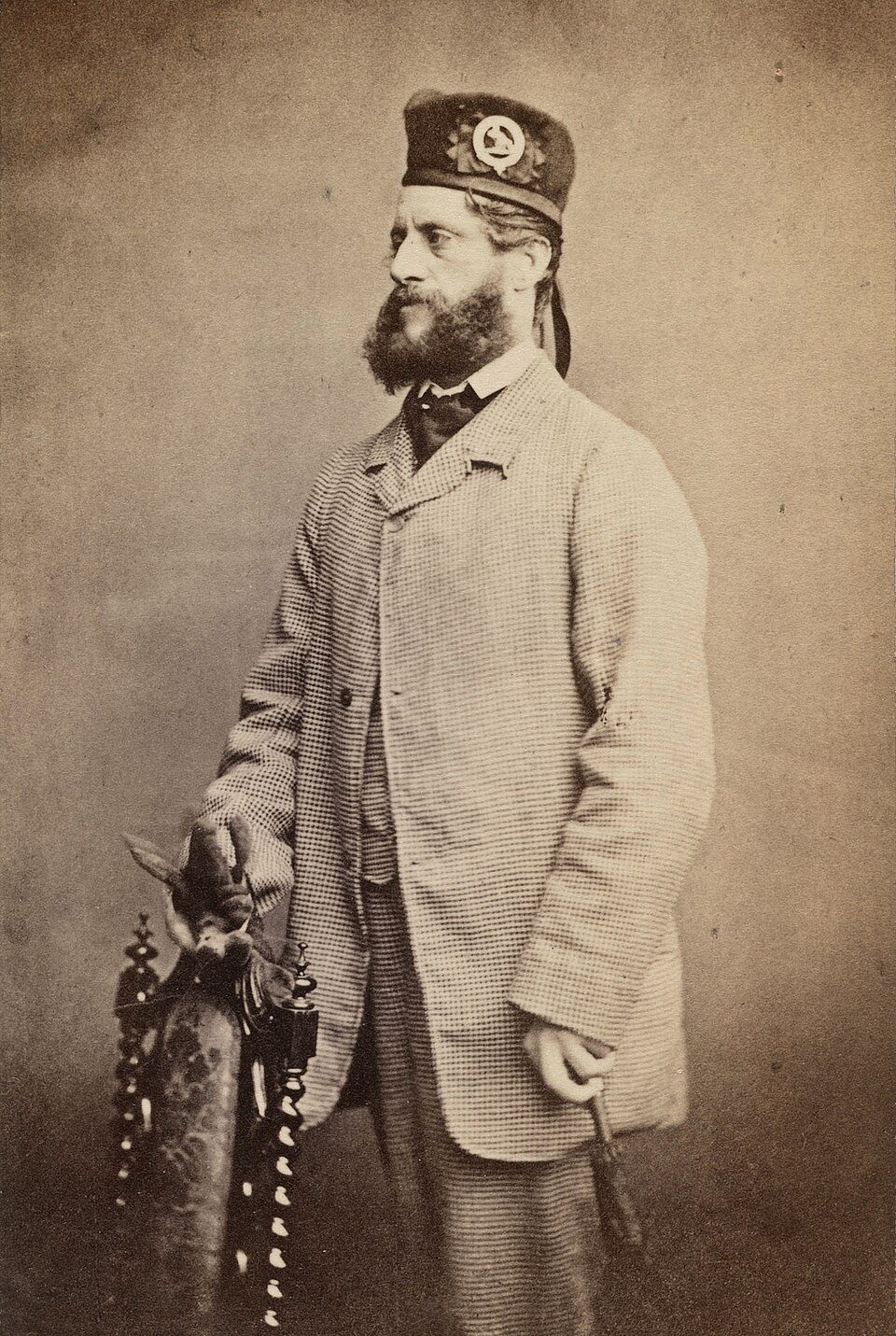
William Harry Hay – 19th Earl of Erroll
Earl Francis then built what became known as New Slains Castle. The oldest part of the building is the south east tower which dates from about 1597. The castle was extensively rebuilt in 1837 following the marriage of the 18th Earl to a daughter of King William IV.
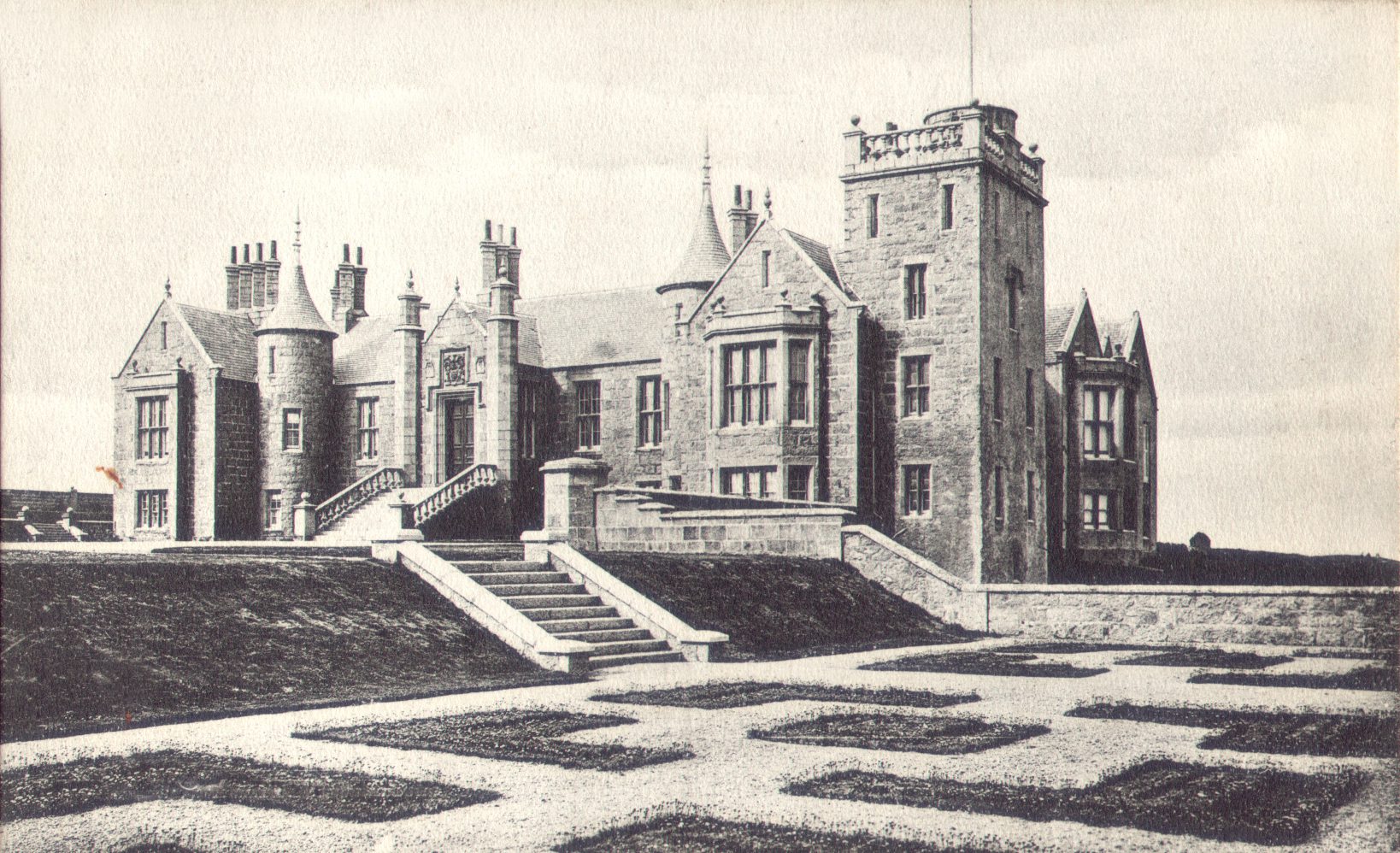
New Slains Castle belonged to the Hay family and holders of the ancestral title of the Earl of Erroll. The family’s aristocratic status is said to have originated from an incident during the Battle of Luncarty, which took place near Perth in the year 980. Farmer Hay was granted an earldom after he and his sons helped to rally the Scots to victory against the Vikings by prodding deserters back onto the battlefield with plough beams; an episode which was used by William Shakespeare for his play Cymbeline.
New Slains Castle is linked to an extraordinary literary heritage. Visitors include Johnson and Boswell, Walter Scott, Robert Burns, and Bram Stoker – all of whom wrote about the castle. The Irish author Bram Stoker discovered Cruden Bay in 1893. ‘When first I saw the place I fell in love with it’. He returned year after year for his August holidays and in 1895 started writing Dracula in the Kilmarnock Arms Hotel. The distinctive octagonal hall in New Slains Castle clearly features in Stoker’s description of Castle Dracula.
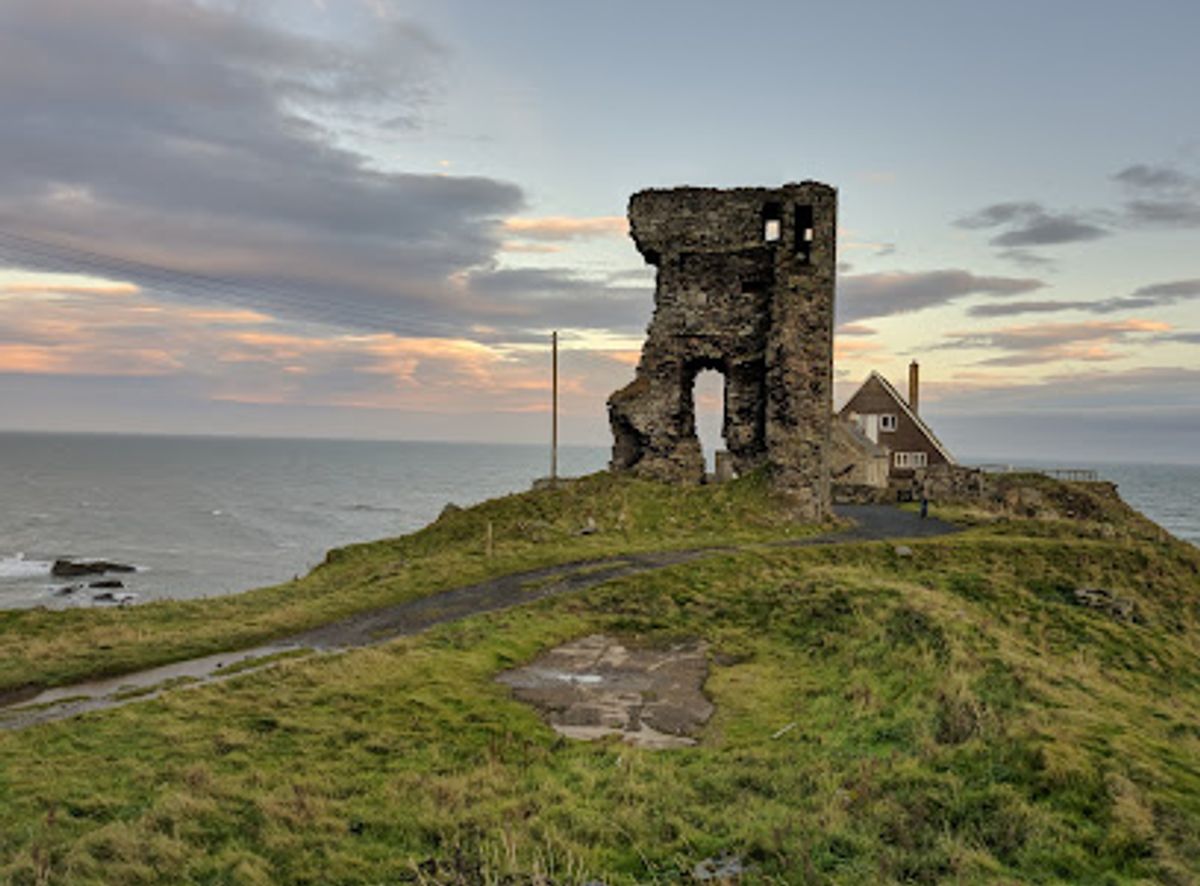
The Hay family left Slains Castle in the early 1900s, and it became available to rent. One notable visitor was Winston Churchill, the guest in 1908 of Prime Minister Herbert Asquith. Slains Castle was sold in 1922. An advert in Country Life magazine stipulated a minimum price of £10,000 for the castle, together with 332 acres of land. The building was bought by a building contractor. He removed the roof in 1925; the lead was said to have brought in more money than was paid for the castle. Slains Castle has since been left as a ruin, and is gradually disintegrating. It is not now safe to enter the building.
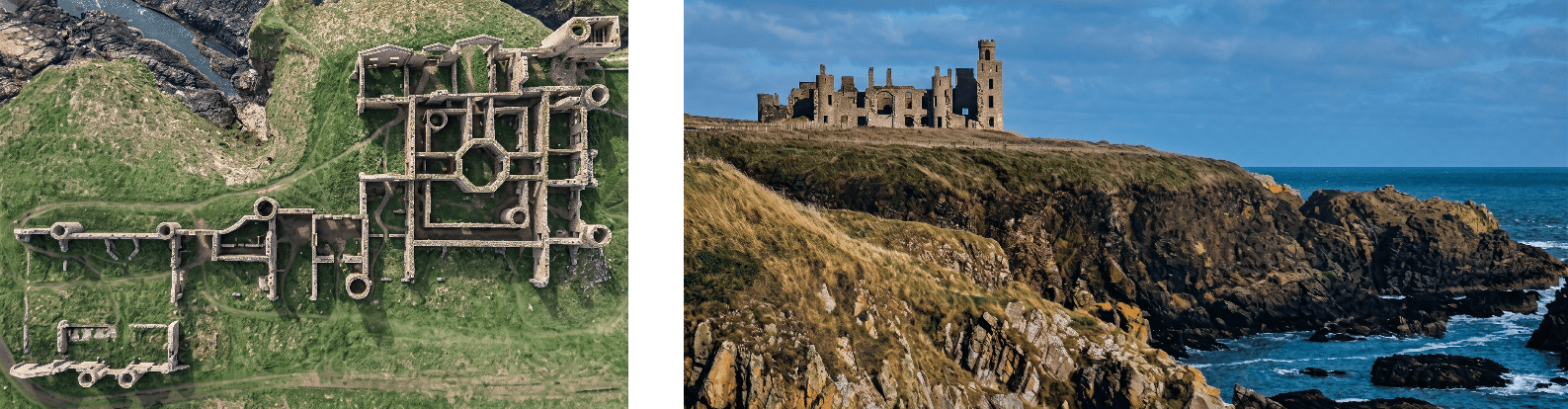
New Slains Castle as it is today