
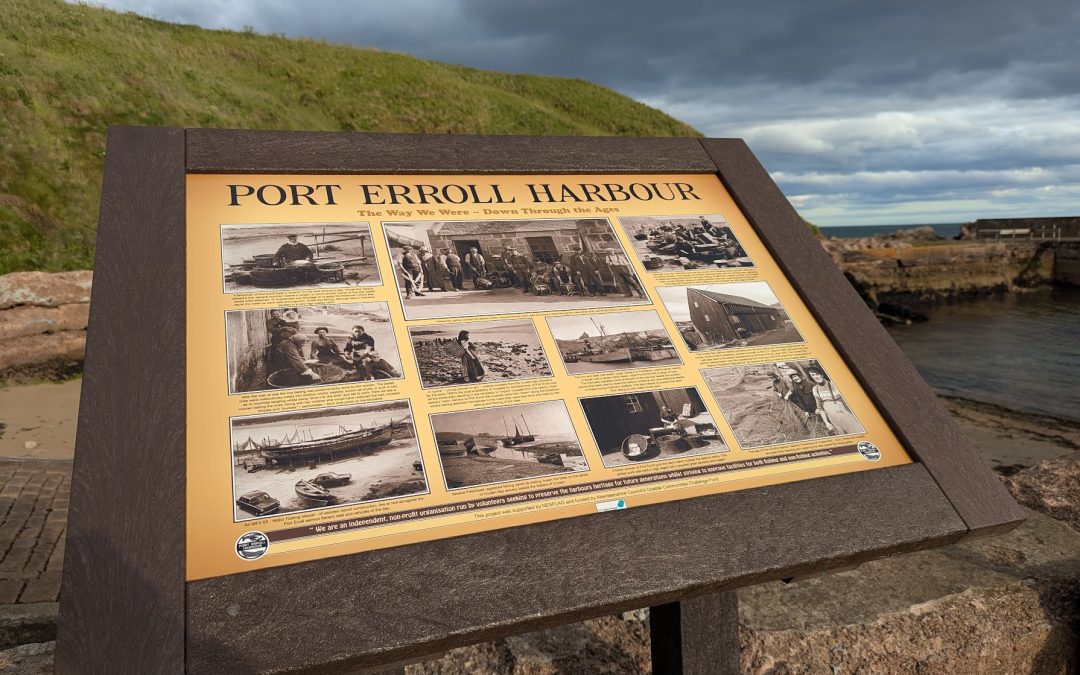
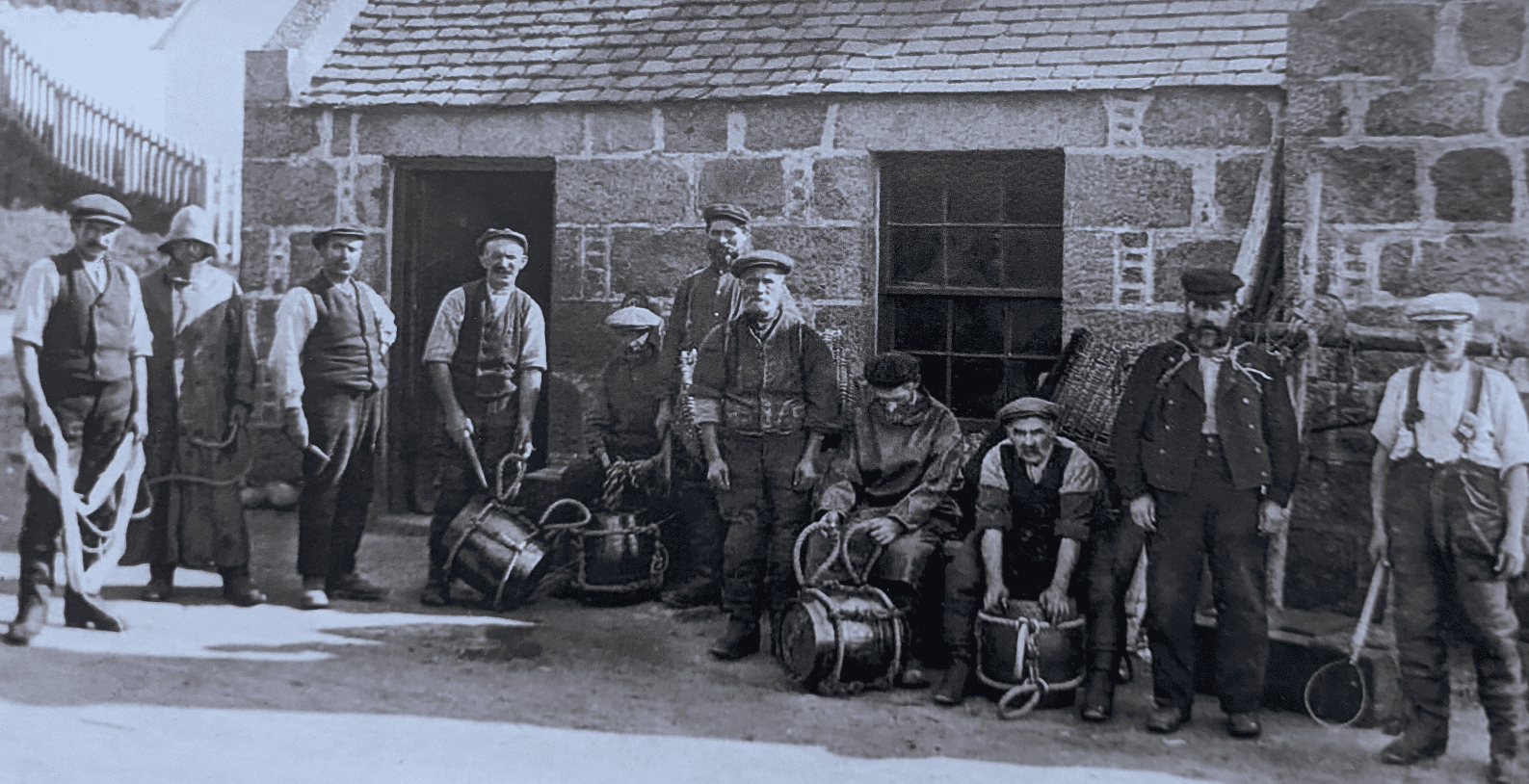
Fishermen gather outside the salmon bothy. Hooped barrels were used as buoys to keep the salmon nets afloat when set at the harbour entrance.
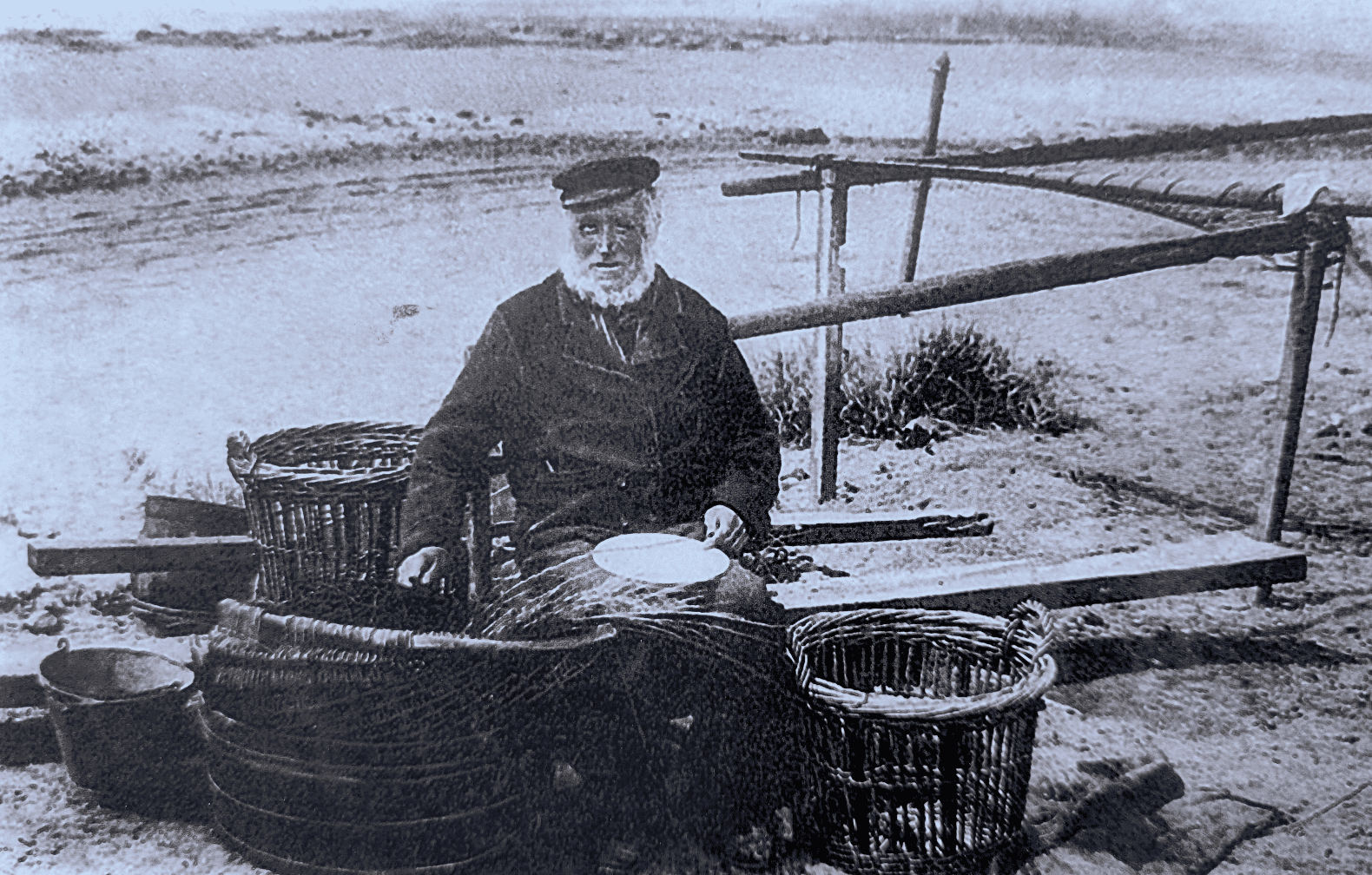
A fisherman of Port Erroll baits a ‘sma lin’ for his next venture to sea. ‘Small line’ fishing utilised a line, several hundred metres in length, to which shorter pieces of line with baited hooks were attached. To supplement any shortage of mussels the fishermen would also dig at low water for sand eels and lugworm. Small line fishing, although labour intensive resulted in a very high quality catch.
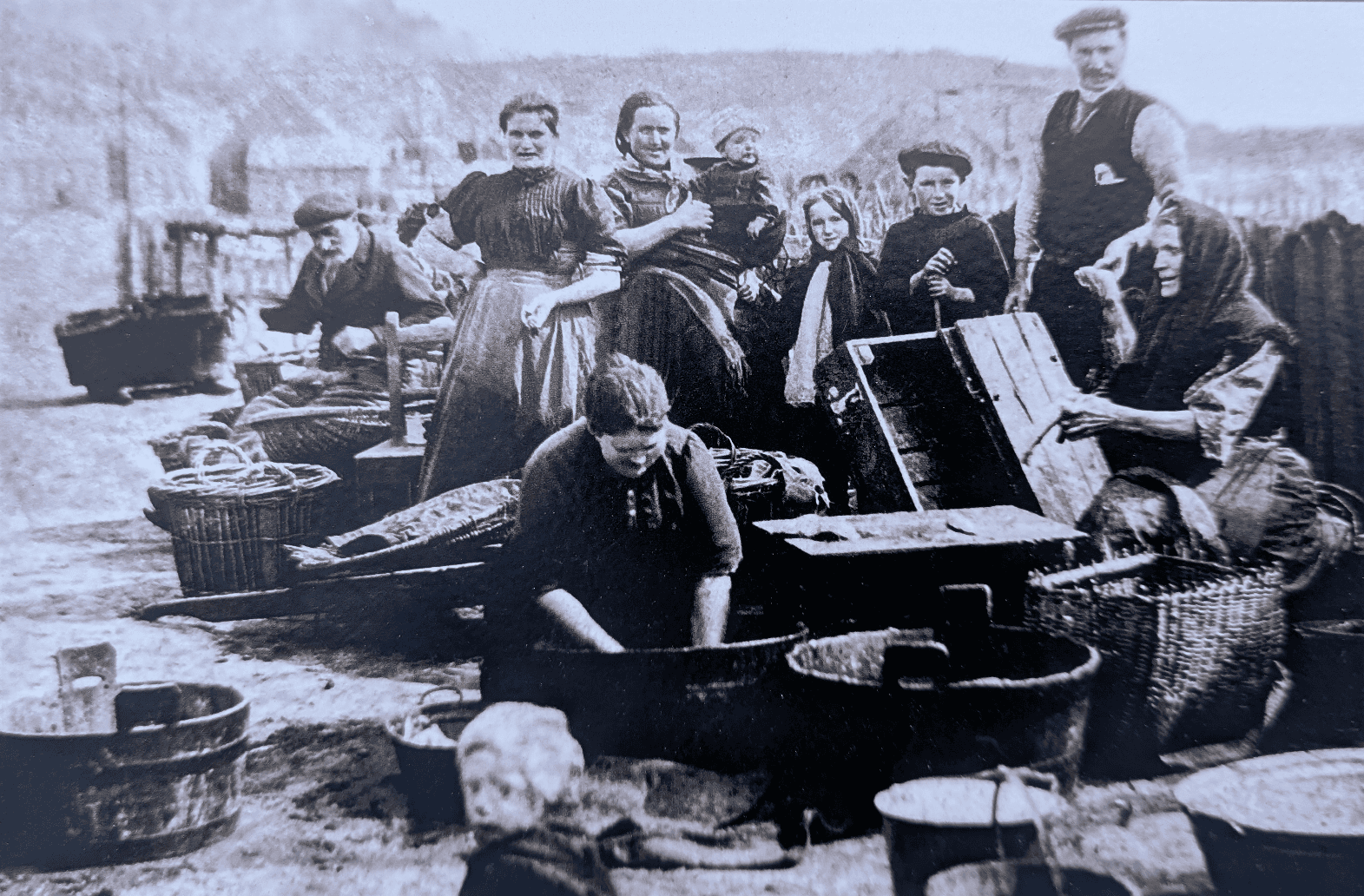
Although only men ventured out to sea the women who remained ashore played a vital role in the fishing industry. They carried out critically important tasks such as mending nets, gathering mussels and baiting lines for the next days fishing. Whether the weather was fair or foul these hardy women thought nothing of walking several miles with creels strapped to their backs brimming with dried fish to sell or barter for such “luxuries” as milk, eggs or butter.
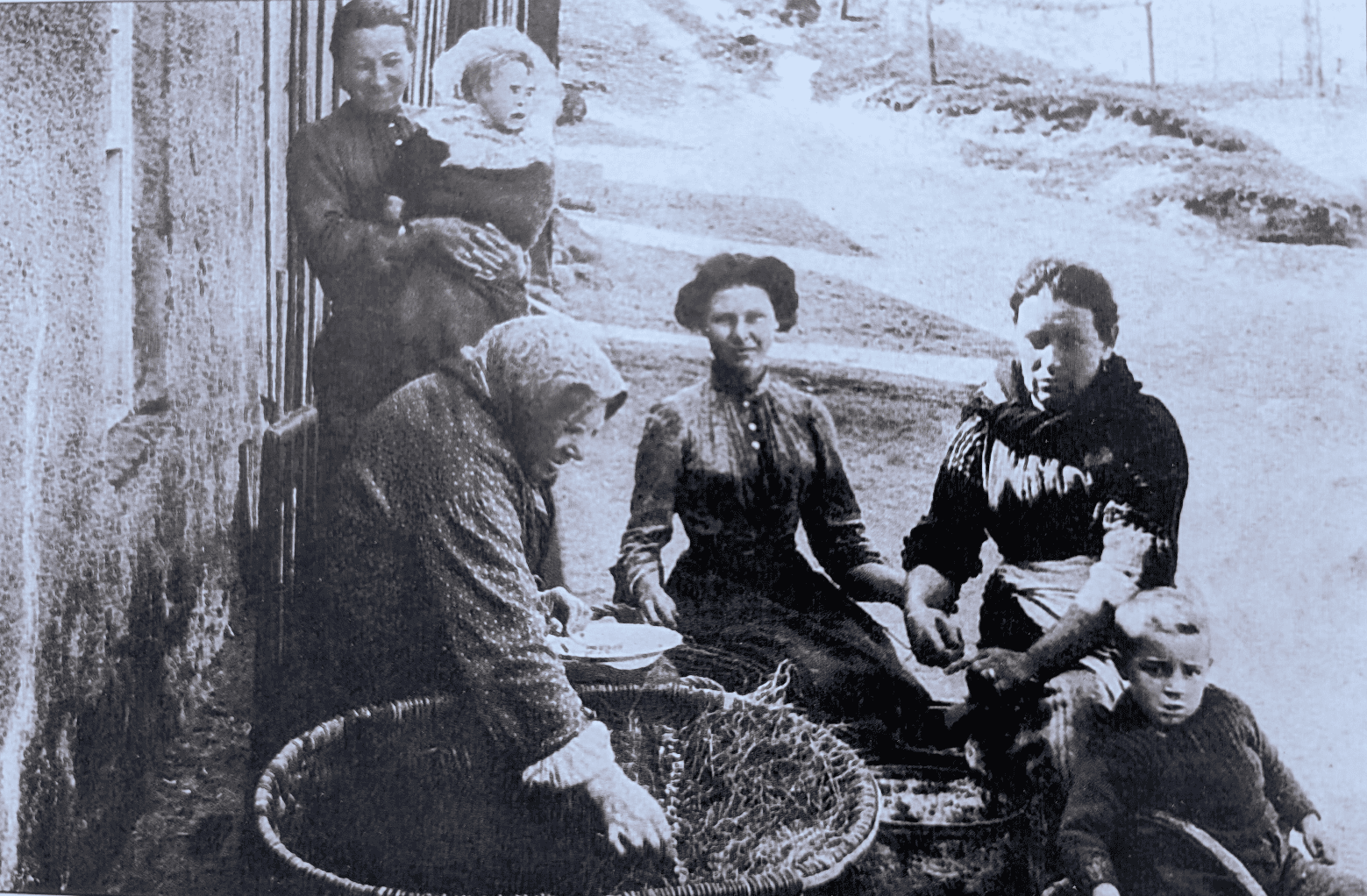
With the men at sea the line baiting was predominantly done by the women. The baited lines were meticulously coiled into shallow wicker baskets, known as sculls, in such a way as to minimise tangling whilst being “shot o’er the side” and set to work. Here we see a woman baiting the lines. Along with her children she would have collected the bait, mussels limpets and “buckies” – periwinkles – from rock pools on the shoreline.
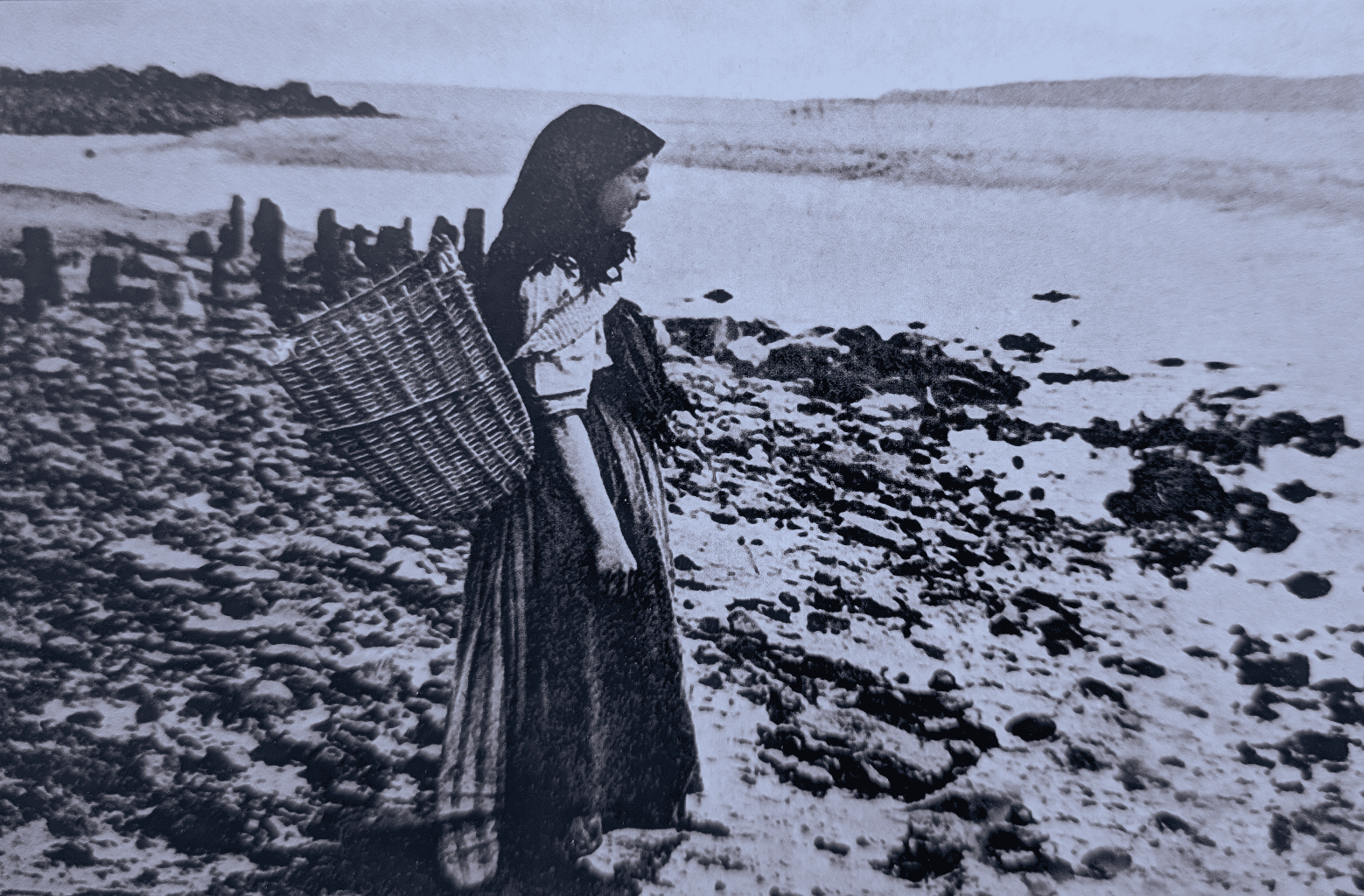
A “quine” – young woman or girl – collects mussels from the Cruden Bay shoreline. By the early 1900’s the local availability of mussels for the fishermen of Port Erroll was all but exhausted resulting in the necessity to ‘import’ mussels from the nearby Ythan estuary. Upon delivery to Port Erroll the mussels were then “sown” along the foreshore where having attached themselves to the rocks they were kept alive and fresh by the ebbing and flowing of the tides.
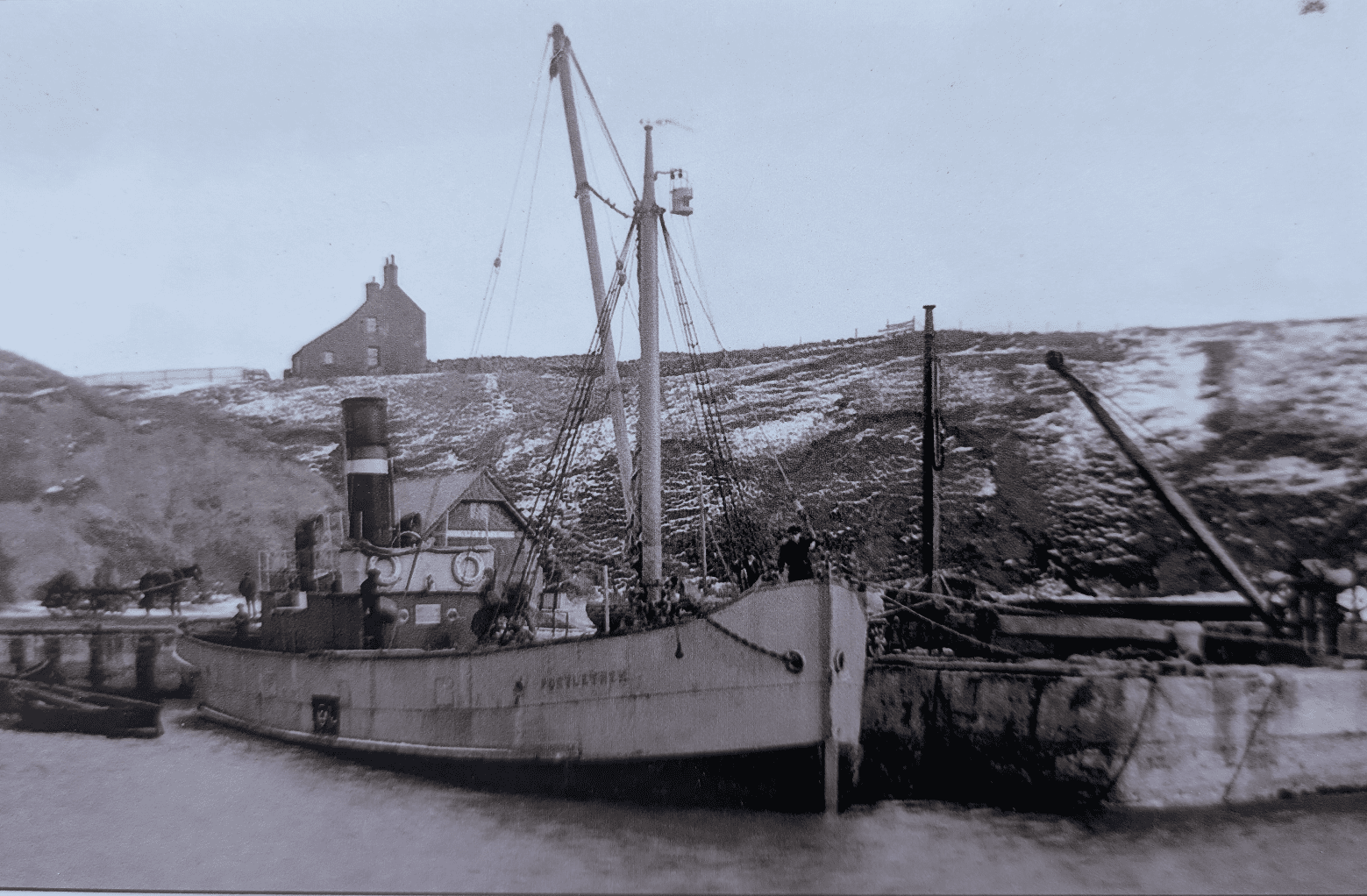
The iron and steel clad steam cargo vessel S.S Port Erroll, twenty-seven metres in length with a seven metre beam, visits Port Erroll with a cargo of coal. The manually operated crane at the end of the pier dits beside the wooden booms that were used to close the harbour entrance and give additional shelter to boats during inclement weather. This also helped to prevent the basin from silting up with water borne sand.
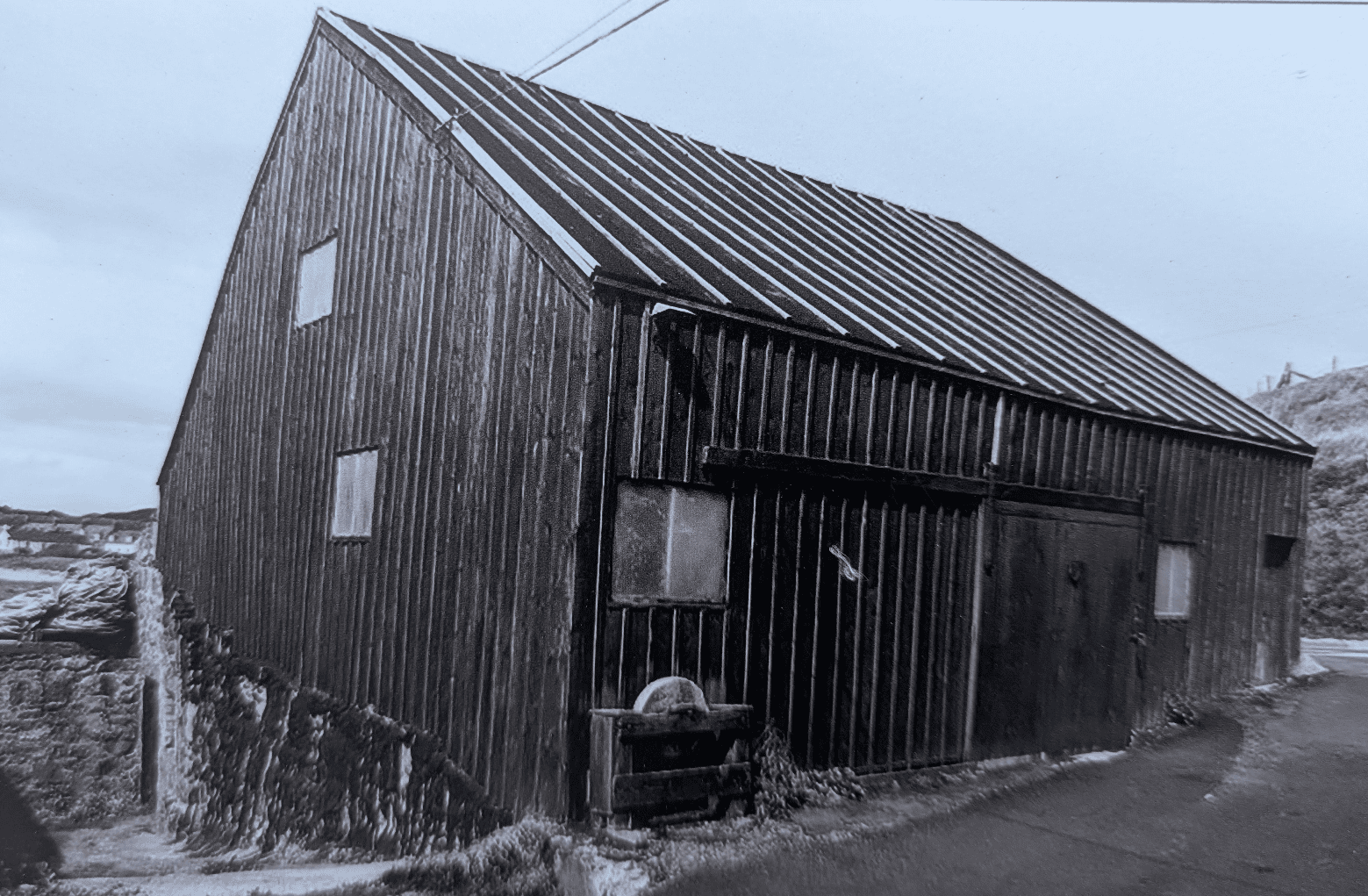
The Cruden Bay salmon fishery workshop and net store along with the semi-subterranean ice house, which is still in existence, are first recorded on the O.S. maps of 1868, although they may well date back to the earlier development by the Earl of Erroll, circa 1830. The Cruden Bay salmon netting station was fully operational from that time until 2016 when the “Conservation of Salmon (Scotland) Regulations” act banned all netting of salmon from coastal waters.
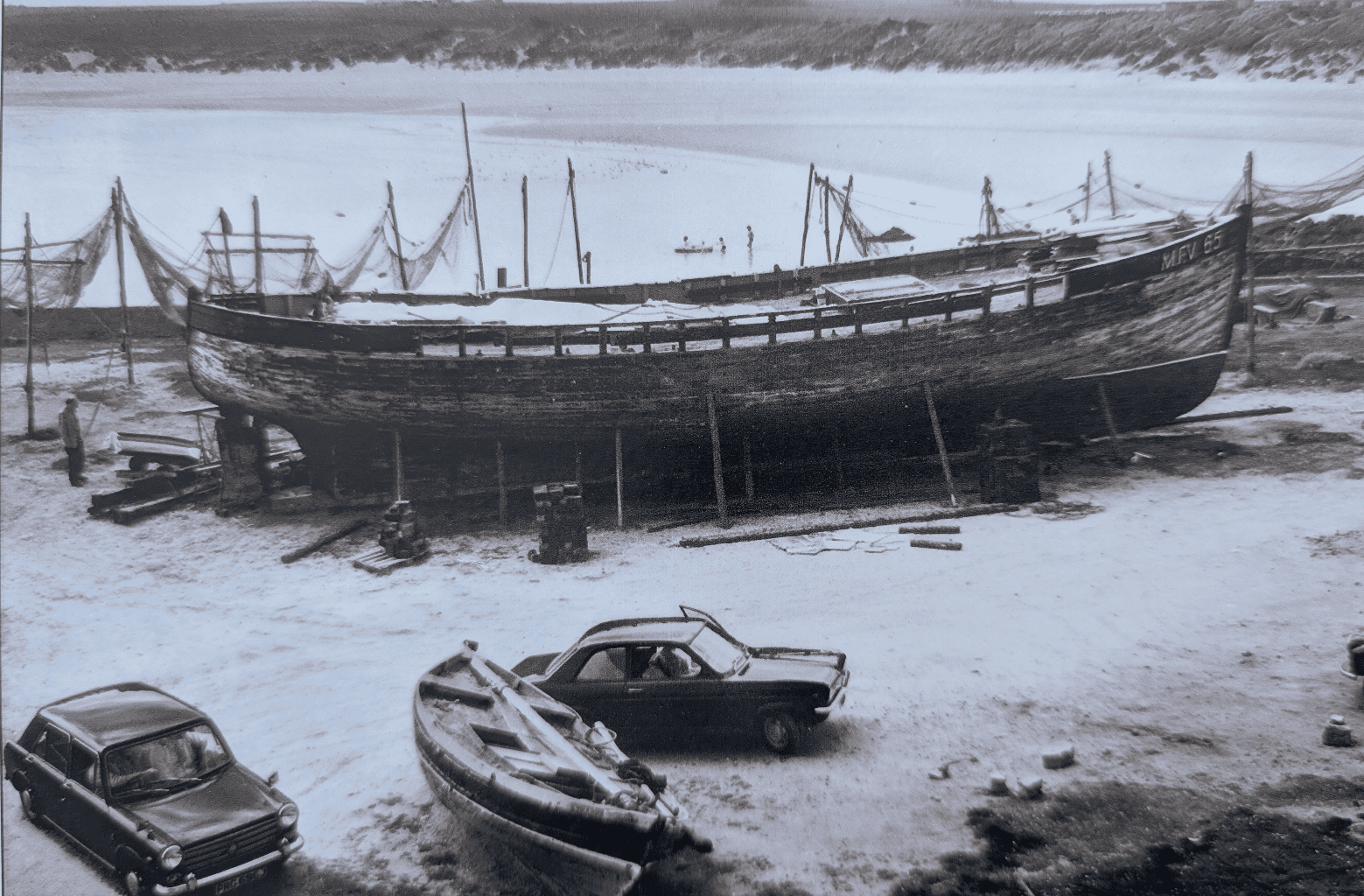
An MFV 65 – Motor Fishing Vessel – of wooden carvel construction, lies at rest alongside the Port Erroll salmon fishers nets and vehicles of the day.
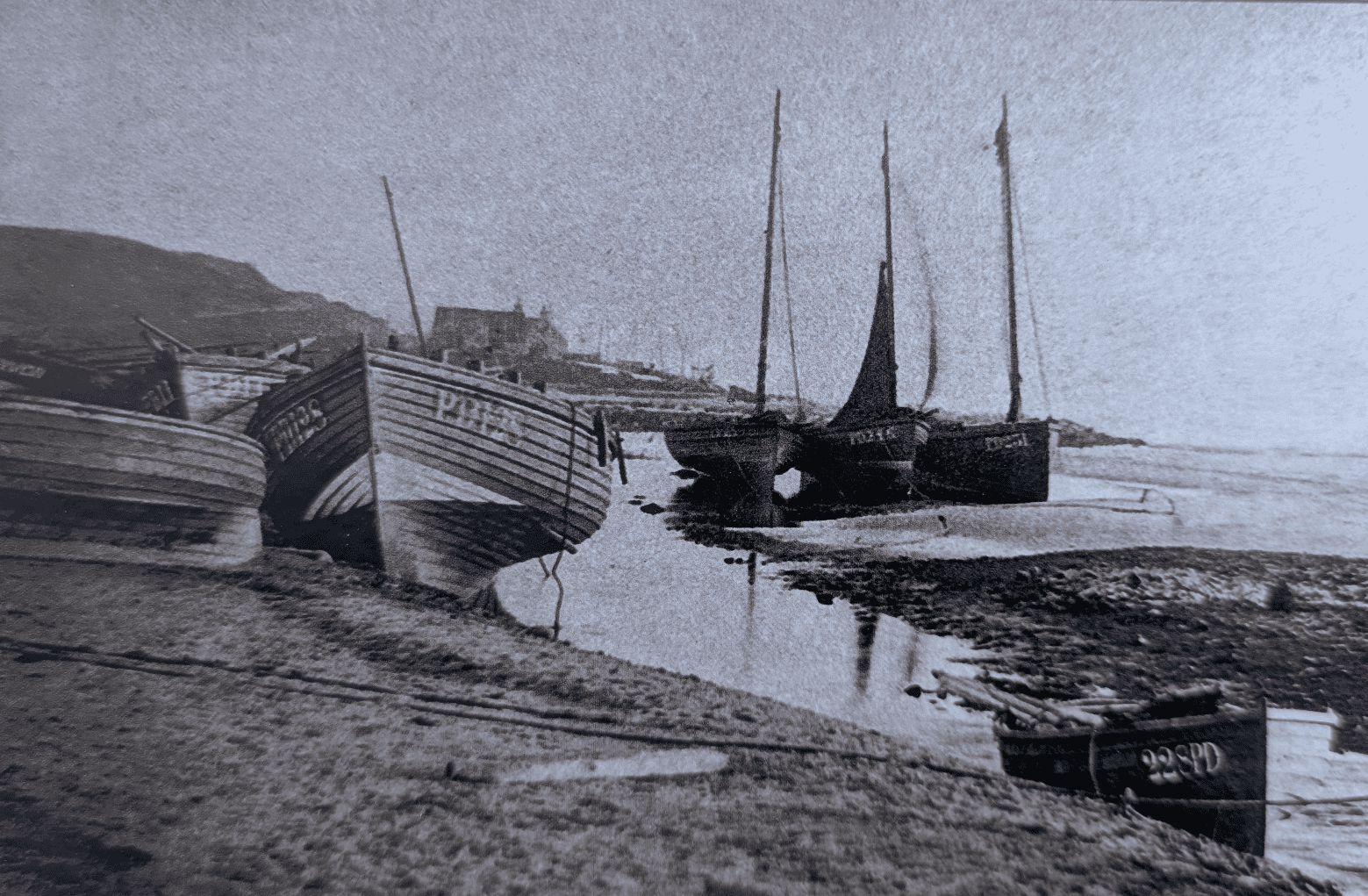
Several Peterhead registered fishing yawls lie resting ‘tween the tides on the sands of Cruden Bay estuary beside the Waters of Cruden.
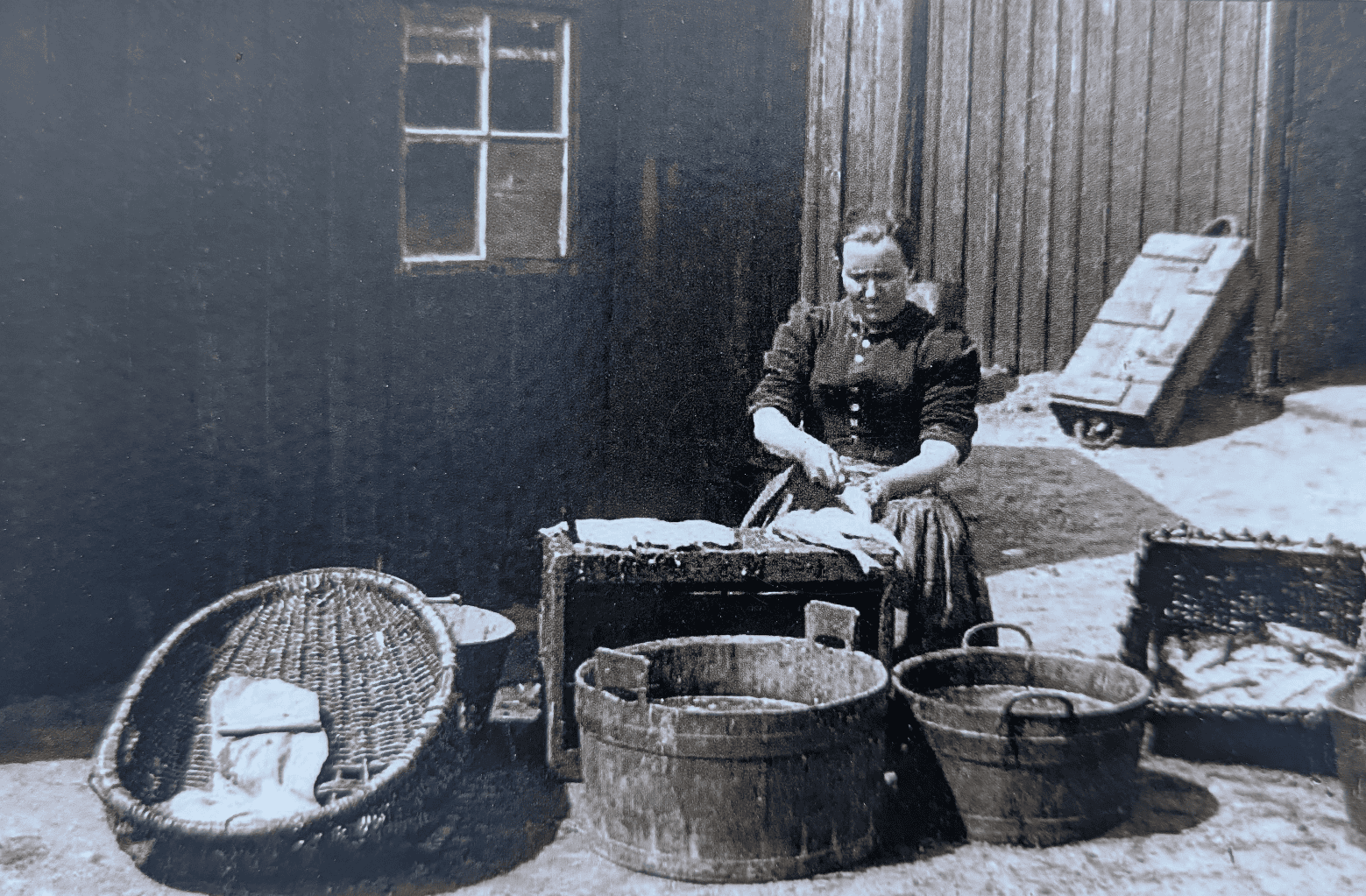
A fisher woman of Port Erroll guts the day’s catch outside the salmon bothy. This skilled work was held in high regard as it required great dexterity and speed.
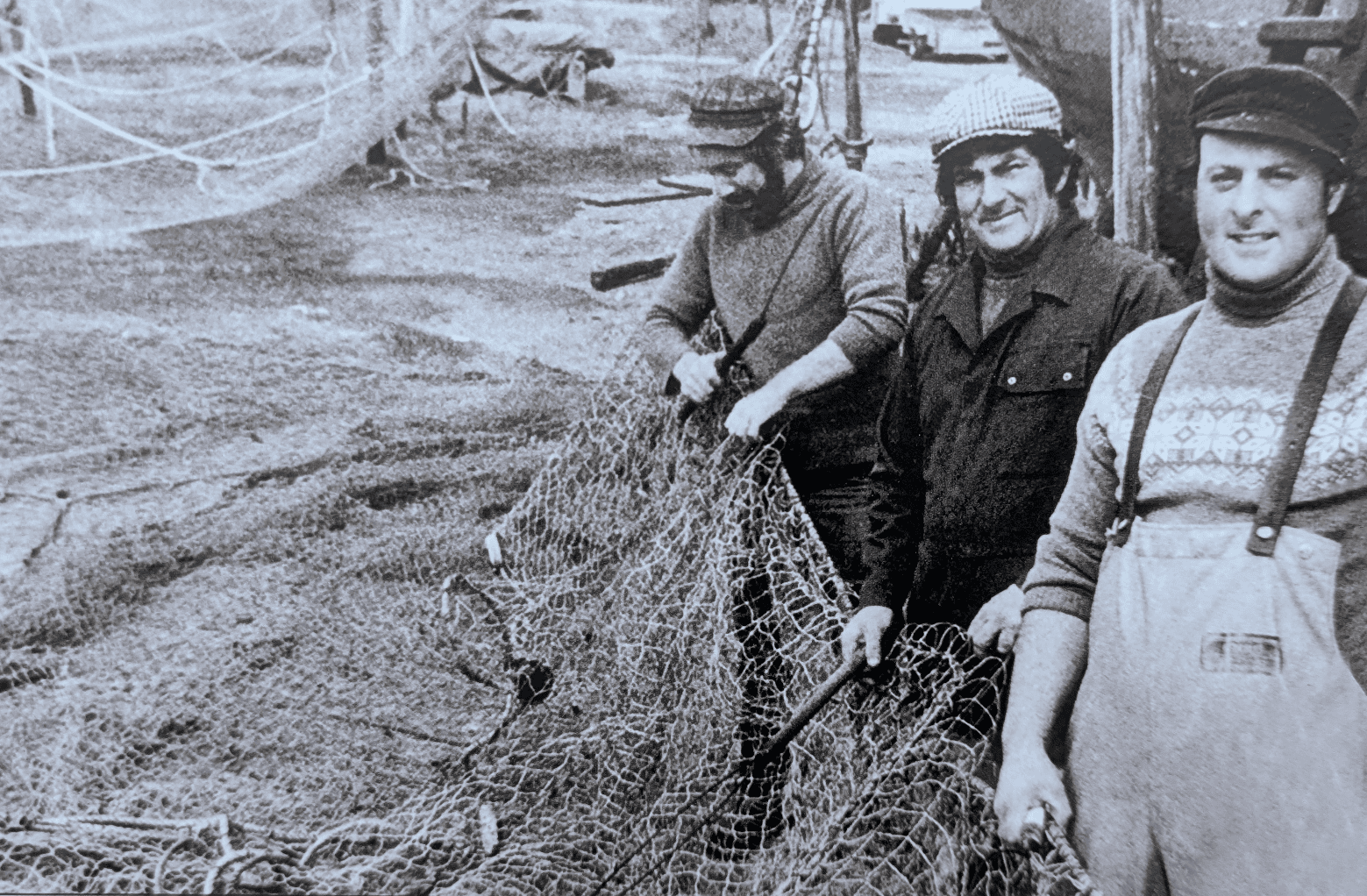
The last of Port Erroll’s historic ‘Salmon Fishermen of Cruden Bay’, Jocky, Bertie and Joseph are seen here cleaning and repairing the nets beside the drying green.
“We are an independent, non-profit organisation run by volunteers seeking to preserve the harbour’s heritage for future generations whilst striving to improve facilities for both fishing and non-fishing activities”
This project was supported by NESFLAG and funded by Aberdeenshire Council’s Coastal Communities Challenge Fund