
The Nymphaea
Shipwrecked - 13 July 1914The rugged Aberdeenshire coastline, a landscape defined by dramatic granite cliffs and treacherous reefs, serves as a silent witness to the era of steam-driven commerce. Among the many casualties claimed by these shores, the 1914 wreck of the SS Nymphaea stands as a poignant case study in the intersection of Victorian industrial ambition and the unforgiving reality of North Sea navigation. As a representative of the height of iron shipbuilding, the Nymphaea was more than a mere cargo carrier; she was a strategic asset for the renowned Stag Line, embodying the transition from sail to the reliable, if sometimes over-confident, power of steam.
The Iron Thoroughbred: Anatomy of the Nymphaea
Constructed during the golden age of Tyne-side engineering, the Nymphaea was a robust example of the iron-hulled steamships that dominated Edwardian trade. Launched in January 1882 by the Tyne Iron Shipbuilding Co Ltd, she was designed for durability and capacity, serving the critical operational needs of Joseph Robinson & Company’s Stag Line.
|
Specification
|
Detail
|
|---|---|
|
Construction
|
January 1882, Tyne Iron Shipbuilding Co Ltd (Yard No. 37)
|
|
Ownership
|
Joseph Robinson & Company (Stag Line)
|
|
Dimensions
|
286.9′ x 37.0′ x 21.8′
|
|
Tonnage
|
1,969 gross / 1,284 net
|
|
Propulsion
|
180 nhp 2-cylinder steam engine
|
|
Engine Maker
|
North Eastern Marine Engineering Co Ltd
|
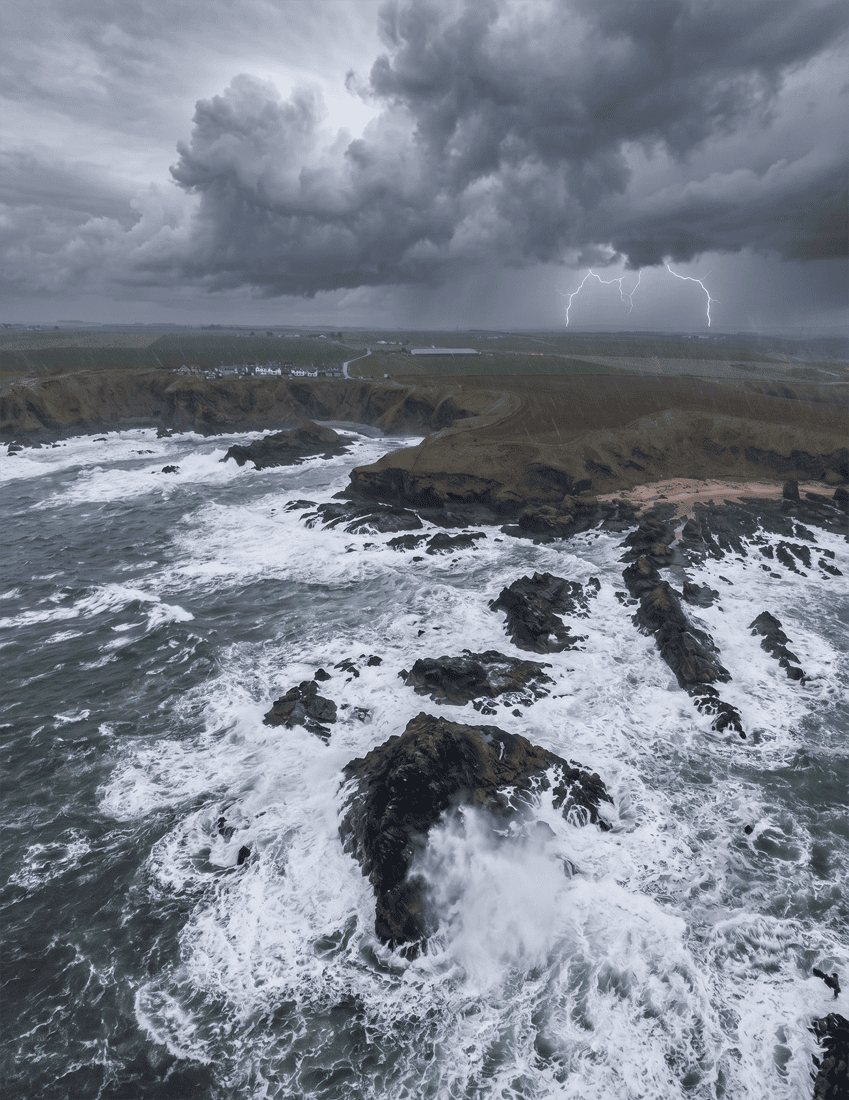
From a forensic perspective, the Nymphaea’s iron construction was a double-edged sword. While the iron provided the structural rigidity necessary to carry heavy bulk through the North Sea’s notorious swells, it offered zero flexibility when confronted with the unyielding “hard rock headlands” described in modern geological surveys of the region. Her 180 nhp 2-cylinder engine, though a workhorse in the protected reaches of the Tyne, was easily overwhelmed by the highly variable currents of the Northeast coast. Unlike the “soft sediment terraces” found further south, the granite reefs of Aberdeenshire provide a punishing interface for an iron hull; the lack of a “crush zone” in 19th-century iron plating ensures that impact with such geology results in immediate and catastrophic breaching.
The Rocks off Whinneyfold
A Fateful Departure: The Last Voyage from the Tyne
Treacherous Veils: Fog and the Girdleness Error
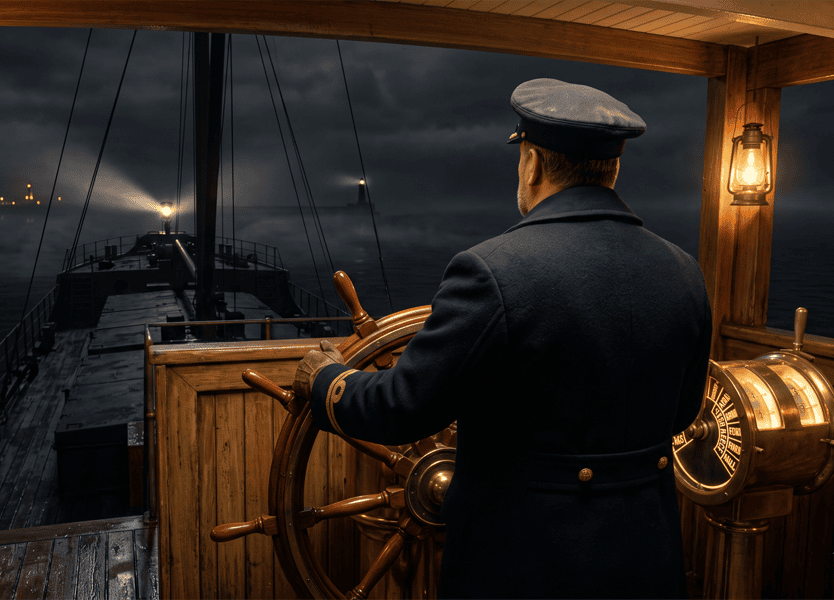
Navigating the North Sea before the advent of radar was a psychological test as much as a technical one. The region is famous for its “haars”—thick, cold coastal fogs that can reduce visibility to mere yards in minutes, creating total sensory deprivation. After passing Bell Rock, the Nymphaea was once again enveloped in this dense maritime shroud.
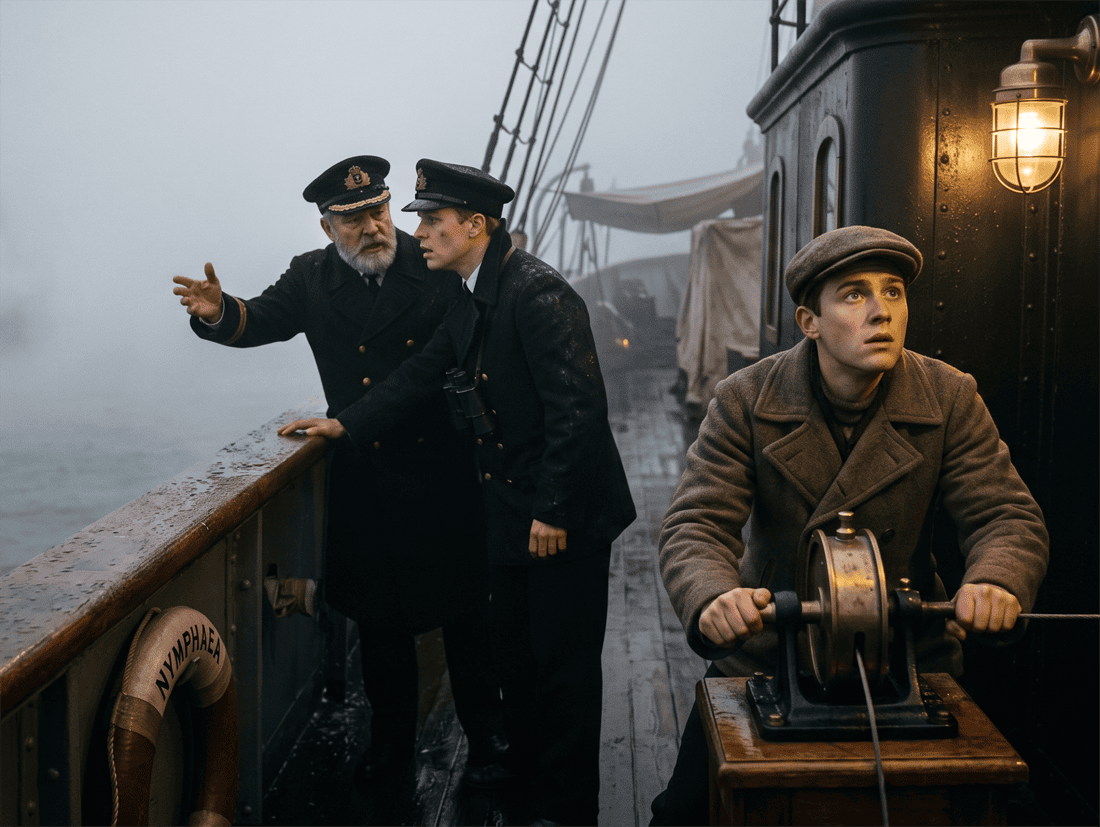
The fatal error occurred at 9:47 pm. Through a momentary break in the haar, the crew sighted a light. Captain Mouat erroneously identified this as the Girdleness lighthouse. This misidentification—a classic human-factors failure in high-stress navigation—set a course for disaster, as the vessel was significantly further west than the crew believed.
The desperation of the final 90 minutes is captured in the forensic timeline of the ship’s soundings:
10:15 pm: First sounding; the depth provided a false sense of security based on the assumed distance from shore.
11:15 pm: Second sounding; the crew remained convinced of their position, failing to recognize the shoreward drift.
11:45 pm: The final sounding returned a depth of only 16 fathoms—a shocking revelation that the ship had crossed the safety contour and was in the “wave zone” of the reef.
Captain Mouat immediately ordered the helm “hard to port” in a frantic attempt to swing the iron hull back toward the safety of the open sea. It was too late. The momentum of the 1,969-ton vessel carried her forward into the submerged granite of Sturdy Head.
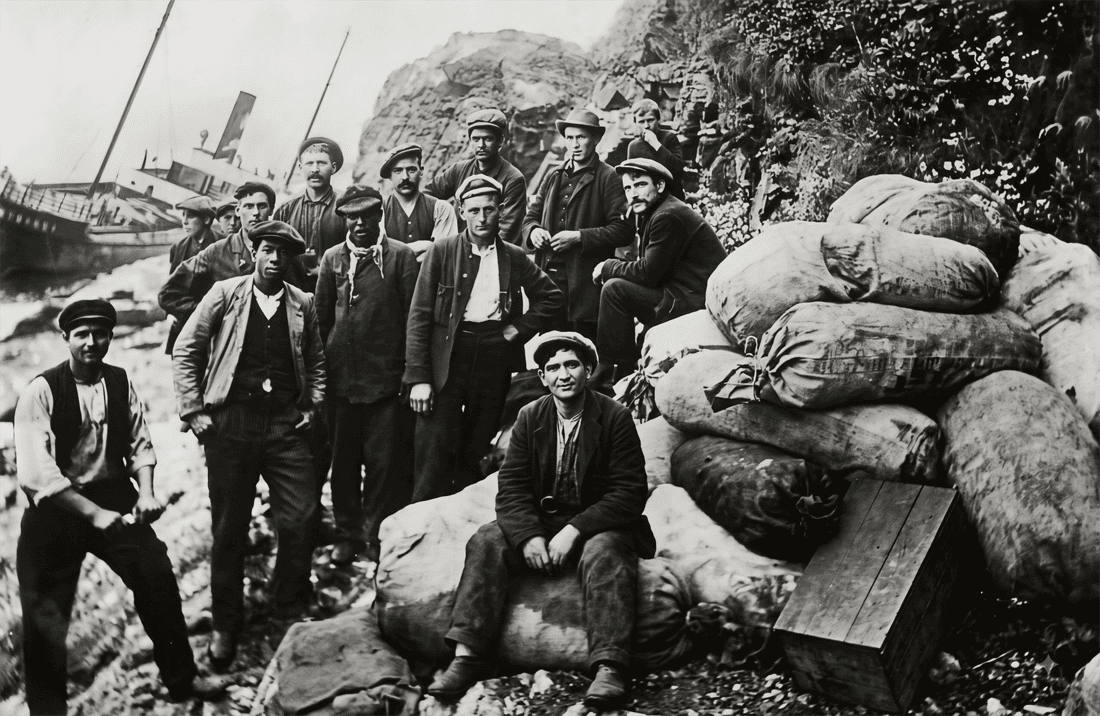
The Vigil at Whinnyfold: Resilience and the Wreck of the Nymphaea
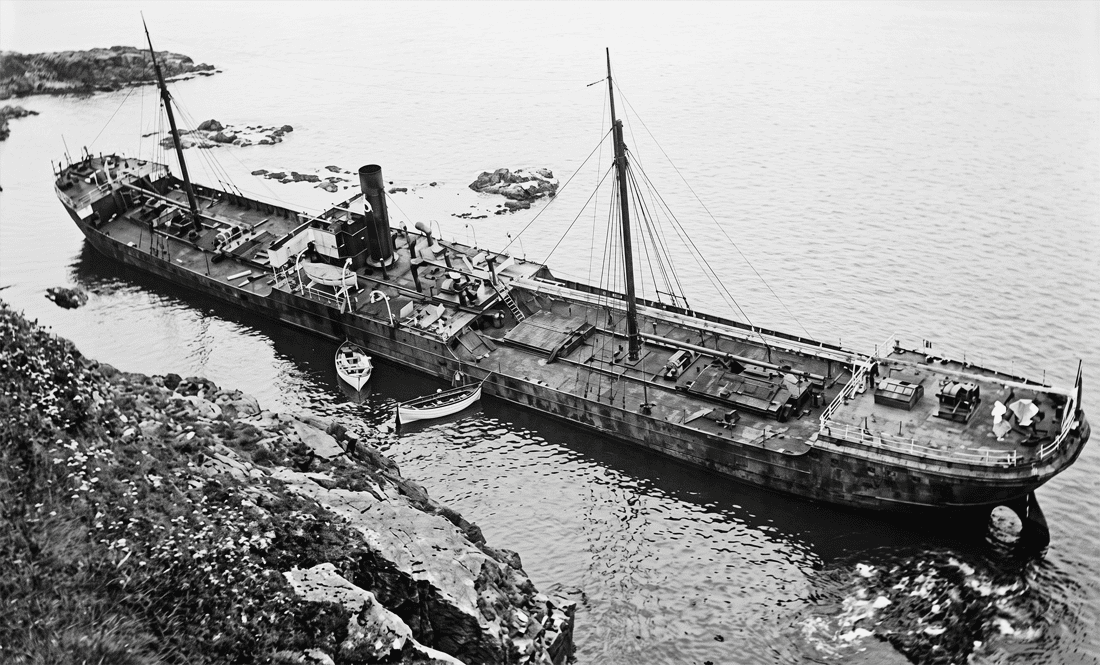
On 14 July 1914, the steamship Nymphaea met a violent end against the unforgiving headlands of Sturdy Head, south of Peterhead. As the hull gave way against the granite cliffs, the crew faced a perilous evacuation onto the rocky shore below.
What followed was a masterclass in maritime composure. Pinned between the swelling surf and sheer, towering cliffs, the mariners navigated a treacherous, seaweed-slick granite shelf. Despite extreme environmental hazards and the vessel grinding against the reef, the crew demonstrated remarkable grit, refusing to abandon the essential artifacts of their trade and personal lives.
In an extraordinary act of determination, the sailors salvaged heavy sea chests, essential tools, and canvas kit bags from the doomed ship. These rescued items were far more than mere property—they preserved their livelihoods, regional identity, and a tangible link to home, allowing the crew to maintain their dignity amid crisis.
This moment of composure was immortalized in a historic photograph capturing the huddled crew on the rocks alongside their saved kit. While modern SCAPE Trust surveys highlight the coast’s ongoing vulnerability to erosion, this image remains an enduring marker of regional heritage, proving that bravery is not just surviving the storm, but maintaining the composure to save what matters most.
Standing Between the Sea and the Storm: Whinnyfold’s Rescue of the Nymphaea
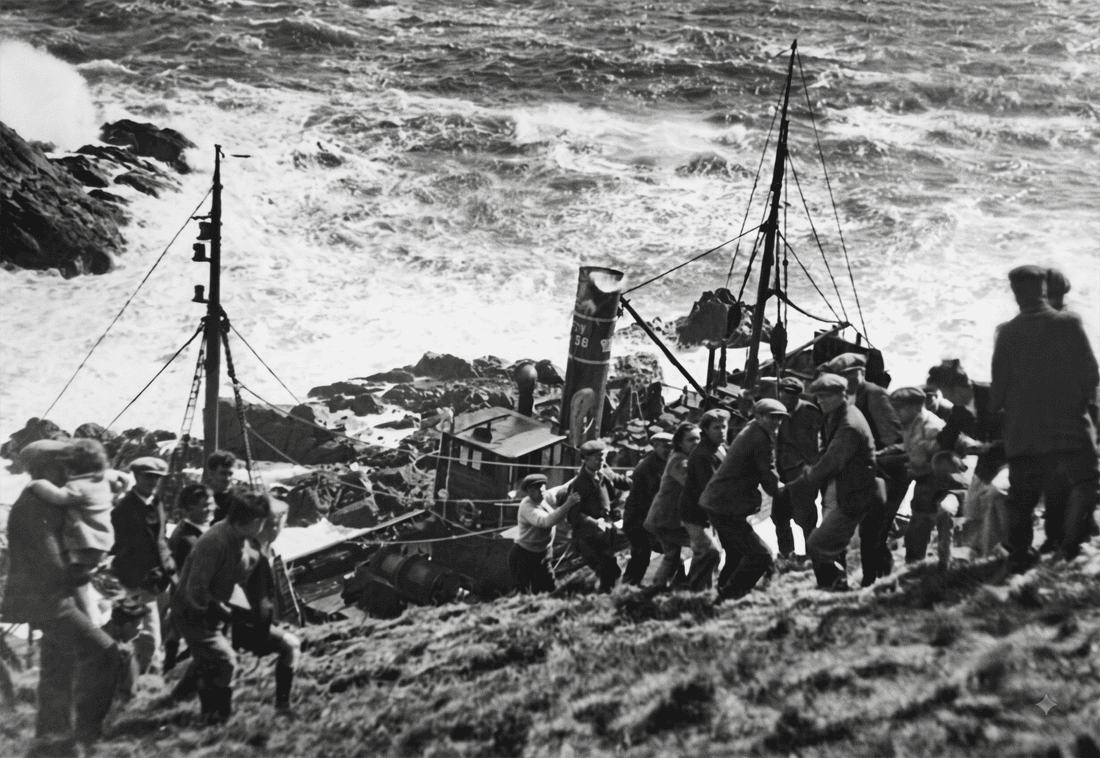
When the 1,969-ton steamship Nymphaea tore into the unyielding granite reefs of Sturdy Head on a fog-bound July night in 1914, the alarm was quickly raised in the nearby village of Whinnyfold. The iron hull, far off course on its passage to Cuba, was doomed to become an unsalvageable wreck. Yet, for the local fishermen and residents, the call to action was immediate and instinctive.
Living along this treacherous stretch of the Aberdeenshire coastline, the people of Whinnyfold were no strangers to maritime disaster. Generations of coastal life had conditioned them to respond to the sea’s perils without hesitation. As the vessel listed violently against the sharp rocks, villagers gathered at the spray-slicked cliffs. In a display of sheer grit and neighborly duty, they formed a human chain along the grassy slope, working together to haul the crew and their salvaged possessions up from the treacherous tideline to safety.
This dramatic rescue was neither the first nor the last time the community would be asked to brave the elements for strangers in distress. The bravery and willingness of these local heroes ensured every soul aboard survived, cementing another proud chapter in Whinnyfold’s long history of selfless coastal rescue.
The Board of Trade Inquiry: Uncovering the Negligence
The subsequent Board of Trade inquiry sought to determine whether the disaster was an “act of God” or the result of human failing. The inquiry’s findings were damning, focusing on a systemic neglect of the ship’s primary navigational equipment.
The primary technical failures identified were:
Compass Neglect: The ship’s compasses had not been professionally adjusted since February 1911, an unacceptable interval for a North Sea trade vessel.
Data Loss: The vital deviation records had been lost overboard earlier in the voyage, and the master failed to replace or replicate the data.
The defense pointed to an “unusual easterly tidal set” that night, cross-referencing the grounding of two other ships further south. However, forensic judgment aligns with the inquiry: while the tidal set was an environmental factor, the wreck was the result of navigational negligence. Without accurate compasses, the crew was effectively blind, making the “tidal set” an excuse rather than a cause.
The CCZAS Perspective: Legacy and the Modern Seabed
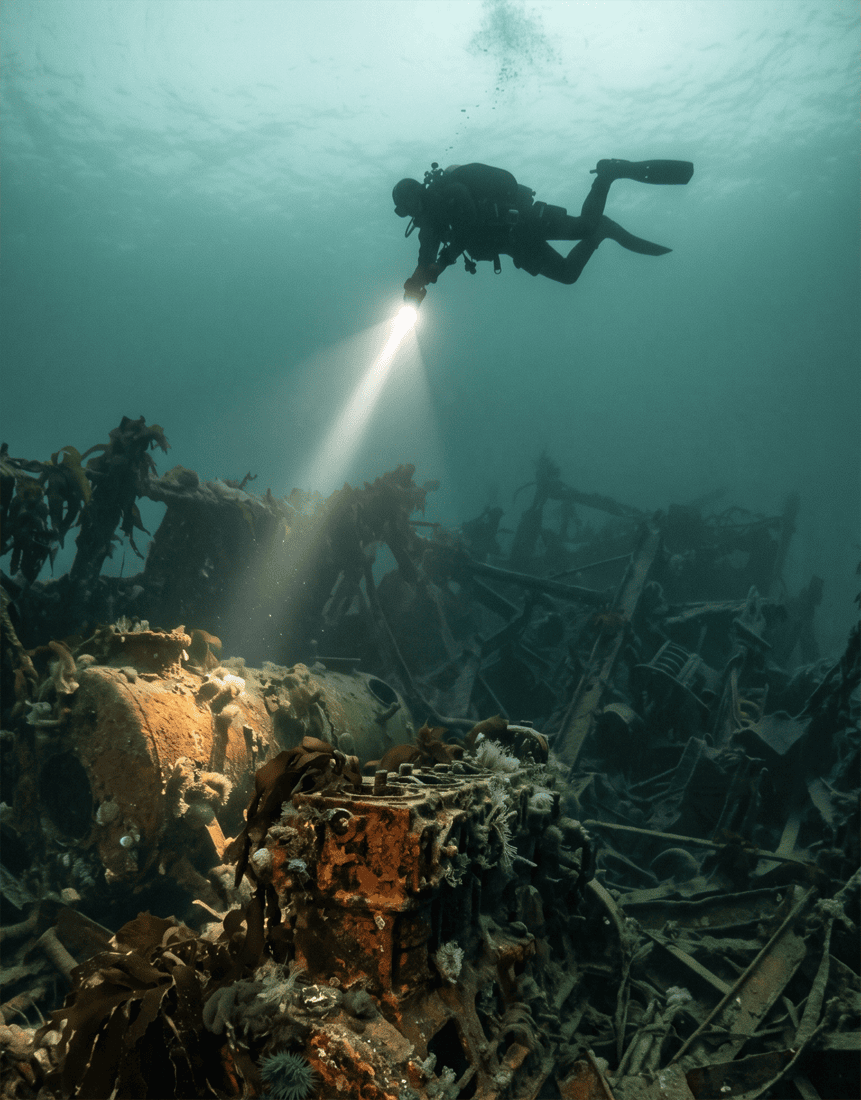
Today, the Nymphaea is no longer a shipping asset but a vital component of Scotland’s coastal heritage, documented in the 2022–2023 Community Coastal Zone Assessment Survey (CCZAS). This survey, conducted by Sarah Boyd and Joanna Hambly of The SCAPE Trust, targeted the Whinnyfold and Cruden Bay area specifically because it is modeled to be at “moderate or high risk of erosion by 2030.”
While many shipwreck records in the national database are “poorly located with multiple wrecks plotted in the same grid square” (Table 1, SCAPE Report), the Nymphaea serves as a rare, fixed stratigraphic point. Because it lies directly beneath the wreckage of the City of Osaka, it provides a reliable anchor for the “Sites at Risk” interactive web map.
Modern Site Metadata:
SCAPE Context: Part of the 2022/23 survey of “high rocky cliffs” and “dynamic coastlines.”
Location: Directly beneath the City of Osaka.
Coordinates: 57°22.593’N, 001°52.957’W.
Depth: 12 metres.
Condition: Scattered iron plates and girders.
The “scattered” state of the wreckage is a direct result of the “alongshore drift” and “net erosion” patterns identified in the SCAPE report. The site remains a testament to the thin line between routine commerce and total disaster. As the coast of Aberdeenshire continues to face the threat of slope failure and erosion, the Nymphaea remains a permanent marker of 1914 maritime history—a ghost in the kelp that reminds us that while iron may corrode, the lessons of navigational precision are eternal.
Principal Sources
- “Nymphaea” from Scottish Shipwrecks (URL): This was the primary historical and narrative source. It provided the vessel’s technical specifications, the timeline of her final voyage, the details of the fog and the Girdleness lighthouse error, the evacuation of the crew and the salvage of their personal possessions, the Board of Trade Inquiry findings, and her 1994 discovery beneath the City of Osaka.
- “NYMPHAEA: WHINNYFOLD, BAY OF CRUDEN, NORTH SEA” on Unpath’d Waters (URL): An official database record from Historic Environment Scotland confirming her classification as a 20th-century steamship and her location off the Aberdeenshire coast.
- “Whinnyfold” on Wikipedia (URL): Used to establish the geographical and historical setting of Whinnyfold, the steep, coastal clifftop village in Aberdeenshire, Scotland, where the crew was cast ashore.
- “Coastal Zone Assessment Survey Aberdeenshire & City of Aberdeen” by The SCAPE Trust (PDF): Provided the broader archaeological framework for the Aberdeenshire coastline, detailing local survey records and heritage sites near Whinnyfold.
Image References
Unless otherwise stated, images featured in this article are sourced from historical collections, archive material, community contributions, contemporary photography or original creative interpretations produced for Cruden Bay Life.
Where original photographic records of the shipwreck do not exist, digital artwork and atmospheric illustrations may be created to help visualise the vessel, the Aberdeenshire coastline and the foggy conditions surrounding the grounding. These images are intended to support understanding and storytelling rather than represent exact historical photographs of events.
Images of surviving artefacts, contemporary wreckage sites and coastal locations connected with the incident are included to help preserve the personal stories of resilience behind the shipwreck, celebrating the survival of the crew who all successfully escaped without loss of life.
We are grateful to historians, archives, local families and community contributors whose photographs, records and memories help ensure that the story of the Nymphaea and her crew continues to be remembered.
About Cruden Bay Life
Cruden Bay Life celebrates the history, landscapes, people and stories that have shaped Cruden Bay and the surrounding Buchan coast.
Every article begins with research drawn from historical publications, archives, maritime records, maps, newspapers, photographs, family histories and contemporary accounts before being developed into an engaging narrative. Stories such as the dramatic grounding of the S.S. Nymphaea at Whinnyfold and the remarkable survival of her crew remind us that local history is not only about dramatic events, but also about human resilience and the individual lives behind them — the sailors, families and communities forever connected to these moments in time.
Alongside traditional research methods, we make thoughtful use of modern creative tools—including artificial intelligence—to assist with research, editing, illustration, music composition and visual presentation. These tools allow forgotten stories to be explored and shared in new ways, while historical evidence, editorial judgement and respect for those whose lives shaped our past remain central to everything we publish.
Researched by people. Enhanced with modern creative tools. Inspired by history. Created for today’s audiences.
Learn more about how we research and create our stories. Click here →