
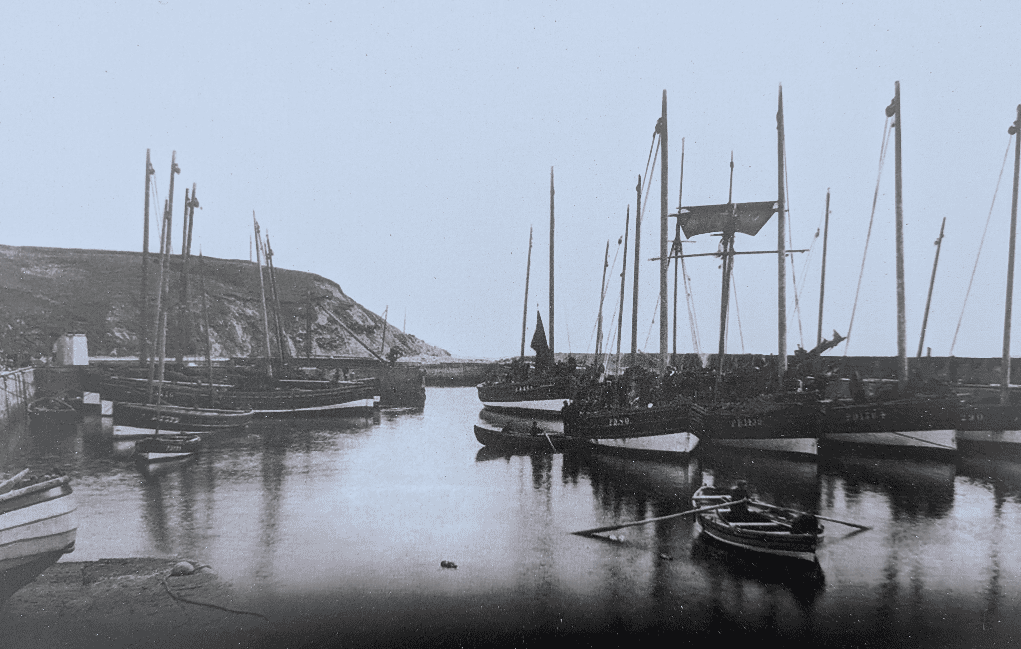
As far back as the mid 1600’s there have been fishermen living and working out of Invercruden, the historic hamlet located in the valley between Slains Castle and Ward Hill. However, it was not until between 1875 and 1880 that the current harbour, built under the auspices of the then 19th Earl of Erroll ~ one William Harry Hay ~ came into existence. In recognition of him having financed its construction the harbour was renamed Port Erroll. Soon there were as many as one hundred and eighty fishermen and sixty-eight boats fishing out of Port Erroll, fishing being the mainstay of the village.
However, the relative prosperity of the late 19th century was not to last as the modern day trawlers and seine net fishing boats of the day were unable to utilise the small tidal harbour. With their methods being the only commercially viable ones, there soon began a rapid decline in the harbour’s fortune and by the outbreak of war in 1914 only sixteen large yawls and some seventy fishermen remained.
When the shipping magnate, Sir John Reeves Ellerman, sold the Erroll estate in 1923, he offered the harbour, along with a gift of £250, to the village fishermen on condition that they themselves raised an additional £250 to add to a Scottish Fisheries Board grant of £500 for harbour maintenance. To assist the fishermen in raising the necessary funds and take control of their own destiny, a sale of work was held in the village with all monies going towards the Port Erroll Harbour Fund. On Saturday 24th March 1923 the sum of £200 was raised allowing them to reach their target. By courtesy of Sir John’s 1924 disposition the harbour is now held “in trust always for behoof of the whole fishermen present and future of Port Erroll or Cruden.”
Thereafter, the downturn in fishing from the harbour continued. By 1930 grass was growing on the piers, and boats lay rotting beside rusting iron chains and anchors. Nineteen boats and fifty-six fishermen still remained, both line fishing and catching crab and lobster. By the end of the Second World War there were only three seine net fishing boats and a few small rowing boats being worked by retired fishermen.
By the 1970’s only a handful of small boats fished from the harbour alongside the historic salmon fishermen’s cobles, used to fish for salmon at the harbour mouth using bag nets.
Today, though the harbour has survived the vagaries of past fragile fishing economies, it now faces it’s sternest battle – against nature itself. With time and tide now having taken their toll on the walls and infrastructure the same sea that once gave the harbour its very livelihood, now threatens to destroy it.
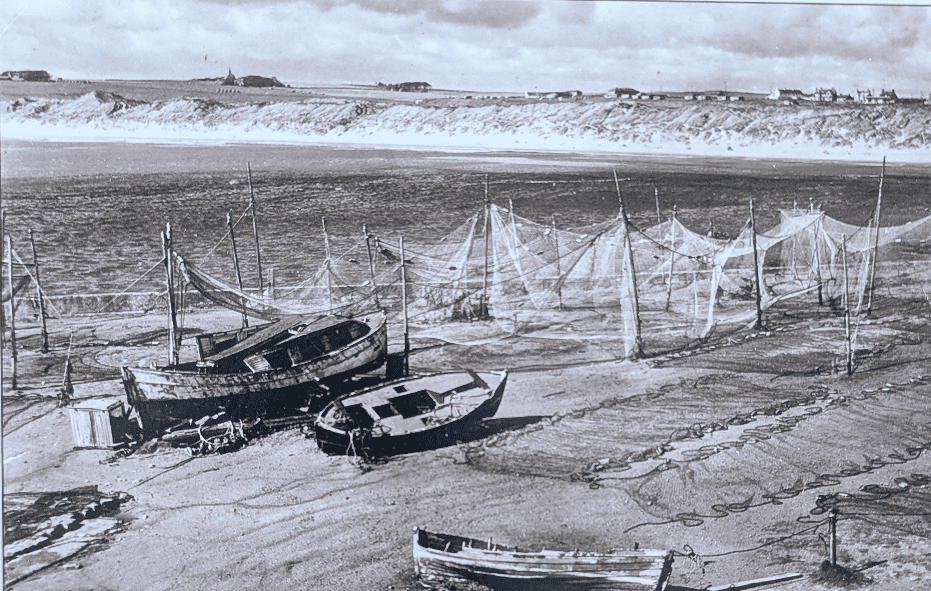
Where “auld boaties” go to die – with their best days now far behind them a scattering of old Port Erroll boats lie abandoned and neglected beside the drying green, where in days now sadly gone, the salmon fishermen’s nets were hung to dry.
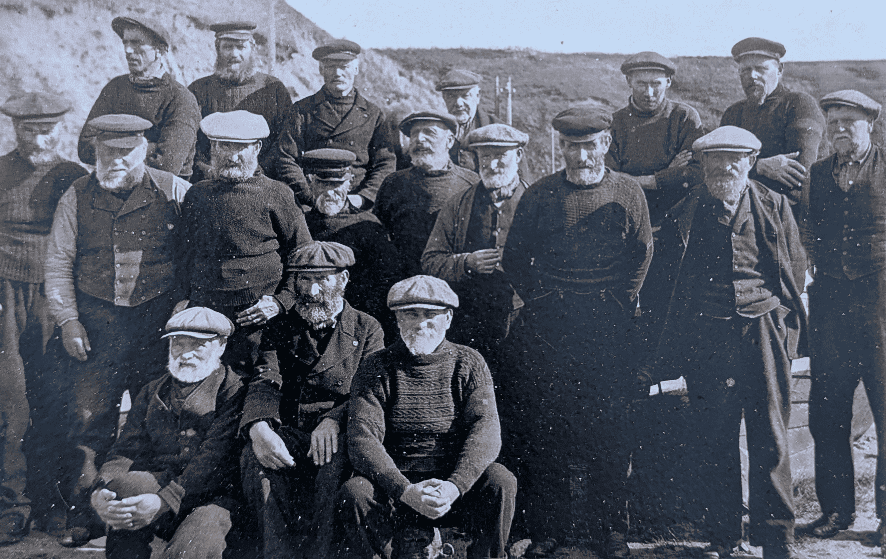
Here we see a gathering of Port Erroll fishermen, well turned out in their Sunday best on the harbour quayside. Fishing was a way of life for the people and communities along the Aberdeenshire coast. All the villages had their own boats and the skills of navigation and seamanship were handed down from father to son through the generations.
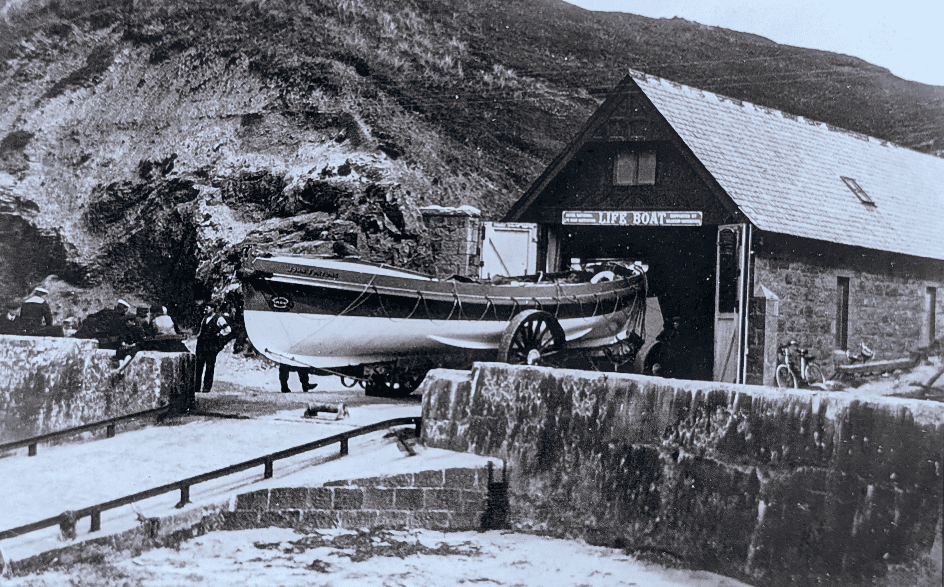
In 1876, with the new harbour now under construction, the R.N.L.I. stationed the thirty-three foot long lifeboat “Peep o’ Day” at Ward of Cruden. Shortly afterwards in 1878, the boathouse at a cost of £510, and the slipway in 1879 at a cost of £70, came into service. Having been called out five times with three folk rescued the Peep o’ Day was replaced in 1888 by the thirty-four foot “Frances Camilla Howard” at a cost of £376. After twelve rescue missions and thirty three lives saved she herself was replaced in 1904 at a cost of £1,007 by the thirty-eight foot long “John Fortune”. Pictured here on her launching cradle at the top of the slipway, the John Fortune was the last lifeboat to be stationed at Port Erroll and the station itself closed permanently in 1921.
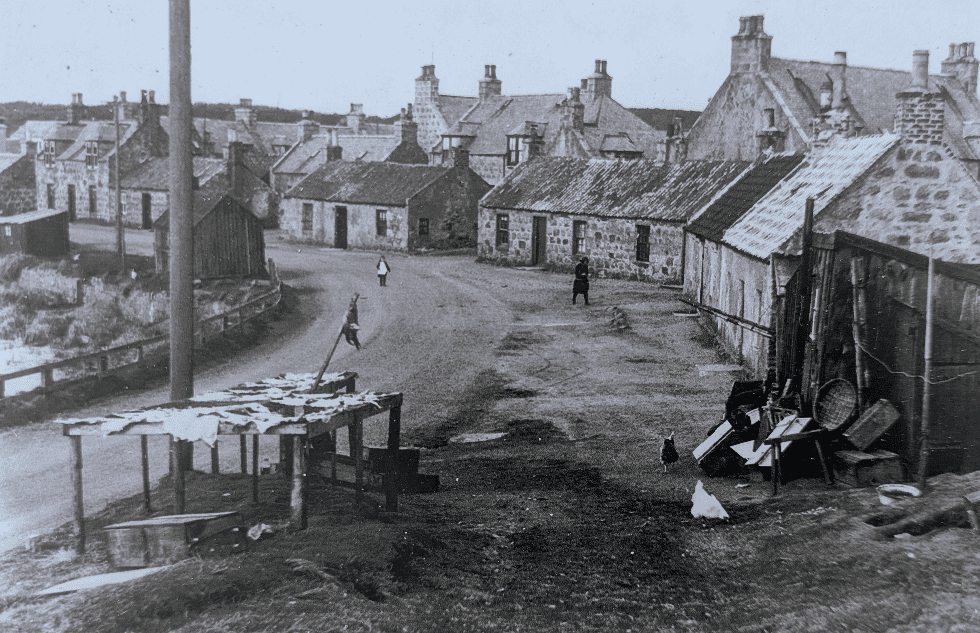
Here we see the timeless tranquility of Port Erroll village at the foot of Ward Hill with chickens scratchin’ for a living beside the families “spelding” ~ gutted and washed whiting or haddock ~ which after splitting are salted before being laid out on racks to dry in the sun.
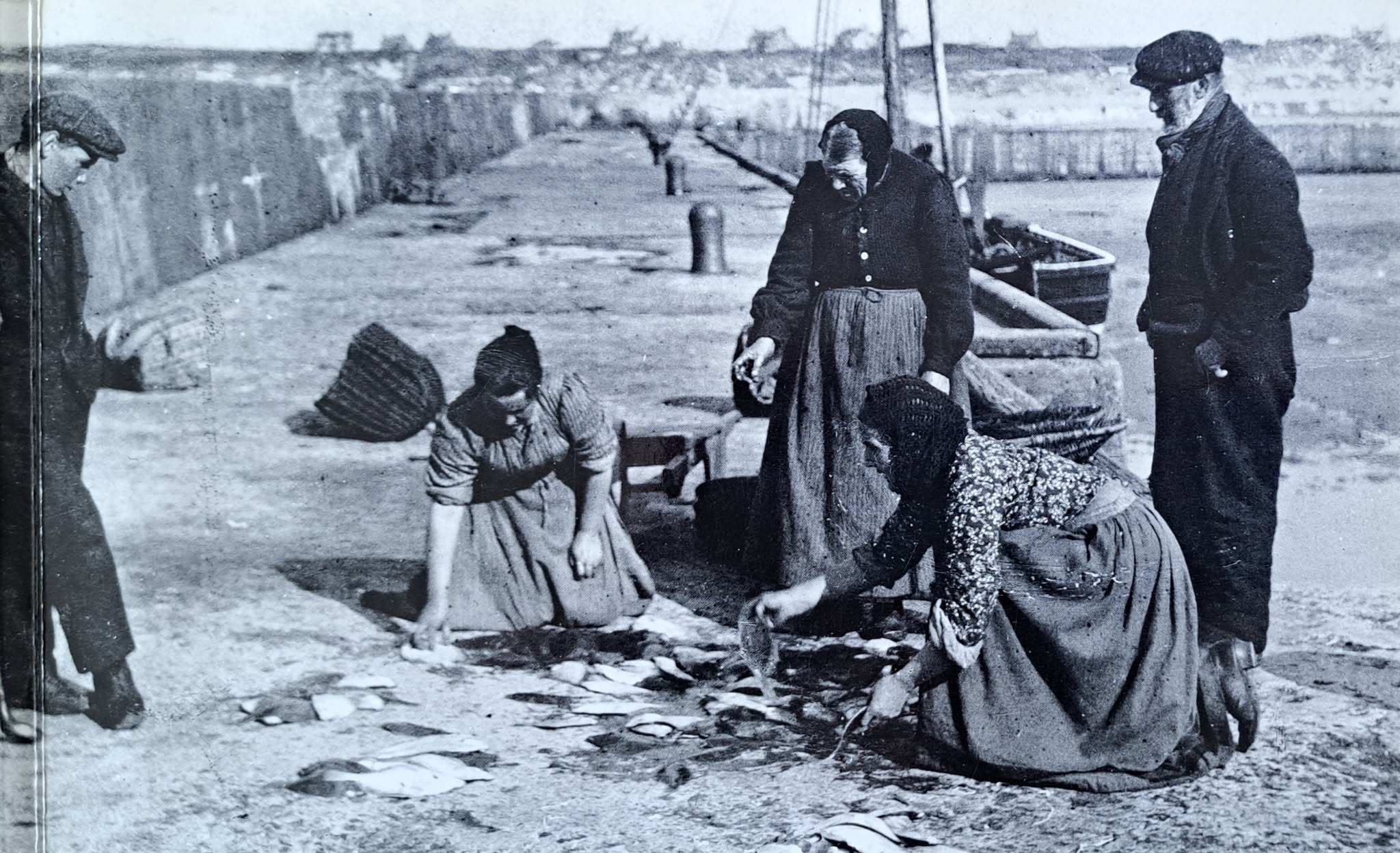
A group of Port Erroll folk on the harbour quayside, circa 1913, can be seen starting to “pairt” the catch. Once the catch was separated into the required number of portions a decision was then made regarding who received which share by “casting cavels”, a process very similar to drawing lots.
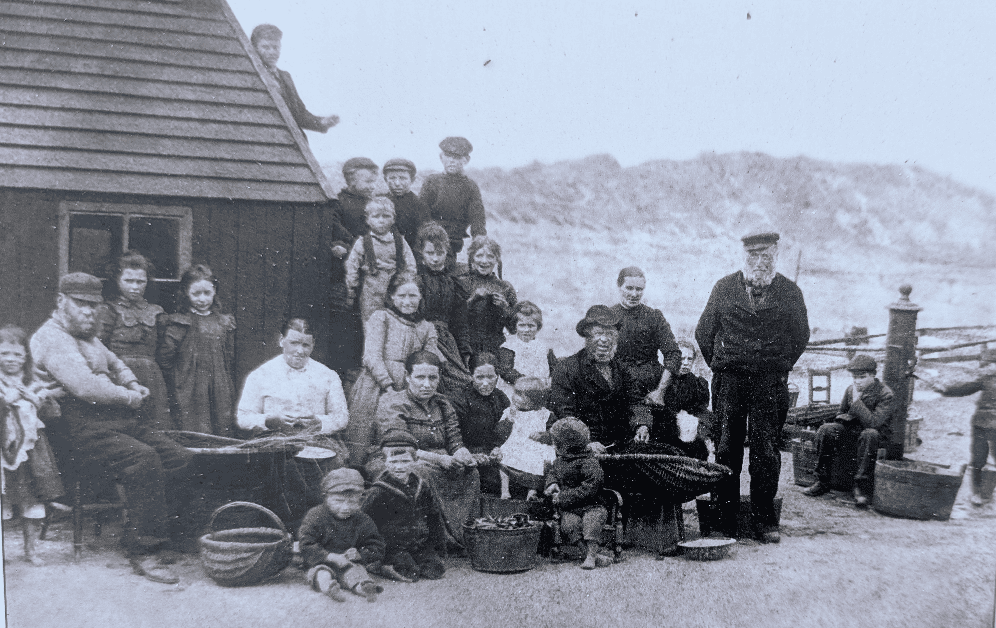
As the people of fishing communities and country folk rarely crossed paths the young frequently married either within their village or to a member of a neighbouring fishing village. “Cod & corn dinna gaun the gither” was the saying of the day and this meant that it was not uncommon for several families within a village to share the same surname. To alleviate at least some of this confusion people were given “tee names” which on some occasions related to the persons house or boat. For example Johnny Summers, who’s boat was the “Sunrise”, would be known as “Johnny Summers Sunrise” and his son Sandy would be known as “Sunrise Sandy”. If Johnny had a daughter called Jean, she would be known as “Sunrise Johnny’s Jean”.
“We are an independent, non-profit organisation run by volunteers seeking to preserve the harbour’s heritage for future generations whilst striving to improve facilities for both fishing and non-fishing activities”
This project was supported by NESFLAG and funded by Aberdeenshire Council’s Coastal Communities Challenge Fund