
Cruden Bay Life
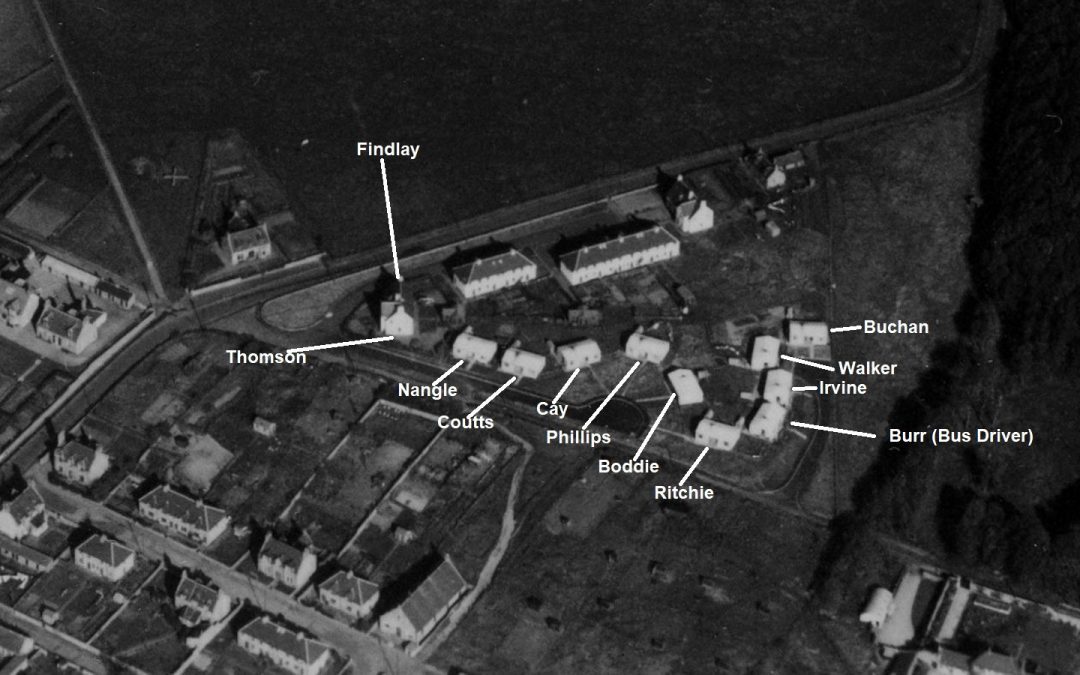
Prefabricated Housing on Castle Road, Cruden Bay
Post-war housing, local change, and what we actually know
In the years following the Second World War, communities across Scotland—including the coastal village of Cruden Bay—faced a pressing need for new housing. While local memory recalls prefabricated (“prefab”) houses on Castle Road during the 1950s, surviving documentary evidence about this specific site is limited. However, by placing Castle Road within the broader historical and housing context of the time, we can establish what is known with confidence—and where the historical record remains incomplete.
The National Context: Why Prefabs Were Built
The appearance of prefabricated housing in Britain was driven by a severe post-war housing shortage. Under the Housing (Temporary Accommodation) Act 1944, the UK government launched a major building programme to provide quick, affordable homes for families displaced by war and poor housing conditions.
- Around 160,000 prefab homes were built across the UK by 1948
- These homes were designed for rapid assembly using factory-made components
- Typical layouts included two bedrooms, a living room, kitchen, bathroom, and indoor toilet—a significant improvement for many families at the time
Although intended as temporary (often 10–15 years), many remained in use for decades.
Prefabricated Housing in Scotland
Scotland developed both temporary prefabs and more permanent “system-built” housing during the late 1940s.
One important example is the “Cruden” house type, built between 1947 and 1950:
- Over 3,000 houses constructed across Scotland
- Typically steel-framed, with concrete or brick cladding
- Usually built as semi-detached or terraced two-storey homes
These were not temporary bungalows, but longer-lasting dwellings produced under post-war housing programmes.
Cruden Bay in the Mid-20th Century
Cruden Bay itself was undergoing significant transition in the mid-20th century:
- The Cruden Bay Hotel was demolished between 1947 and 1952, freeing up land in the village
- The 1950s and 1960s saw population decline, reflecting wider rural trends
Despite this decline, the post-war housing programme still required local authorities to provide modern accommodation, particularly to replace outdated or overcrowded housing.