
Port Erroll Harbour
A Small Harbour With A Big Welcome
Welcome to Port Erroll Harbour
Tucked away on the stunning Aberdeenshire coastline, Port Erroll Harbour is one of Cruden Bay’s most treasured landmarks – a place where history, nature, and community come together in a setting of quiet beauty and timeless charm. Sheltered by rocky headlands and nestled just below the village, the harbour offers a peaceful escape that invites exploration, reflection, and connection with the sea.
This small but characterful harbour has long played a central role in the life of the area, once supporting a thriving fishing industry and now serving as a picturesque hub for locals and visitors alike. Its traditional stone quays, working boats, and views out to the open North Sea create a sense of place that feels both authentic and alive.
Whether you’re setting off on a coastal walk, pausing to take in the sea air, or watching the boats as they rise and fall with the tide, Port Erroll offers something for everyone. It’s a favourite destination for photographers capturing the ever-changing light, artists seeking inspiration, and nature lovers drawn to the area’s rich wildlife.
As part of the wider Cruden Bay experience, Port Erroll Harbour invites you to slow down, take in the scenery, and enjoy a glimpse into the maritime heritage that shaped this remarkable corner of northeast Scotland.
All images used on this website are subject to copyright
“Farewell to Port Erroll”
Farewell to Port Erroll is an original composition by Cruden Bay Life, created especially to accompany our page dedicated to the story and spirit of Port Erroll Harbour. This evocative piece reflects the rhythm of the tides, the echo of working boats, and the deep connection between the people of Cruden Bay and the North Sea. Through its flowing melodies and gentle harmonies, the song captures both the beauty and the quiet melancholy of a harbour that has witnessed generations of fishermen, families, and change.
The accompanying video features treasured footage from Jill Cramphorn (McWilliams)’s film Cruden Bay 2000, a vivid time capsule that preserves the character and charm of the village at the dawn of a new millennium. Her lens captures moments of everyday life, familiar faces, and the enduring presence of the sea that continues to shape this community.
Together, the music and images form a moving tribute to Port Erroll’s maritime heritage, a place of stories, hard work, and belonging. We invite you to listen, watch, and reflect on Farewell to Port Erroll, a heartfelt farewell, and a celebration of the harbour’s timeless soul.

Port Erroll Today (A Community Trust)
Today, Port Erroll Harbour is a vibrant, independent hub managed entirely by the Port Erroll Harbour Cruden Bay Trust Ltd, a non-profit organization that relies heavily on the dedication of volunteers, mooring fees, and public donations. It stands as a testament to the village’s enduring maritime spirit, welcoming small-scale commercial fishermen alongside a growing community of leisure boaters, paddleboarders, and wild swimmers.
The local community works tirelessly to preserve this historic structure against the relentless power of the North Sea. Recently, the Trust successfully managed a critical emergency intervention when powerful hydraulic action carved a 6-metre cave inside the West Pier head, requiring urgent concrete injection to prevent a devastating structural collapse.
This dedication is further supported by vital local grants, such as those from the Coastal Communities Challenge Fund. A recent £15,305 award funded the enhancement of the harbour’s public spaces, allowing for the re-grading of the grass drying green, the addition of picnic tables, new heritage interpretation lecterns, and the installation of a harbour webcam. An additional £16,197 grant enabled the complete refurbishment of the public toilet block and improved water access for both fishermen and visiting tourists.
The harbour is more than just a scenic mooring; it is a lively gathering place. It features an informal “Aire” where motorhomes and campervans are welcomed to stay overnight, directly contributing to the site’s upkeep. The harbour’s spirit truly shines during major community events like the Port Erroll Harbour Gala, which brings the village together with live music, local food, and joyous performances—such as secret ‘flash mobs’ singing traditional sea shanties like The Wellerman.
Ultimately, Port Erroll Harbour today is not just a relic of the past, but a living, breathing landmark sustained by the passionate people of Cruden Bay.
The Railway Resort & A Shifting Tide
As the nineteenth century drew to a close, Port Erroll experienced a dramatic shift in its fortunes and identity. The bustling herring industry began to face modern challenges. The harbour had been built as a tidal refuge and was notoriously difficult for boats to navigate, accessible only when the tide had fairly risen. As the fishing industry modernised and shifted towards larger, deeper-draft steam drifters, the shallow waters of Port Erroll struggled to accommodate the new fleet, prompting commercial activity to gradually relocate to larger, more accessible ports.
However, as the fishing tide ebbed, a new wave of prosperity arrived in the form of luxury tourism. In 1897, the Great North of Scotland Railway opened a new branch line and station, officially promoting the name “Cruden Bay” to attract affluent holidaymakers to the scenic coastline.
This railway connection paved the way for the magnificent Cruden Bay Hotel, which opened its doors in 1899 as an opulent destination for the upper classes. The resort boasted a championship golf course and featured its own electric tramway to transport guests directly from the railway station to the hotel in unparalleled style. During this brief but golden tourist boom in the early 1900s, the village was transformed, blending its rugged, working-class fishing heritage with high-society leisure.
The era of the grand railway resort was ultimately short-lived. The branch line closed to passengers in 1932, and the magnificent hotel was later requisitioned as an army hospital in 1939 before being demolished in the 1950s. Yet, this transformative period forever altered the village, cementing the name “Cruden Bay” and leaving a legacy of coastal tourism that continues to shape the harbour today.

Image created by Cruden Bay Life
A Glimpse Into the Past
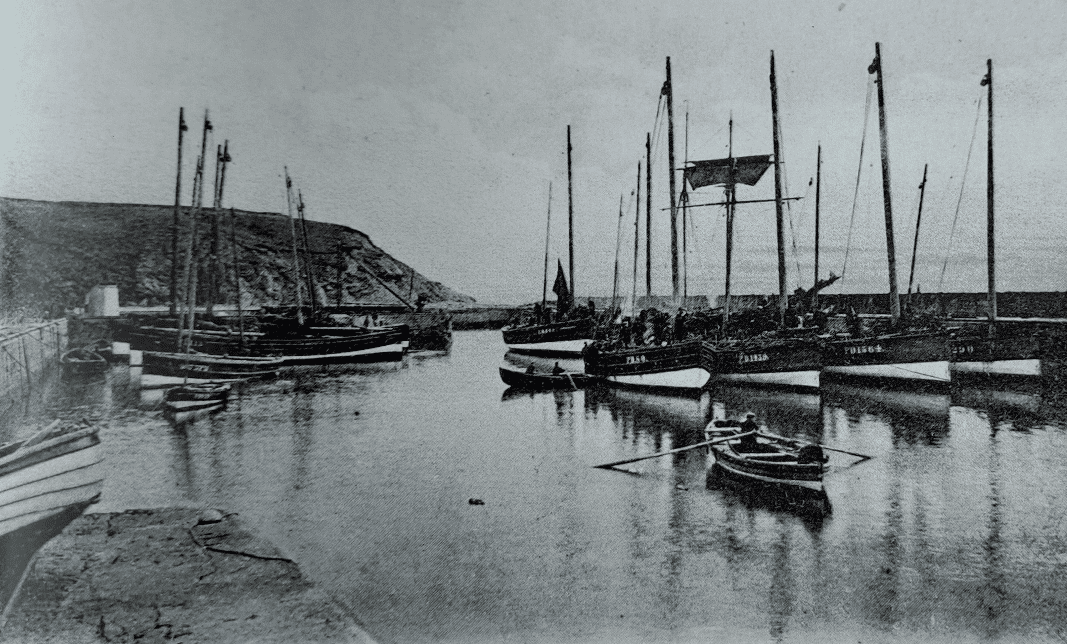
Heroes and Heartbreak (The Lifeboat Station & Shipwrecks)
The treacherous reefs and rugged cliffs of the Buchan coast made navigating the North Sea a perilous endeavour for nineteenth-century mariners. Recognising this constant danger, the Earl of Erroll, alongside his son Lord Kilmarnock and local residents, formally petitioned the Royal National Lifeboat Institution (RNLI) for a dedicated rescue presence at Port Erroll.
Their efforts succeeded on 30 October 1877, when the Port Erroll Lifeboat Station was officially established. To serve the village, the RNLI dispatched a 33-foot self-righting “Pulling and Sailing” lifeboat named the Peep O’Day. Remarkably, the £500 capital cost for this vital vessel was funded by a generous donation from a benefactor named Mr. G. Marshall-May, who sent the gift all the way from Whanganui, New Zealand.
Manned by brave local fishermen who intimately understood the North Sea’s ferocious temperament, the lifeboat crews became the village’s unsung heroes. However, despite their courage and skill, the coastline remained unforgiving. Tragedy struck the community deeply during the brutal winter storms of January 1912, a devastating period that saw both the S.S. Frederick Snowden and the S.S. Wistow Hall wrecked just off the coast. These heartbreaking losses served as a grim reminder of the sea’s deadly power over those who earned their livelihoods upon it.
The Port Erroll Lifeboat Station remained in service for over four decades, concluding its life-saving operations when it was eventually disestablished in 1921. Although the station is now a memory, the heroism of the men who rowed the Peep O’Day out into tempestuous seas remains a proud and poignant chapter in the harbour’s rich maritime history.
Two Days | Two Wrecks | One Deadly Sea.
On consecutive days in January 1912, the North Sea claimed the Frederick Snowden and the Wistow Hall off the Aberdeenshire coast. The back-to-back disasters shocked local communities and stand as a grim reminder of the sea’s merciless power.

Image created by Cruden Bay Life
The Loss of the Frederick Snowden (17th January 1912)
The disappearance of the Aberdeen collier steamer Frederick Snowden remains one of the great maritime mysteries of the northeast coast. A regular trader between the Tyne and Aberdeen, the vessel sailed with a crew of fourteen and a heavy cargo of coal, but never reached her destination. Initial concern turned to dread when wreckage bearing her name was recovered in Peterhead Harbour.
Eyewitnesses later reported a steamer foundering off Whinnyfold, helpless in mountainous seas, before suddenly capsizing and sinking about a mile and a half offshore. No rescue was possible, and no survivors were ever found. The loss devastated families across Aberdeen, leaving unanswered questions about the vessel’s final moments and marking a sombre chapter in the region’s maritime history.

Image created by Cruden Bay Life
The Wreck of the Wistow Hall (18th January 1912)
In January 1912, the 3,314-ton steamship Wistow Hall left Newcastle for Glasgow with a crew of 57 men, unaware she was heading into one of the fiercest North Sea storms of the era. Over several harrowing days, towering seas tore away her funnel and lifeboats, flooded the engine room, and left the ship helpless, drifting north without power, food, or fresh water.
Driven onto the rocks near North Haven, Port Erroll, the wreck unfolded in full view of the shore. Despite courageous rescue attempts by local lifeboatmen and fishermen battling violent surf, only three men survived. Fifty-four sailors lost their lives, many of them Lascar mariners serving far from home. The tragedy left a deep mark on the local community and stands as one of the most devastating shipwrecks on the Aberdeenshire coast.

Image created by Cruden Bay Life
Bram Stoker’s Coastal Muse
Between 1892 and 1910, the renowned author Bram Stoker found his summer sanctuary in Cruden Bay. Initially staying at the Kilmarnock Arms Hotel—where his signatures still grace the historic guestbook—Stoker later favoured renting local properties like Hilton Cottage near the village and Crookit Lum Cottage in nearby Whinnyfold. He was deeply captivated by the rugged Buchan coastline, the formidable North Sea, and the resilient local fisherfolk.
This profound connection led Stoker to use Port Erroll and its surrounding cliffs as the direct setting for his 1895 novel, The Watter’s Mou’. This tragic smuggling tale was inspired by the treacherous local rocks and real village personalities, such as the local coastguard. Stoker’s immersion in the community was so deep that he even incorporated authentic Aberdeenshire Doric dialect, such as the phrase “Dinna fash” (don’t worry), into his later writings.
Beyond local folklore, the dramatic landscape significantly influenced his 1897 gothic masterpiece, Dracula. Stoker often wrote at a small round table in the garden of Hilton Cottage, enjoying a direct view of the towering Slains Castle. The striking coastal fortress left such an indelible mark on his imagination that its octagonal reception hall served as the direct template for a windowless room within Count Dracula’s own castle in Transylvania.
Villagers would often see the tall author pacing the vast expanse of Cruden Bay beach, lost in intense thought with a slight stoop. Here, he plotted his novels and absorbed “the music of the sounding sea,” drawing upon Port Erroll’s powerful, brooding atmosphere to fuel his dark and enduring creativity.
Pioneering Piers (Building the Harbour)
Before the 1870s, the coastal settlement here was merely a tiny, exposed hamlet of rudimentary fisher cottages perched atop Ward Hill, known simply as Ward. Seeking to expand the local fishing community he had established in the 1840s, William Hay, the 18th Earl of Erroll, embarked on a highly ambitious engineering project. Between 1875 and 1880, he financed the construction of a substantial new harbour at a remarkable personal cost of £14,000. To commemorate this monumental undertaking, the surrounding area was officially renamed Port Erroll.
The construction of Port Erroll Harbour was a pioneering architectural marvel for its time. Rather than relying solely on traditional stone and rubble, the works were formed using concrete, making it an exceptionally early example of this material being used in British marine engineering. This sturdy, solid-core structure was specifically designed to withstand the brutal hydraulic pressure and relentless waves of the North Sea. Its layout features two distinct basins—a smaller first basin facing east, which opens sharply to the left into a larger second basin. A high wall of concrete was also erected to separate the safe haven from the shifting sands of the Water of Cruden estuary.

Image created by Cruden Bay Life
Despite this modern and expensive infrastructure, Port Erroll remained a tidal harbour. Gaining entry was notoriously difficult, as the treacherous approach and rapid tides meant the refuge was only accessible when the water had fairly risen. Nevertheless, these pioneering concrete piers successfully birthed a new era for the village, transforming it from a precarious clifftop outpost into a dedicated, sheltered fishing port.

Image created by Cruden Bay Life
The Forgotten River
Stand on the Ladies’ Bridge today, and you can watch the Water of Cruden flow quietly into the sea beside Port Erroll Harbour. It seems like the most natural route in the world, but the landscape holds a fascinating secret. Before the mid-nineteenth century, this river bypassed the harbour entirely, flowing northeast through a broad valley to empty into the North Sea at a rocky coastal gorge known as ‘Old Water Moo’.
The deliberate diversion of the Water of Cruden was no accident—it was an ambitious feat of Victorian civil engineering that played a crucial role in the creation of a successful harbour. As the new concrete piers were being constructed to support the local fishing industry, engineers faced a constant battle against the North Sea.
Relentless waves and tides continually swept massive volumes of sand into the harbour mouth, creating shallow banks that threatened to block vessel access. By canalising the river and forcing its freshwater volume to discharge directly beside the new harbour, engineers created an ingenious natural hydraulic flushing system. This constant flow washed incoming marine sediment back out to sea, helping to keep the approach clear for the village’s fishing fleet.
Want to uncover the historical maps and local memories that revealed this 19th-century mystery? Read the full story of The Forgotten River here →.
The Golden Age of the Herring Lassies
During the late nineteenth century, Port Erroll Harbour was a thriving hub for the Scottish herring boom, a highly synchronised trade that exported millions of barrels of cured fish across Europe. The local industry reached its absolute peak in 1885, when the harbour supported a bustling fleet of vessels, including 32 large herring boats, bringing unprecedented commercial activity to the village.
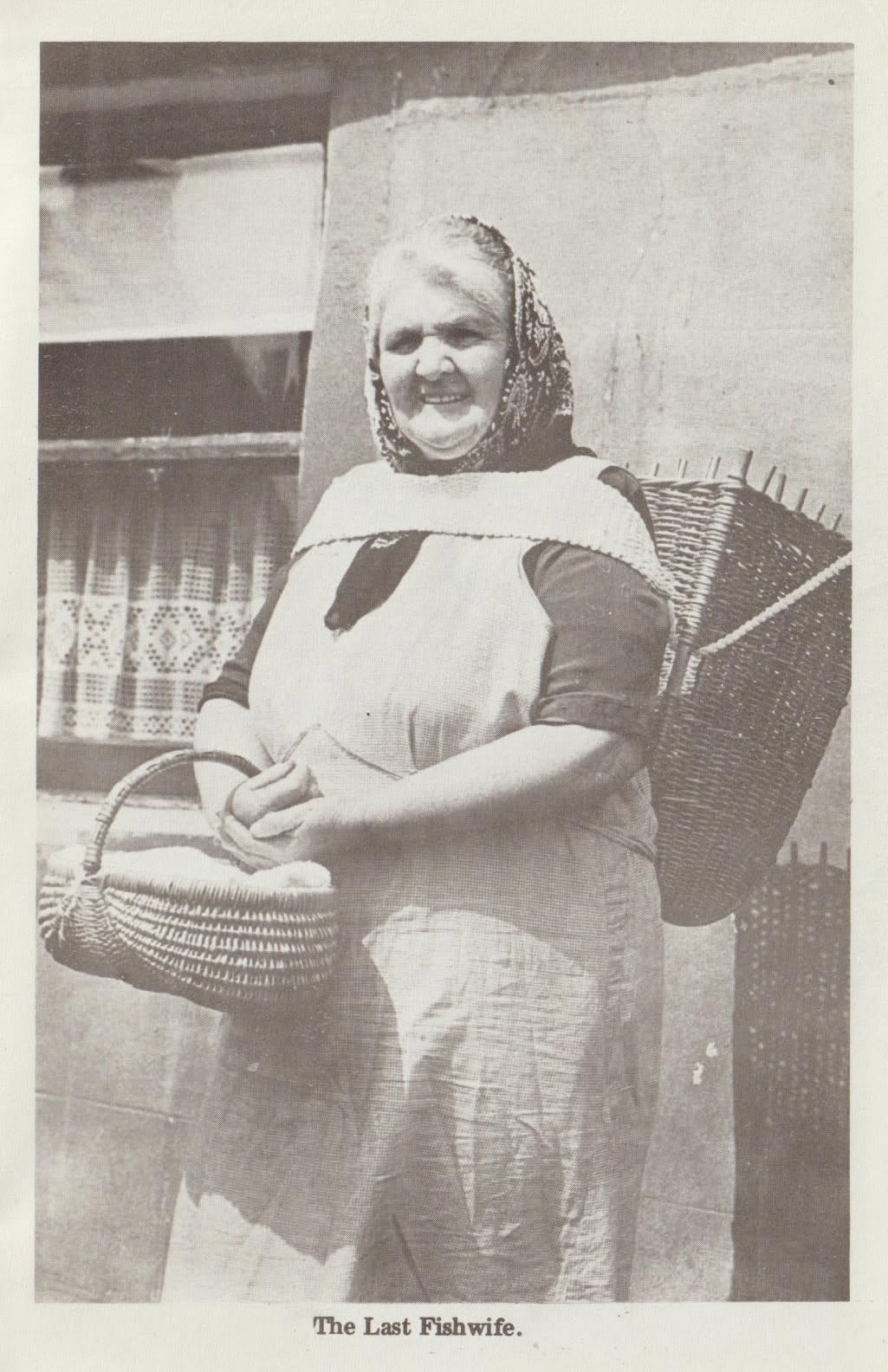
At the heart of this booming trade were the “herring lassies” or fisher girls, migrant workers who followed the fishing fleets along the coast during the season. The work was incredibly gruelling and physically demanding. Operating outdoors in teams of three—two gutters and one packer—these women processed the catch at lightning speed. Using short, sharp knives called cutags, a skilled gutter could process up to one fish per second. To protect their hands from the sharp blades and the highly corrosive salt brine used to cure the fish, the women wrapped their fingers in strips of cloth known as “clooties”. The packer would then arrange the salted herring tightly in wooden barrels, placing them in spiral rosettes with alternating layers of heads and tails, generously coated in salt to preserve them for long export journeys.
This golden era of economic prosperity also highlighted a stark social divide within the village. Main Street, formerly known as The Terrace, was home to merchants and tradesmen who largely kept themselves separate from the working-class fisherfolk. The fishing families were clustered down by the water along Harbour Street, often living in cramped, overcrowded conditions. It was not uncommon for large, multi-generational families—sometimes up to eleven people—to share small, two-room, single-storey cottages, where it was said they scarcely had enough space to breathe. Despite these harsh realities, the golden age of the herring lassies remains a defining chapter in Port Erroll’s history, showcasing the remarkable resilience and hard work of its coastal community.
The image of ‘The Last Fish Wife’, was included in a book of poetry called Mount Pleasant, which was published by Peterhead resident Peter Buchan in 1961. Her name, unfortunately was not recorded.
Scenic Beauty, Wildlife & Coastal Adventures
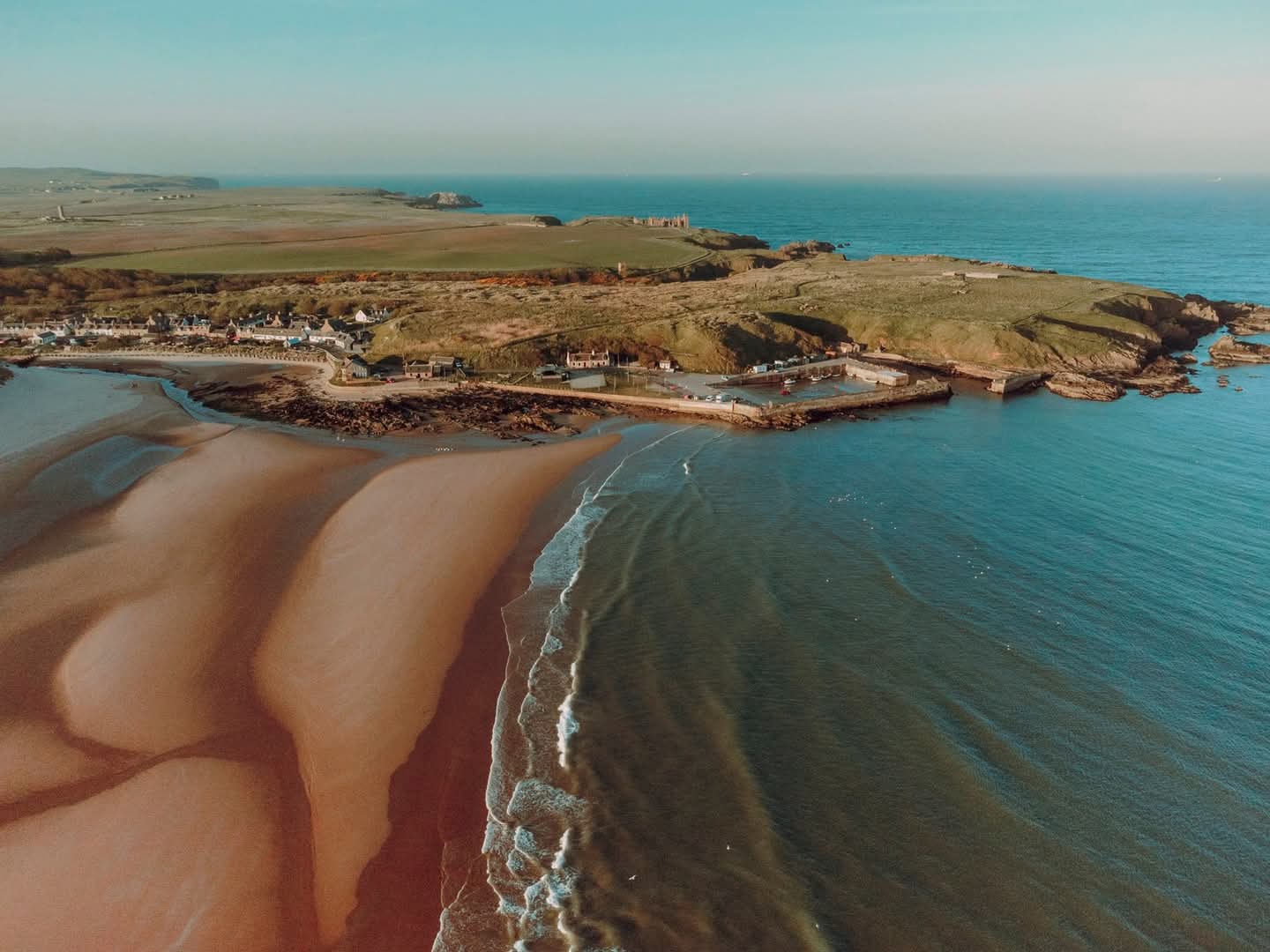
Port Erroll Harbour is more than just a historic maritime landmark—it’s a gateway to some of the most breathtaking natural landscapes on the Aberdeenshire coast. Surrounded by dramatic cliffs, sweeping sand dunes, and panoramic views of the North Sea, the area offers a feast for the senses in every season. The ever-changing light, shifting tides, and wide skies create a dynamic setting that captivates photographers, artists, and nature lovers alike.
Wildlife thrives in and around the harbour. Keen-eyed visitors can spot a variety of seabirds nesting along the cliffs or soaring overhead, from gannets and gulls to the occasional puffin. Grey seals are often seen basking on offshore rocks or swimming close to shore, while dolphins and porpoises occasionally make an appearance further out at sea, especially during the summer months.
The harbour also serves as the perfect starting point for a variety of walking routes, offering adventures for all abilities. One of the most popular paths leads along the rugged coastline to Slains Castle, a striking ruin perched dramatically on the clifftops. Believed to have inspired Bram Stoker’s Dracula, the walk offers not only literary intrigue but also unforgettable views.
Whether you prefer a leisurely beach walk or a more challenging coastal hike, the network of trails around Port Erroll provides a rich opportunity to explore the wild beauty of this unique corner of Scotland—on foot, at your own pace.
Things to See & Do / Community & Boating Life
Whether you’re visiting for a few hours or settling in for a full day, Port Erroll Harbour offers a wealth of experiences that connect visitors to both the natural beauty of the coastline and the area’s enduring maritime traditions.
Begin your visit by exploring the rock pools that emerge at low tide. These miniature marine ecosystems are full of life – crabs scuttle beneath seaweed, anemones sway gently with the water’s movement, and small fish dart between the rocks. It’s an ideal activity for families, nature lovers, and anyone with a sense of curiosity.
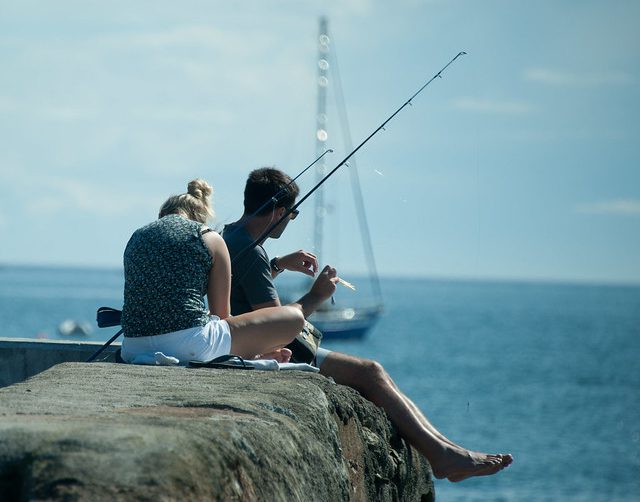
Fishing enthusiasts will also find plenty to enjoy. Rod fishing from the harbour wall is a peaceful, meditative way to spend time by the sea. With a bit of luck and the right tide, you might catch mackerel, pollock, or other local species, all while enjoying the fresh coastal air and panoramic sea views.
Port Erroll is also a working harbour, and boating remains central to its character. You’ll often see local fishing boats heading out or returning with their catch, as well as kayaks and small leisure craft launched from the slipway. Cold water swimmers can regularly be seen in the harbour, if you fancy joining them, you must use a tow float, and SUPs must be visible.
Jet skis are not permitted to be launched from the harbour slipway.
This lively yet laid-back boating culture reflects a close-knit community and a deep respect for the sea that continues to shape village life.
Keep an eye out for community events too – occasional harbour days, beach cleans, and local gatherings help preserve the harbour’s spirit and welcome visitors into the rhythm of coastal living.
‘To Haul Another Day’
A Song for Ally McGee Snr. and Ally McGee Jnr.
Introduction by Gordon Mackay
To Haul Another Day is an original song written and performed by Michael Rochon. It tells the story of Ally McGee Snr. and his son Ally McGee Jnr., lifelong fishermen from Cruden Bay. I’m proud to share it on my website, as Ally Jnr. is my cousin and Ally Snr. was my uncle.
I first heard about the song from my cousin, who told me that he had only ever heard it played once, as he never managed to get a recording at the time. He said how much he’d love to hear it again, and, eager to hear it myself, I reached out to Michael, who now lives in Wick, and he kindly agreed to record it for the website. The video accompanying this article is the result — a moving tribute to family, friendship, and the enduring spirit of the sea.
Michael explains the story behind the song:
“I was told by young Ally about how he tried to encourage his dad to keep going despite his dreadful, terminal illness. He described how they persuaded him to take one last trip around their old fishing spots. They wrapped him up warmly and headed out to sea.
They started fishing at the “Twa Ene,” just beyond the castle, and old Ally suddenly came to life, saying, “There’s a naked girl swimming past the boat!” A young woman with long blonde hair swam by, then climbed out onto the nearby rocks and looked back at them. At that moment, young Ally pulled out his phone and snapped a photo. When they returned to the harbour, they told everyone about the mermaid.
I thought it was a great idea for a song, but given that old Ally was making the most of the time he had left, I found it hard to write it in anything but a somber tone. Eventually, I came up with the chorus, “To haul another day,” which perfectly summed up the situation—a positive song about a good friend’s last day at sea, despite his ill health.
It still makes me sad to sing it. Old Ally was a good friend and one of life’s true good guys. I’m glad he hauled another day.”
Sharing this song is a way to honour my uncle and cousin and celebrate the friendships and memories that make life meaningful.
Cruden Water – Written and performed by Cruden Bay Folk Club
Written as an anthem for the Cruden Bay Folk Club, Cruden Water celebrates the rich heritage and enduring spirit of the village.
The song paints a vivid picture of life in and around Cruden Bay, weaving together past and present—from Viking invasions and historic battles to the fishermen, golfers, and community members who define the area today.
At its heart, the song flows through Port Erroll Harbour, capturing the gentle movement of the Cruden Water as it makes its way to the sea. The harbour itself, with its moored boats and sparkling lights, becomes a central symbol of connection, livelihood, and continuity, linking the natural landscape to the village’s human stories. From the towering castle steeped in myth to the dunes and coastal scenery, Cruden Water offers both a musical journey and a heartfelt tribute, celebrating the beauty, history, and life that converge at Port Erroll Harbour.
The Speech That Never Needed to Be Made
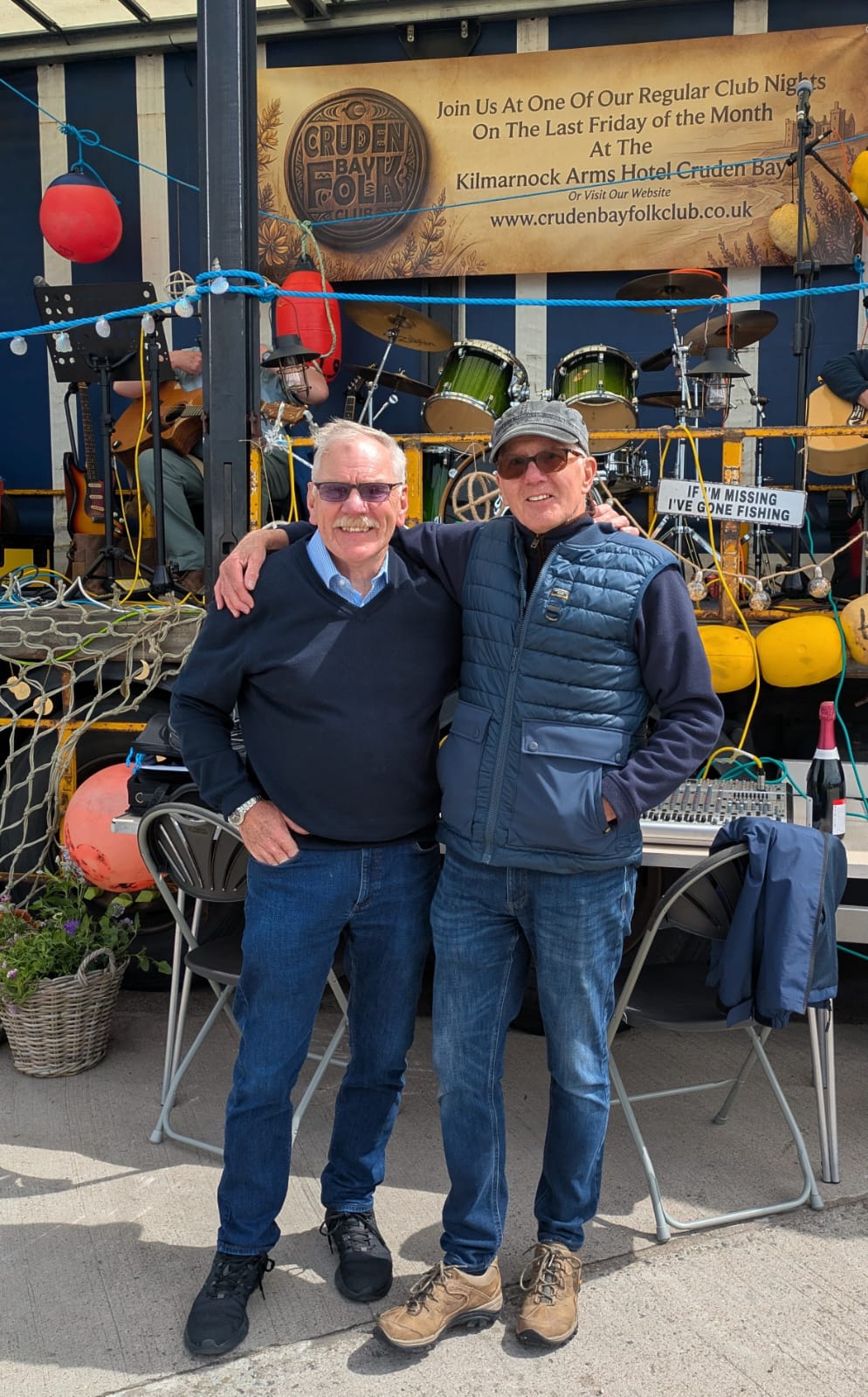
I was invited to officially open the 2026 Port Erroll Harbour Gala with a speech celebrating our community and thanking everyone who had helped make the event possible.
As it turned out, the speech was never delivered.
Technical challenges with the PA system, last-minute changes and the constant demands of keeping a full programme of live entertainment running meant there was never quite the right moment. Looking back, though, I realised those carefully prepared words were never really needed. The Gala itself became the speech.
Throughout the day, musicians, volunteers, sponsors and organisers quietly stepped forward whenever challenges arose. Headline performers adapted to unexpected circumstances, experienced musicians helped solve technical problems, volunteers gave up their own time to support others, and countless people worked behind the scenes to ensure visitors simply enjoyed a wonderful day by the harbour.
The photograph alongside this introduction captures one of my favourite moments of the day. It shows me with my Uncle George, a lifelong fisherman whose connection with Port Erroll Harbour stretches back many decades. Like so many friends and family members who stopped by to wish us well, George reminded me that the Harbour Gala is more than an annual event; it’s another chapter in the continuing story of a community whose traditions are carried forward by each generation.
This feature isn’t simply a report about another successful Harbour Gala. It’s the story of the people behind it—the performers, volunteers, sponsors and supporters whose quiet generosity turned an ordinary summer’s day into something rather special.
Because, in the end, the greatest strength of Cruden Bay has never been its scenery or its history. It’s the people who call it home.
Campervan Overnight Parking at Port Erroll Harbour
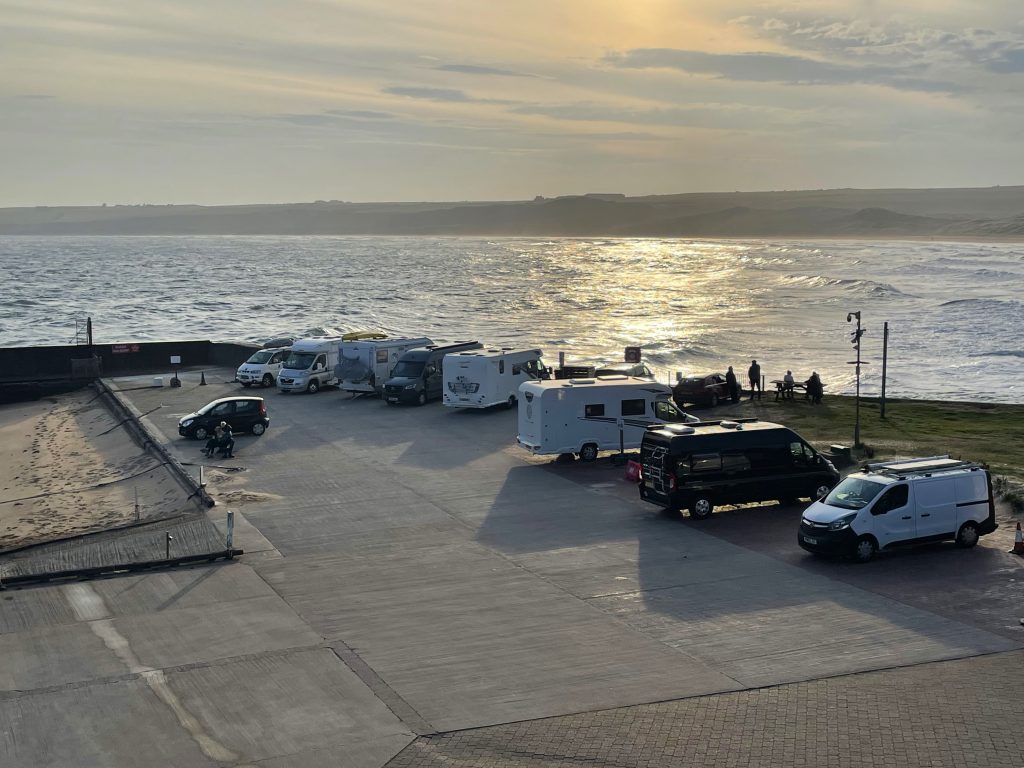
Port Erroll Harbour in Cruden Bay offers a picturesque and tranquil setting for campervan enthusiasts seeking a coastal retreat. Situated directly on the harbourfront, there is a parking area that provides stunning views of the North Sea and the historic harbour, making it an ideal spot for a peaceful overnight stay.
The site accommodates motorhomes or campervans, with a maximum stay of three nights. Facilities are basic: there is a small toilet block and access to fresh water, but no electric hook-ups or waste disposal services. Grey waste and chemical toilet waste must not be dumped, as there are no chemical/black waste disposal facilities on site. Visitors are encouraged to maintain a safe distance between vehicles and to respect the space allocated for berth holders and harbour operations.
While there is no compulsory fee, the Port Erroll Harbour Trustees suggest a contribution of £10 per night to support the maintenance and preservation of this historic site. Collection boxes are located at the head of the slipway and on the middle door of the toilet block.
Conveniently, the Harbour Dunes Café is located nearby, offering a selection of refreshments and meals. Additionally, the harbour’s proximity to Cruden Bay Beach and the ruins of Slains Castle provides ample opportunities for exploration and enjoyment of the area’s natural beauty.
Please note that camping (i.e., tents) is not permitted, and visitors are asked to observe all signage and guidelines to ensure a pleasant experience for all.
Toilet Facilities at Port Erroll Harbour
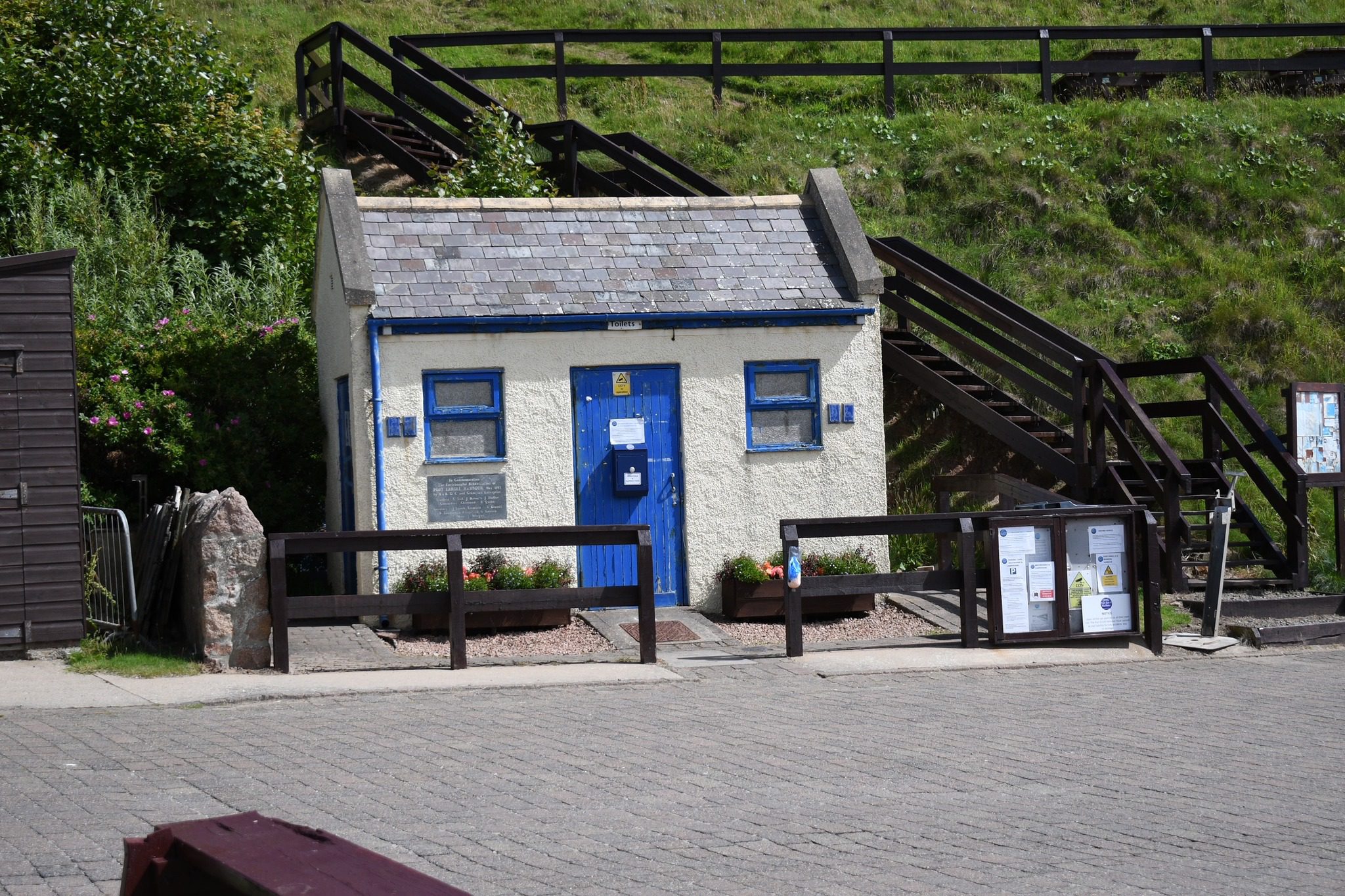
Located near the heart of the harbour, the toilet block at Port Erroll is a valuable facility for visitors, day-trippers, and those staying overnight in campervans or motorhomes. Built and maintained entirely by the dedicated volunteers of the Port Erroll Harbour Trust, these facilities are a testament to the community’s commitment to preserving and supporting this unique coastal location.
Unlike many similar amenities elsewhere, the Port Erroll toilet block receives no public funding. Its upkeep relies solely on the generosity of users and the income generated from berthing and slipway fees, as well as donations from overnight guests. Every contribution goes directly towards the maintenance, cleaning, and continued availability of this much-needed resource.
Visitors are encouraged to use the facilities respectfully and consider the time, effort, and cost involved in keeping them open year-round. Whether you’re enjoying a walk along the harbour, launching a boat, or staying overnight in a motorhome, your donation—no matter how small—helps ensure that these community-run amenities remain available for future visitors.
Donation information is displayed on-site, and every bit of support is greatly appreciated by the volunteers who care for this special place. Please help us keep Port Erroll Harbour clean, accessible, and welcoming for all.
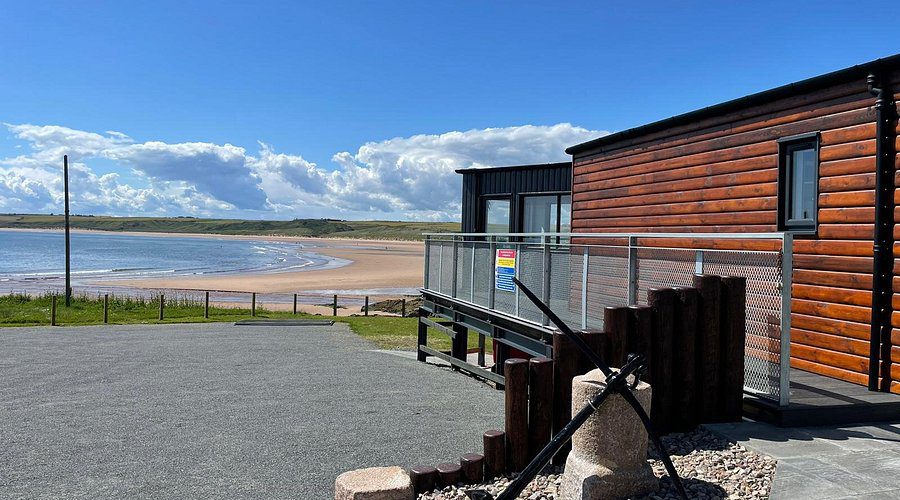
Relax, Refresh, and Savor at Port Erroll Harbour
The harbour is also an ideal spot for a relaxing break, especially if you enjoy good food in a picturesque setting. You can bring a packed lunch and settle in for a peaceful picnic at the quay, where the gentle lapping of the tide and the cries of seabirds create a calming coastal atmosphere. But if you’d rather leave the catering to someone else, you’re in for a treat—just a few steps from the water’s edge is the charming Harbour Dunes Café.
This welcoming café is a favourite among locals and visitors alike. Whether you’re after a freshly brewed coffee to warm your hands or a homemade scone straight from the oven, Harbour Dunes delivers quality with a local touch. Their menu features a tempting selection of home baking, light bites, and seasonal specials, all made with care and served in a cosy setting with views of the harbour. It’s the perfect place to pause, refuel, and soak in the maritime charm.
While the atmosphere is tranquil, the harbour remains very much alive. Small boats continue to launch from the slipway, and local fishermen can often be seen checking lobster pots. Managed by the Port Erroll Harbour Trustees, this historic harbour remains a vital and vibrant part of the community.


PORT ERROLL HARBOUR (Noticeboard #1)
The Way We Were ~ Down Through the Ages
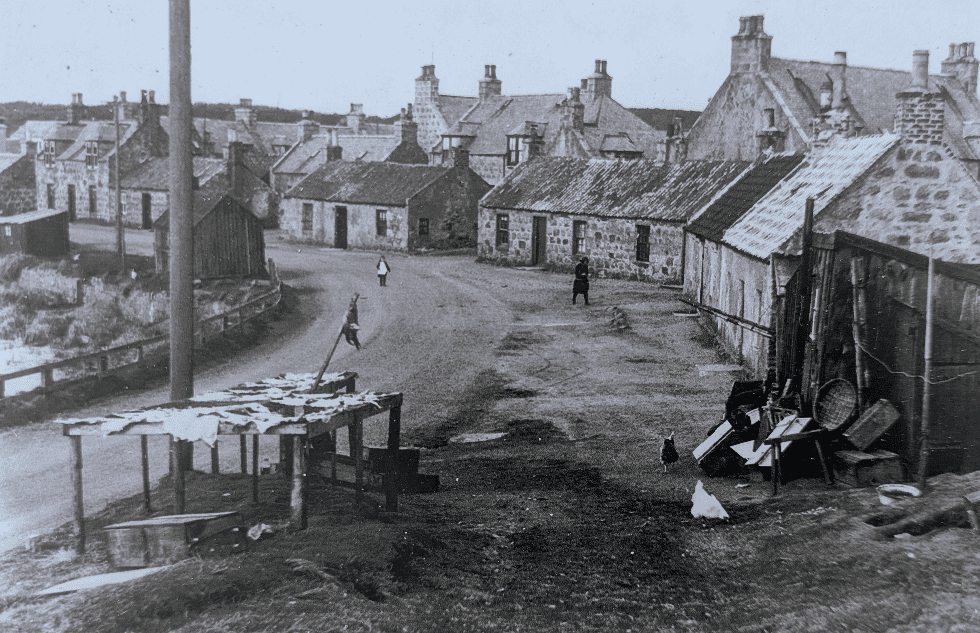
Here we see the timeless tranquility of Port Erroll village at the foot of Ward Hill with chickens scratchin’ for a living beside the families “spelding” ~ gutted and washed whiting or haddock ~ which after splitting are salted before being laid out on racks to dry in the sun.
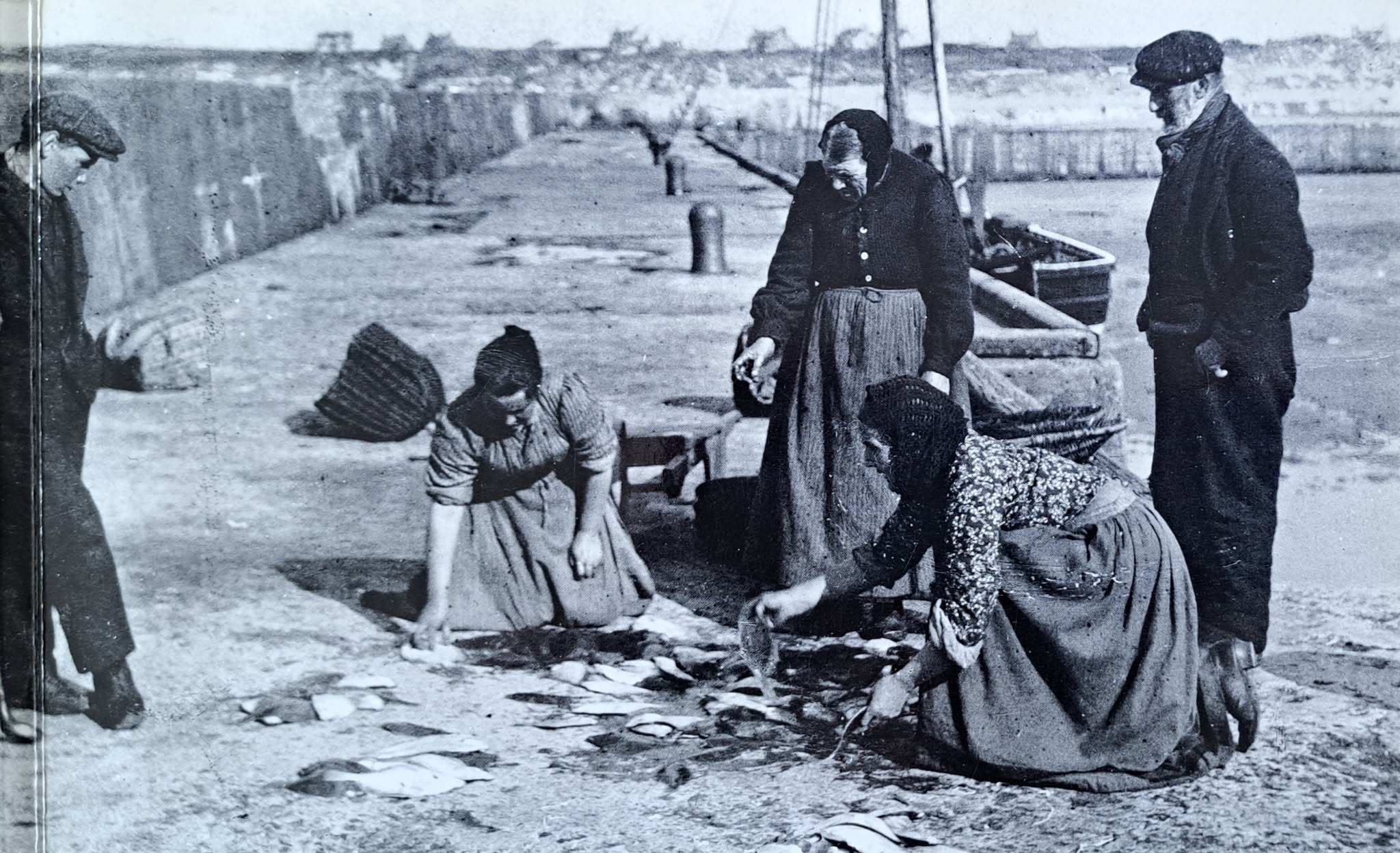
A group of Port Erroll folk on the harbour quayside, circa 1913, can be seen starting to “pairt” the catch. Once the catch was separated into the required number of portions a decision was then made regarding who received which share by “casting cavels”, a process very similar to drawing lots.
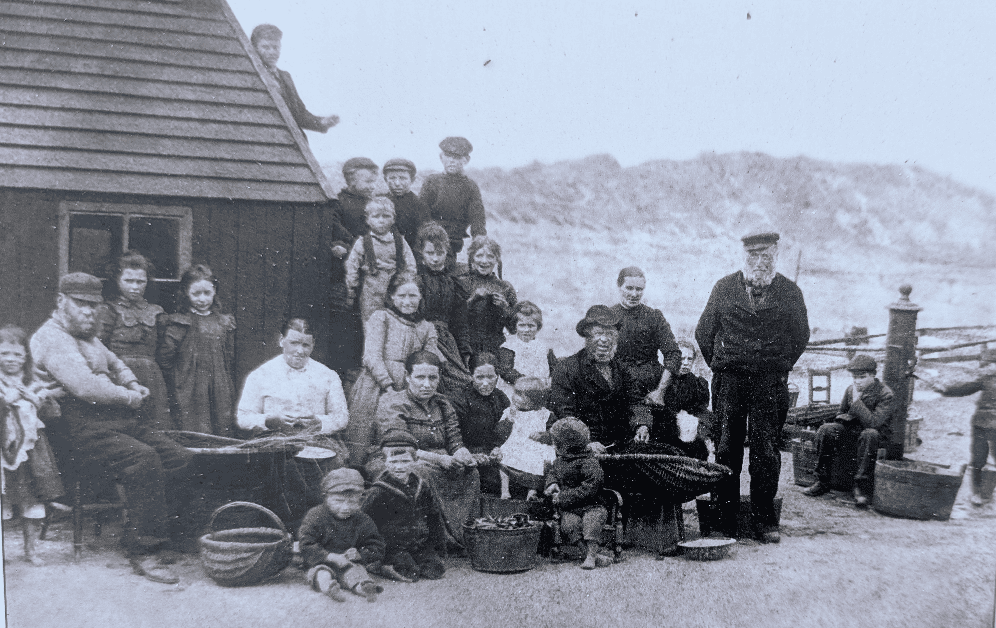
As the people of fishing communities and country folk rarely crossed paths the young frequently married either within their village or to a member of a neighbouring fishing village. “Cod & corn dinna gaun the gither” was the saying of the day and this meant that it was not uncommon for several families within a village to share the same surname. To alleviate at least some of this confusion people were given “tee names” which on some occasions related to the persons house or boat. For example Johnny Summers, who’s boat was the “Sunrise”, would be known as “Johnny Summers Sunrise” and his son Sandy would be known as “Sunrise Sandy”. If Johnny had a daughter called Jean, she would be known as “Sunrise Johnny’s Jean”.
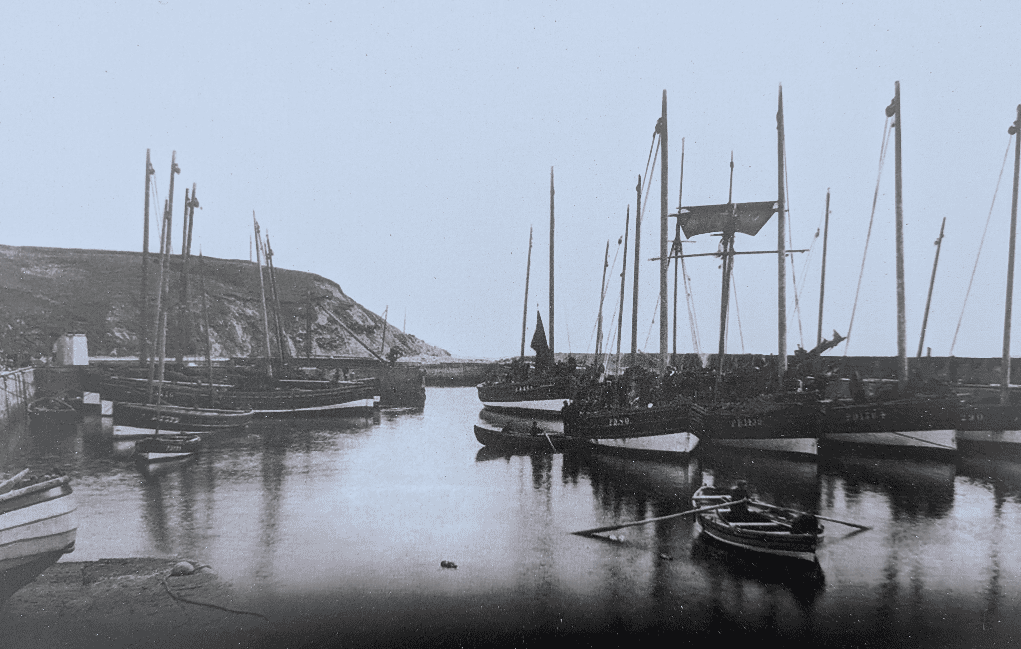
As far back as the mid 1600’s there have been fishermen living and working out of Invercruden, the historic hamlet located in the valley between Slains Castle and Ward Hill. However, it was not until between 1875 and 1880 that the current harbour, built under the auspices of the then 19th Earl of Erroll ~ one William Harry Hay ~ came into existence. In recognition of him having financed its construction the harbour was renamed Port Erroll. Soon there were as many as one hundred and eighty fishermen and sixty-eight boats fishing out of Port Erroll, fishing being the mainstay of the village.
However, the relative prosperity of the late 19th century was not to last as the modern day trawlers and seine net fishing boats of the day were unable to utilise the small tidal harbour. With their methods being the only commercially viable ones, there soon began a rapid decline in the harbour’s fortune and by the outbreak of war in 1914 only sixteen large yawls and some seventy fishermen remained.
When the shipping magnate, Sir John Reeves Ellerman, sold the Erroll estate in 1923, he offered the harbour, along with a gift of £250, to the village fishermen on condition that they themselves raised an additional £250 to add to a Scottish Fisheries Board grant of £500 for harbour maintenance. To assist the fishermen in raising the necessary funds and take control of their own destiny, a sale of work was held in the village with all monies going towards the Port Erroll Harbour Fund. On Saturday 24th March 1923 the sum of £200 was raised allowing them to reach their target. By courtesy of Sir John’s 1924 disposition the harbour is now held “in trust always for behoof of the whole fishermen present and future of Port Erroll or Cruden.”
Thereafter, the downturn in fishing from the harbour continued. By 1930 grass was growing on the piers, and boats lay rotting beside rusting iron chains and anchors. Nineteen boats and fifty-six fishermen still remained, both line fishing and catching crab and lobster. By the end of the Second World War there were only three seine net fishing boats and a few small rowing boats being worked by retired fishermen.
By the 1970’s only a handful of small boats fished from the harbour alongside the historic salmon fishermen’s cobles, used to fish for salmon at the harbour mouth using bag nets.
Today, though the harbour has survived the vagaries of past fragile fishing economies, it now faces it’s sternest battle – against nature itself. With time and tide now having taken their toll on the walls and infrastructure the same sea that once gave the harbour its very livelihood, now threatens to destroy it.
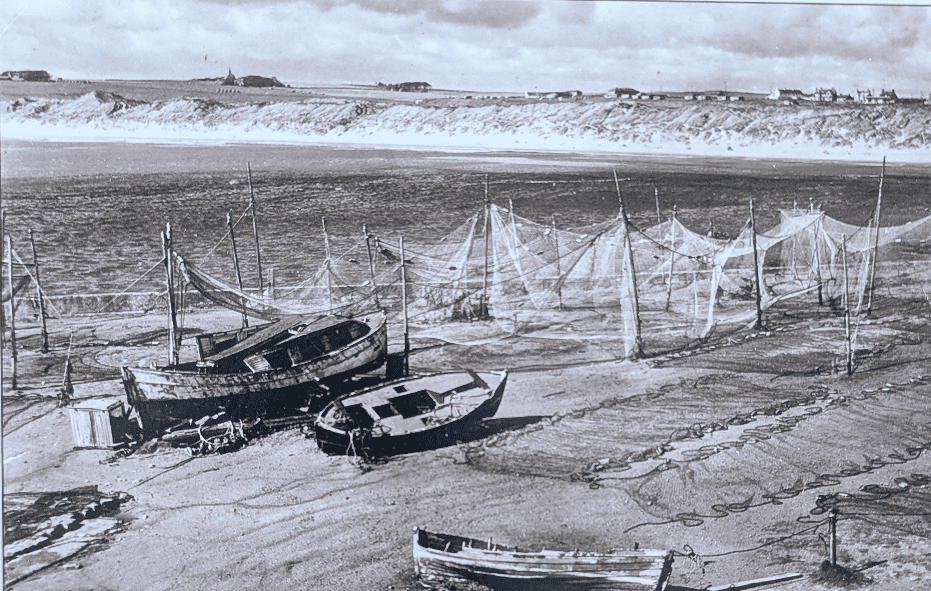
Where “auld boaties” go to die – with their best days now far behind them a scattering of old Port Erroll boats lie abandoned and neglected beside the drying green, where in days now sadly gone, the salmon fishermen’s nets were hung to dry.
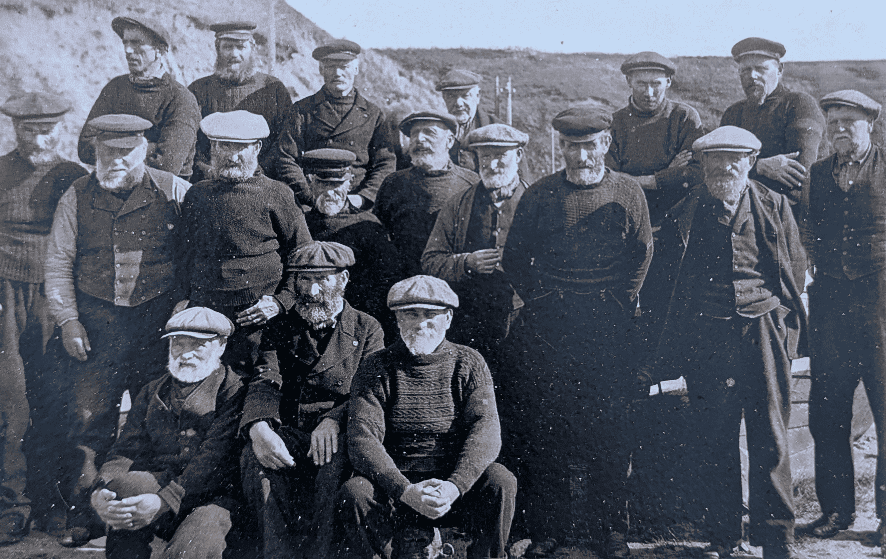
Here we see a gathering of Port Erroll fishermen, well turned out in their Sunday best on the harbour quayside. Fishing was a way of life for the people and communities along the Aberdeenshire coast. All the villages had their own boats and the skills of navigation and seamanship were handed down from father to son through the generations.
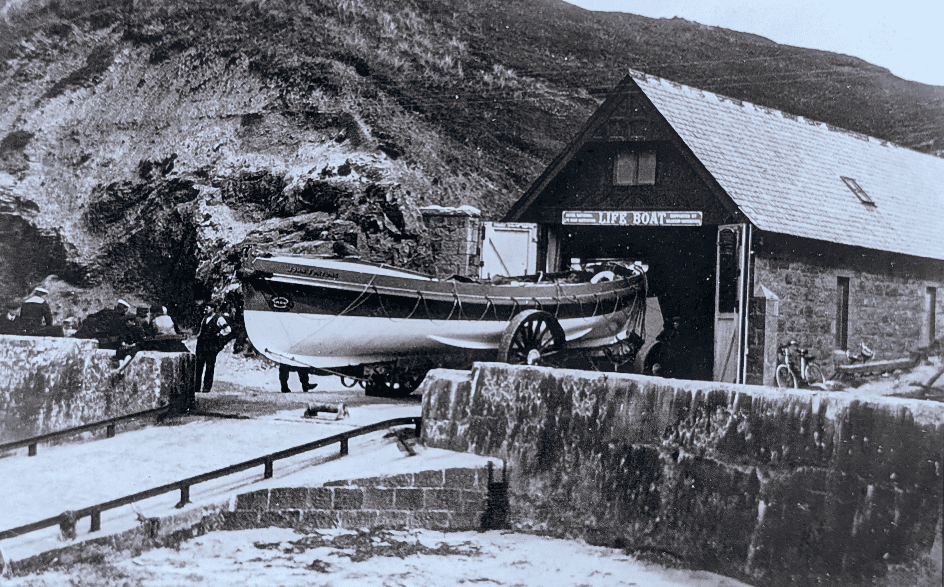
In 1876, with the new harbour now under construction, the R.N.L.I. stationed the thirty-three foot long lifeboat “Peep o’ Day” at Ward of Cruden. Shortly afterwards in 1878, the boathouse at a cost of £510, and the slipway in 1879 at a cost of £70, came into service. Having been called out five times with three folk rescued the Peep o’ Day was replaced in 1888 by the thirty-four foot “Frances Camilla Howard” at a cost of £376. After twelve rescue missions and thirty three lives saved she herself was replaced in 1904 at a cost of £1,007 by the thirty-eight foot long “John Fortune”. Pictured here on her launching cradle at the top of the slipway, the John Fortune was the last lifeboat to be stationed at Port Erroll and the station itself closed permanently in 1921.
“We are an independent, non-profit organisation run by volunteers seeking to preserve the harbour’s heritage for future generations whilst striving to improve facilities for both fishing and non-fishing activities”
This project was supported by NESFLAG and funded by Aberdeenshire Council’s Coastal Communities Challenge Fund
PORT ERROLL HARBOUR (Noticeboard #2)
The Way We Were ~ Down Through the Ages
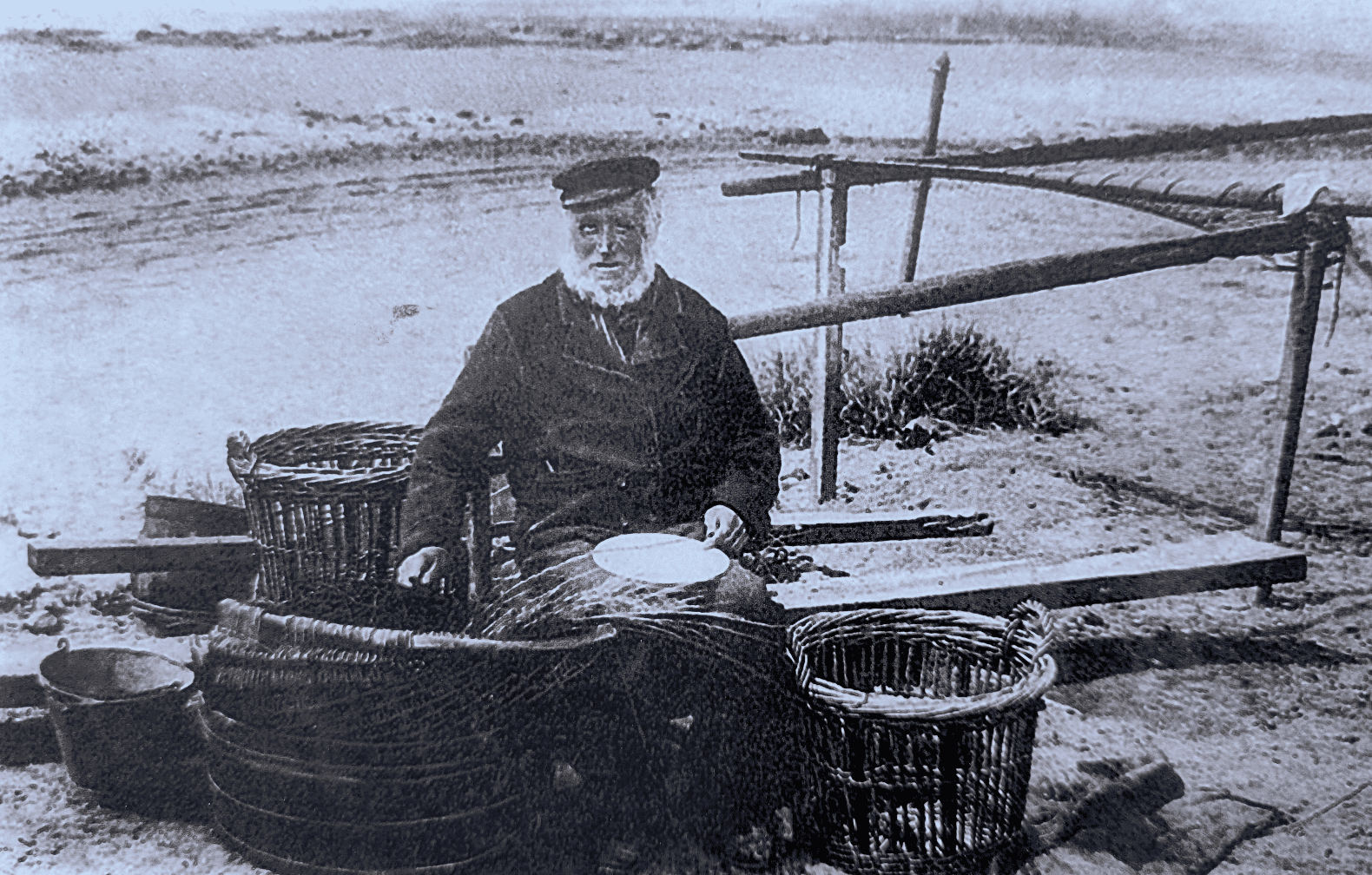
A fisherman of Port Erroll baits a ‘sma lin’ for his next venture to sea. ‘Small line’ fishing utilised a line, several hundred metres in length, to which shorter pieces of line with baited hooks were attached. To supplement any shortage of mussels the fishermen would also dig at low water for sand eels and lugworm. Small line fishing, although labour intensive resulted in a very high quality catch.
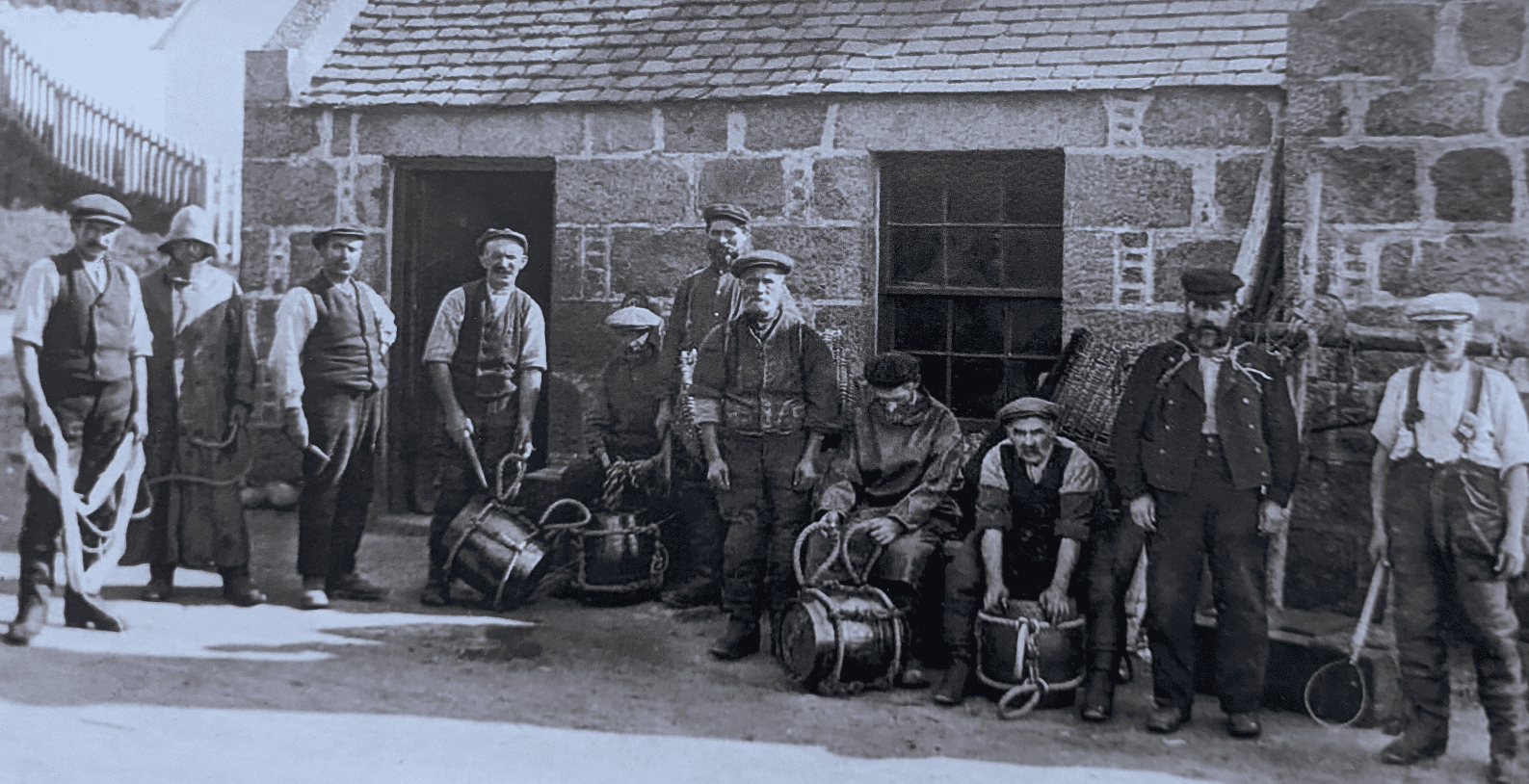
Fishermen gather outside the salmon bothy. Hooped barrels were used as buoys to keep the salmon nets afloat when set at the harbour entrance.
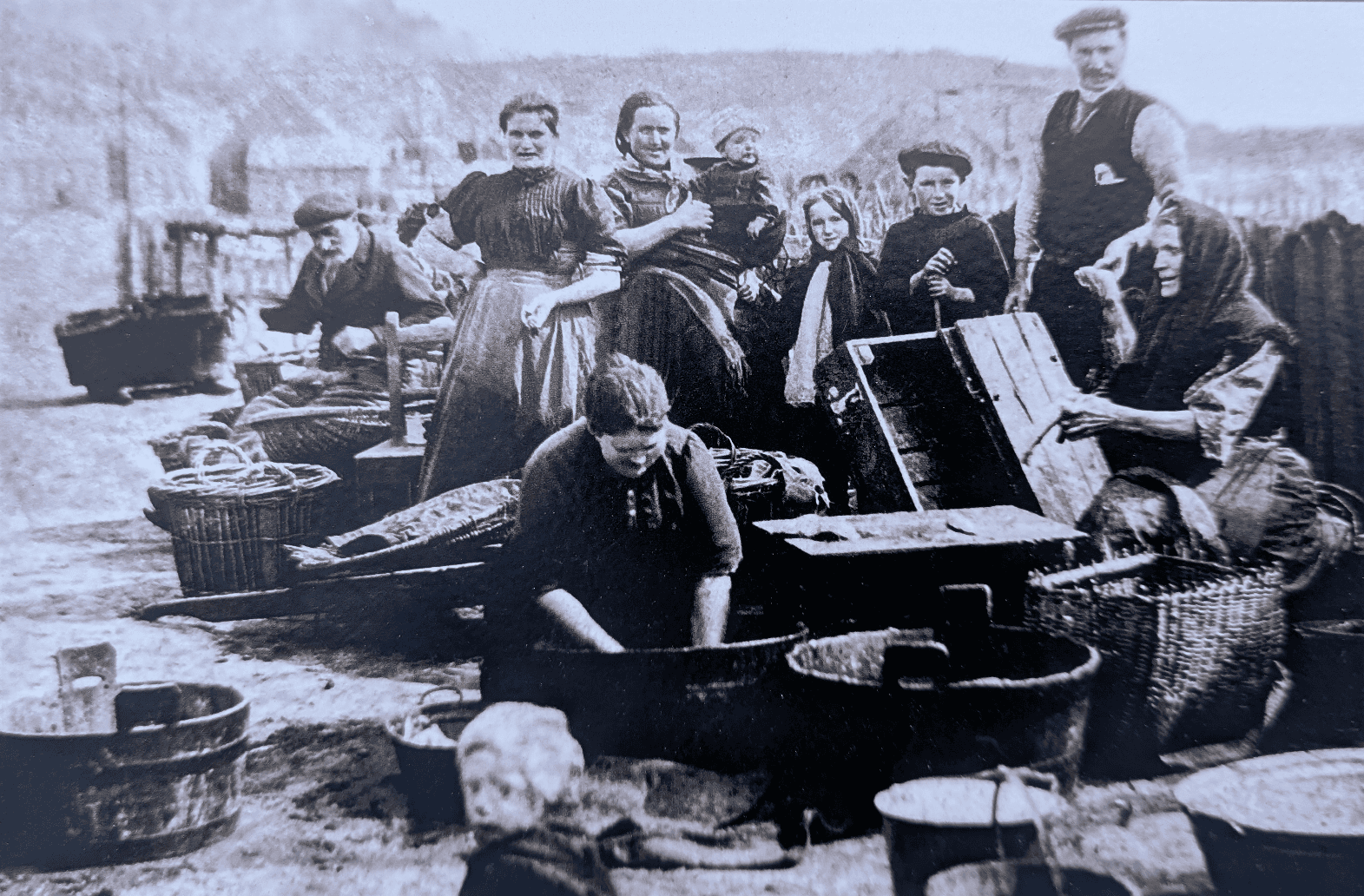
Although only men ventured out to sea the women who remained ashore played a vital role in the fishing industry. They carried out critically important tasks such as mending nets, gathering mussels and baiting lines for the next days fishing. Whether the weather was fair or foul these hardy women thought nothing of walking several miles with creels strapped to their backs brimming with dried fish to sell or barter for such “luxuries” as milk, eggs or butter.
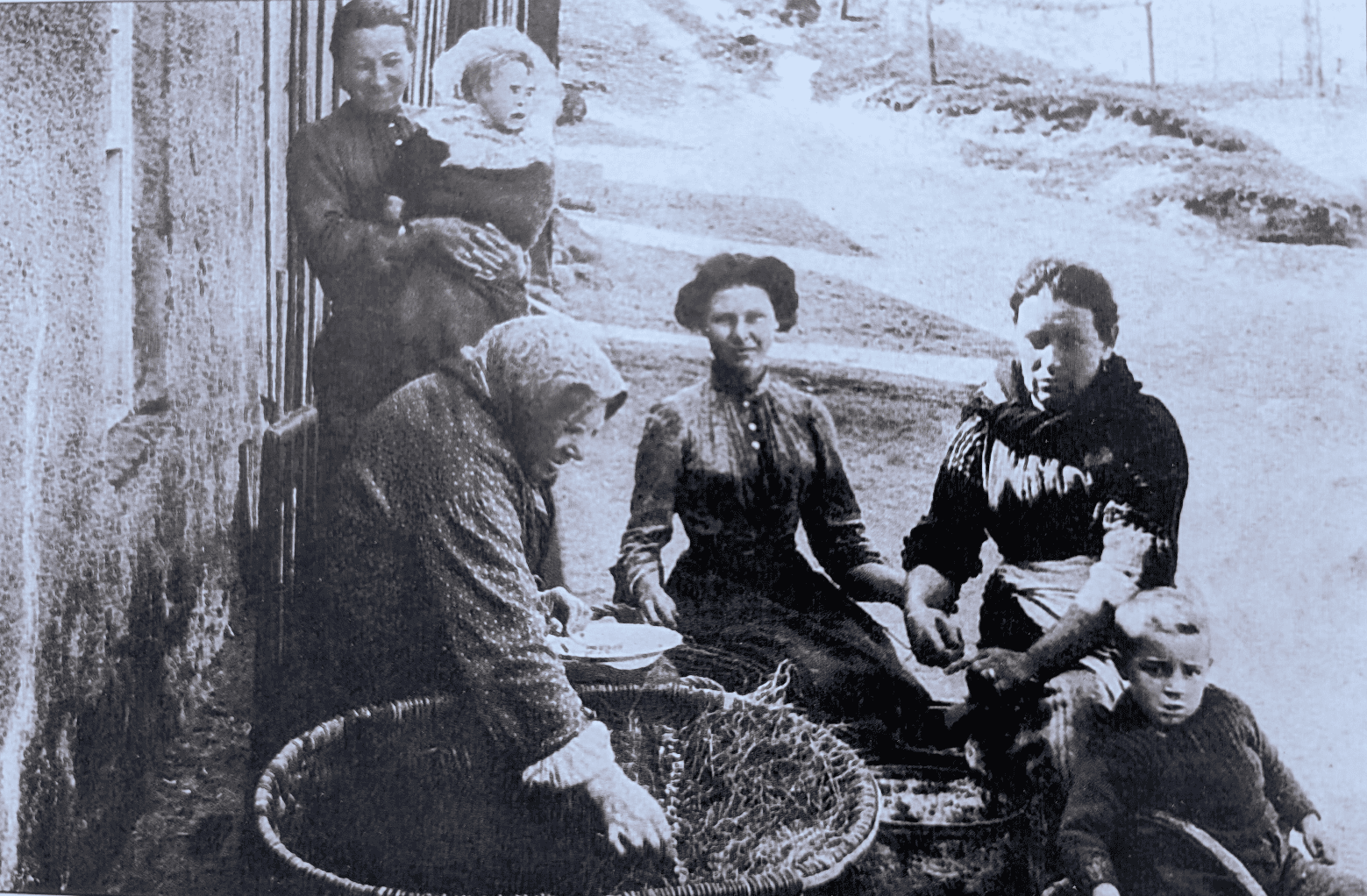
With the men at sea the line baiting was predominantly done by the women. The baited lines were meticulously coiled into shallow wicker baskets, known as sculls, in such a way as to minimise tangling whilst being “shot o’er the side” and set to work. Here we see a woman baiting the lines. Along with her children she would have collected the bait, mussels limpets and “buckies” – periwinkles – from rock pools on the shoreline.
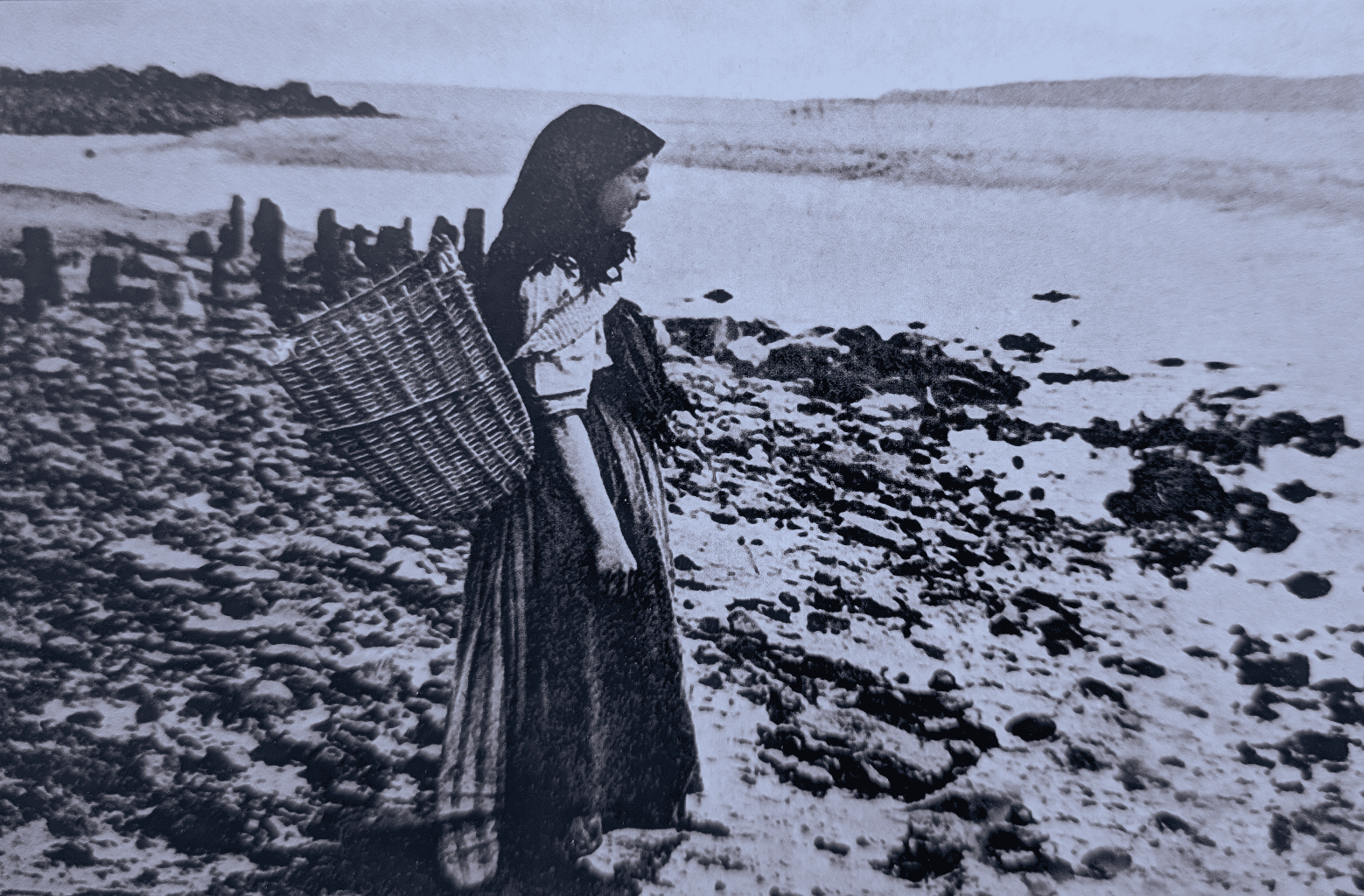
A “quine” – young woman or girl – collects mussels from the Cruden Bay shoreline. By the early 1900’s the local availability of mussels for the fishermen of Port Erroll was all but exhausted resulting in the necessity to ‘import’ mussels from the nearby Ythan estuary. Upon delivery to Port Erroll the mussels were then “sown” along the foreshore where having attached themselves to the rocks they were kept alive and fresh by the ebbing and flowing of the tides.
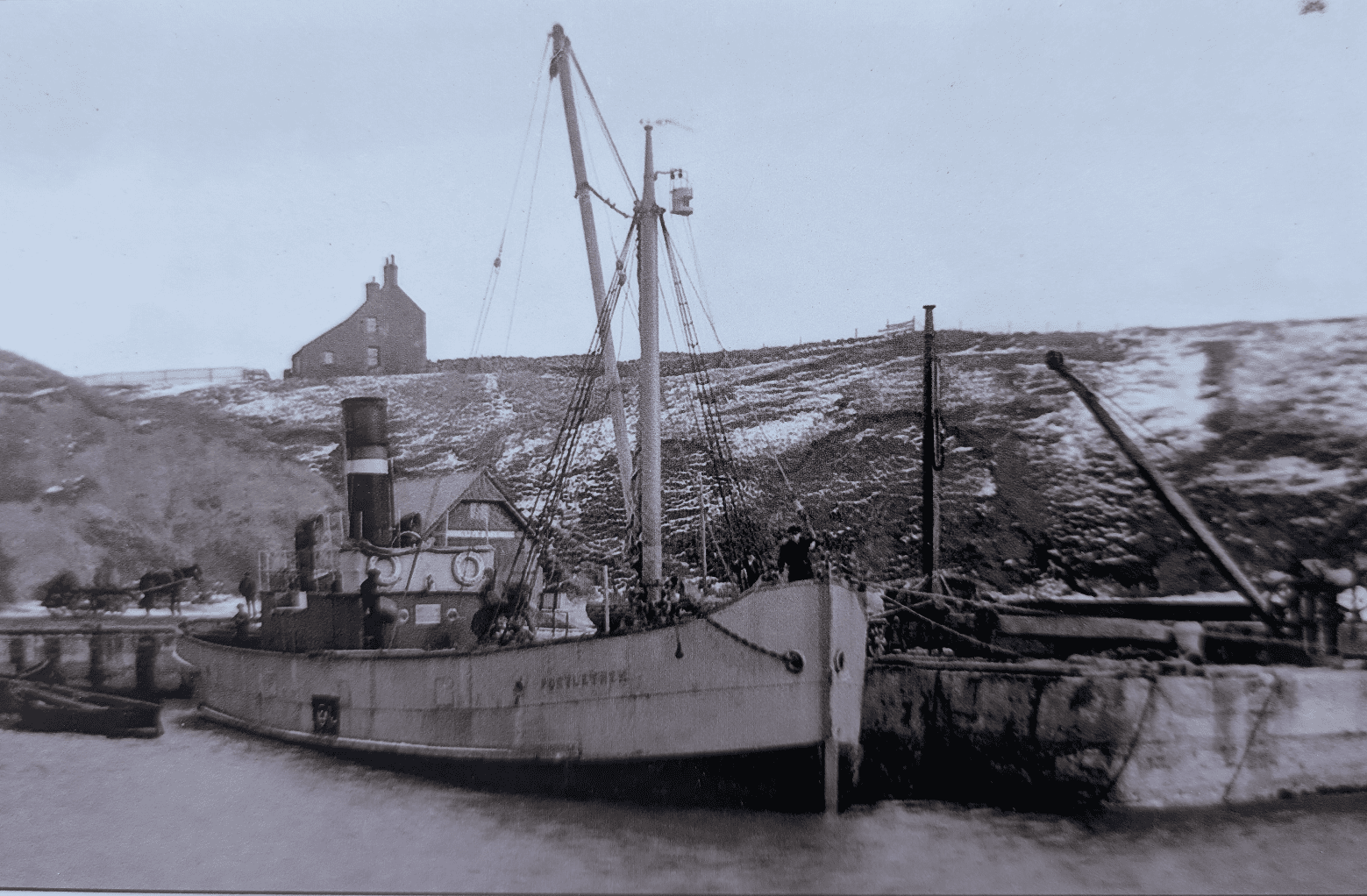
The iron and steel clad steam cargo vessel S.S Port Erroll, twenty-seven metres in length with a seven metre beam, visits Port Erroll with a cargo of coal. The manually operated crane at the end of the pier dits beside the wooden booms that were used to close the harbour entrance and give additional shelter to boats during inclement weather. This also helped to prevent the basin from silting up with water borne sand.
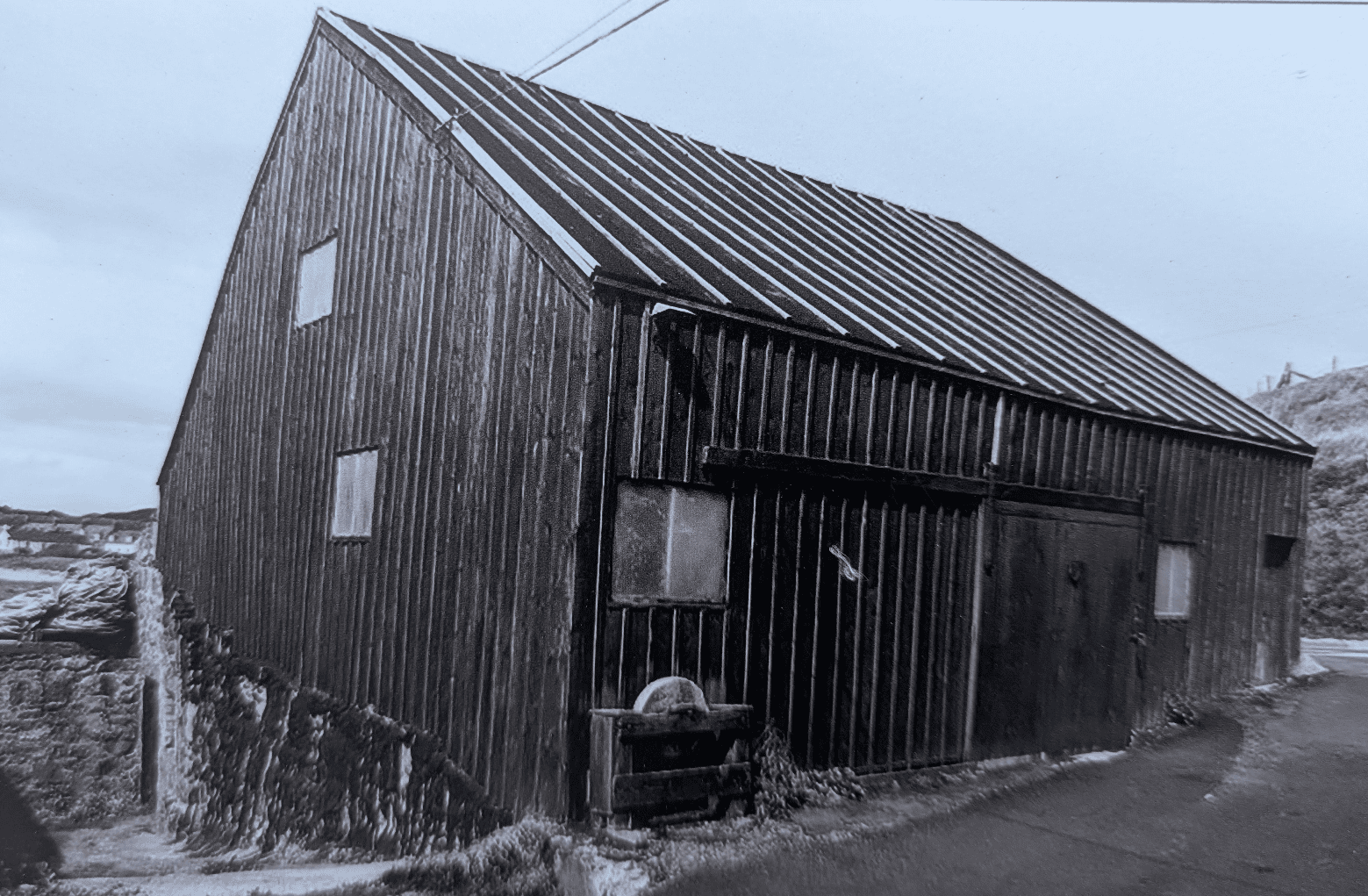
The Cruden Bay salmon fishery workshop and net store along with the semi-subterranean ice house, which is still in existence, are first recorded on the O.S. maps of 1868, although they may well date back to the earlier development by the Earl of Erroll, circa 1830. The Cruden Bay salmon netting station was fully operational from that time until 2016 when the “Conservation of Salmon (Scotland) Regulations” act banned all netting of salmon from coastal waters.
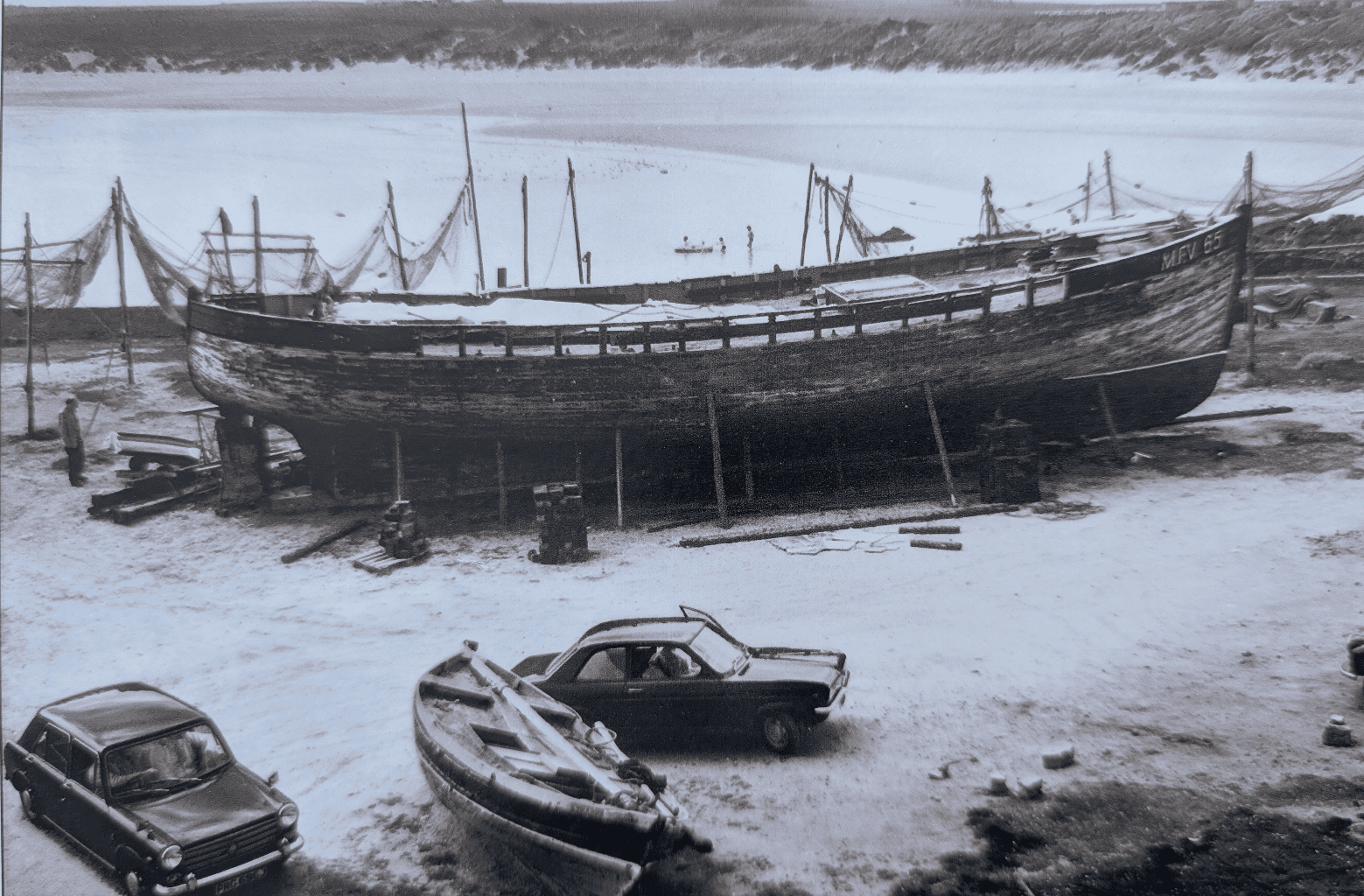
An MFV 65 – Motor Fishing Vessel – of wooden carvel construction, lies at rest alongside the Port Erroll salmon fishers nets and vehicles of the day.
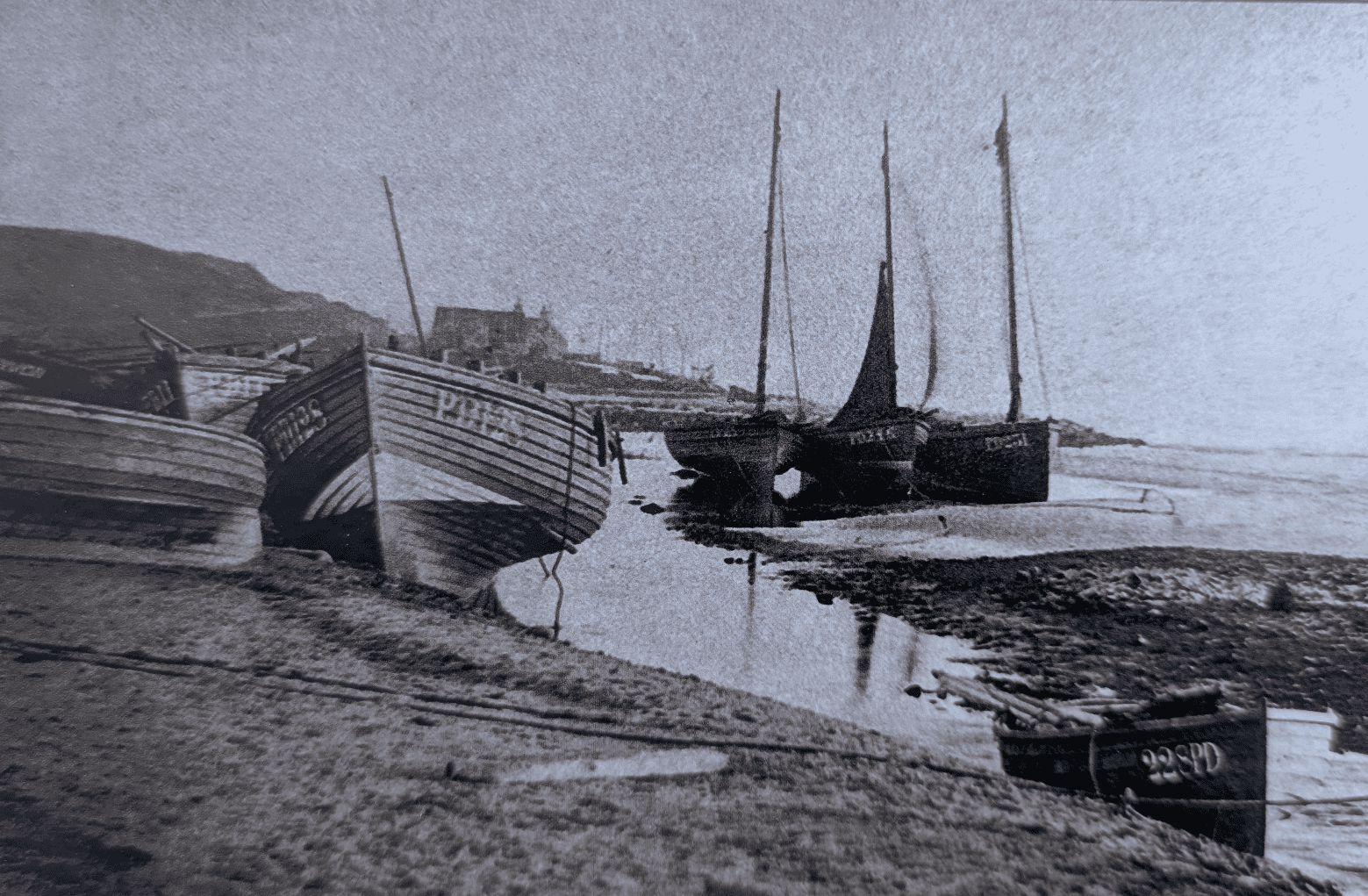
Several Peterhead registered fishing yawls lie resting ‘tween the tides on the sands of Cruden Bay estuary beside the Waters of Cruden.
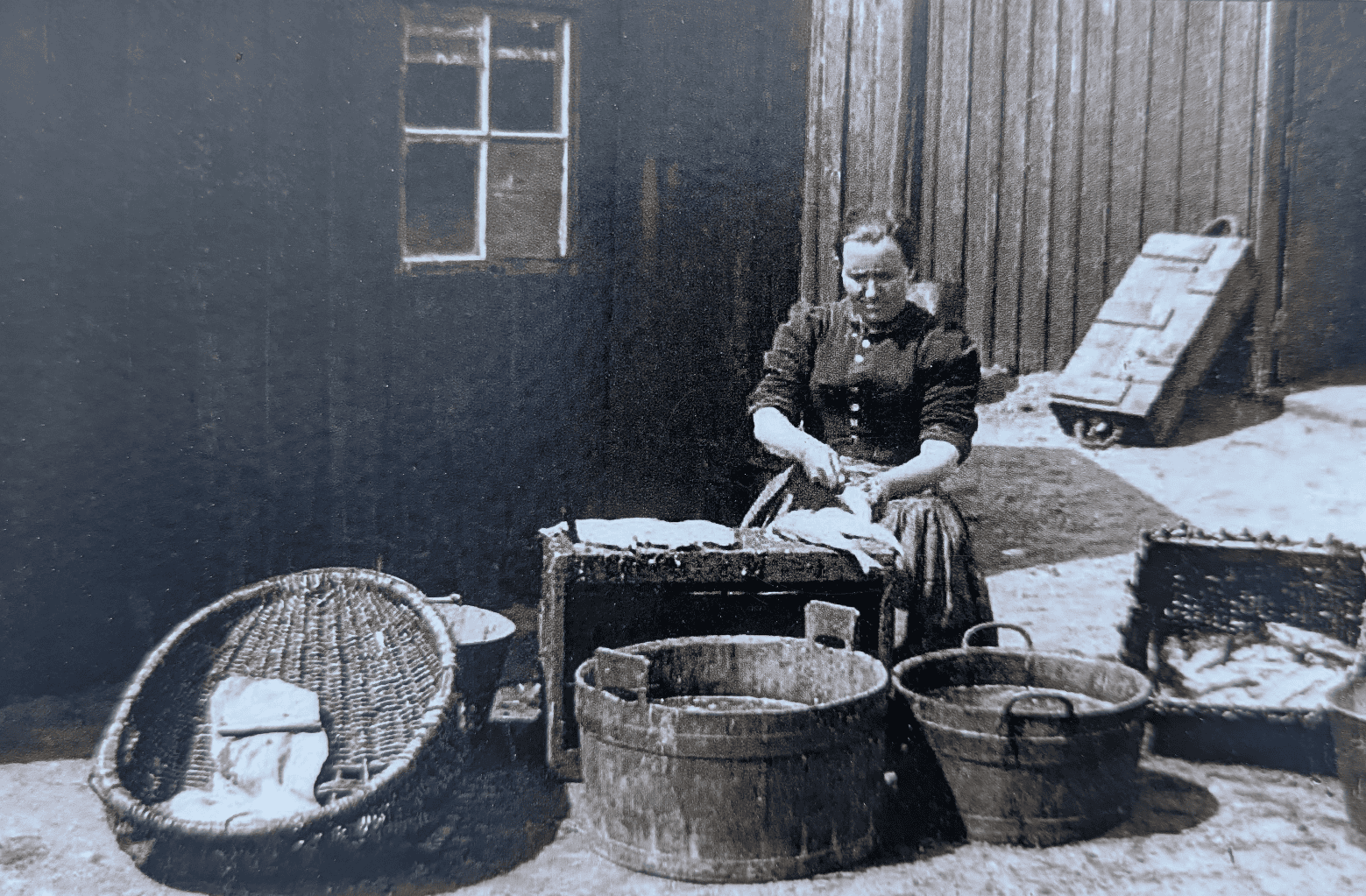
A fisher woman of Port Erroll guts the day’s catch outside the salmon bothy. This skilled work was held in high regard as it required great dexterity and speed.
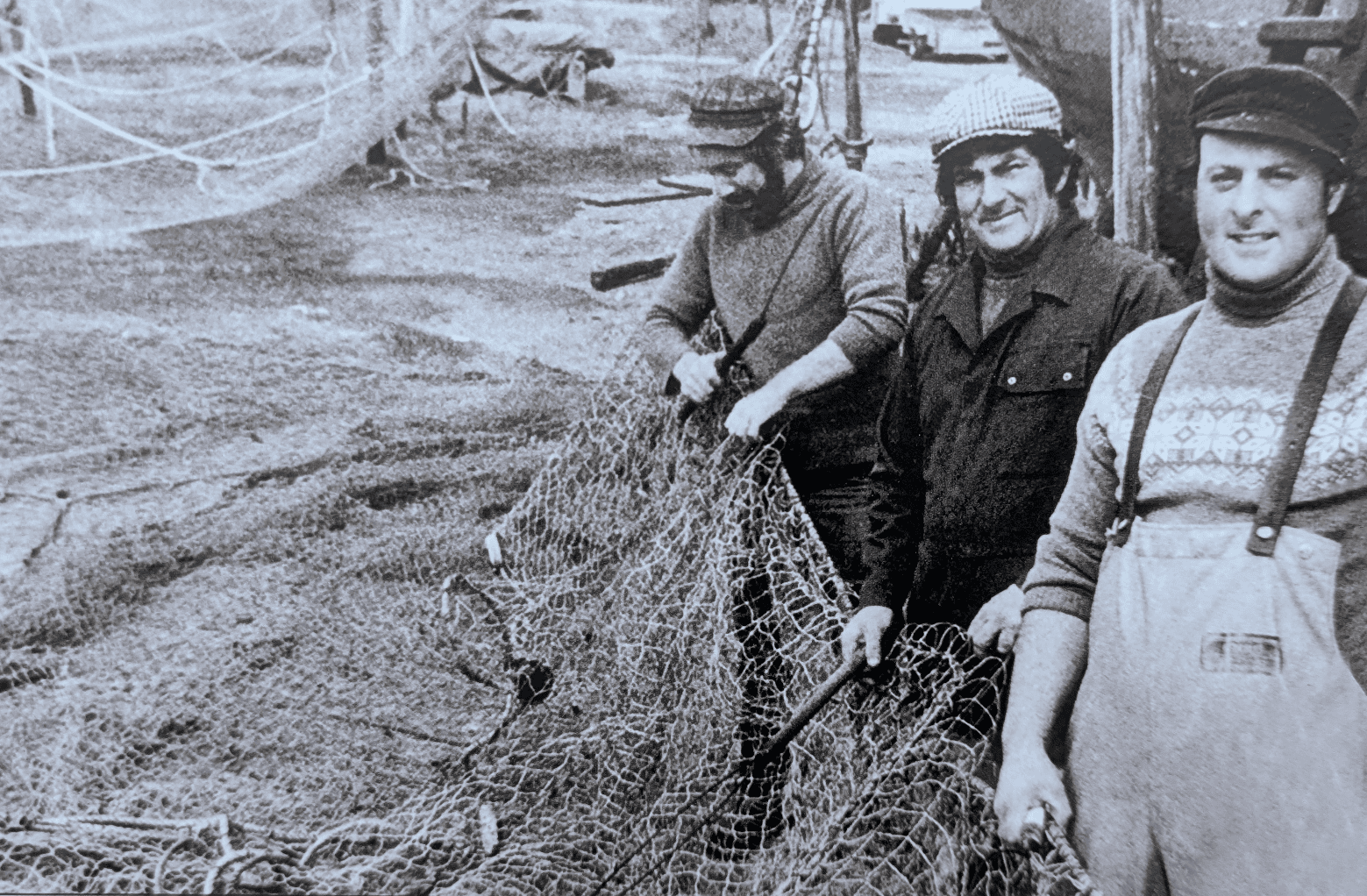
The last of Port Erroll’s historic ‘Salmon Fishermen of Cruden Bay’, Jocky, Bertie and Joseph are seen here cleaning and repairing the nets beside the drying green.
“We are an independent, non-profit organisation run by volunteers seeking to preserve the harbour’s heritage for future generationswhilst striving to improve facilities for both fishing and non-fishing activities”
This project was supported by NESFLAG and funded by Aberdeenshire Council’s Coastal Communities Challenge Fund

So, have you been paying attention?
What have you learned from our journey into the rich maritime history of Port Erroll Harbour?
From the 18th Earl of Erroll’s ambitious 19th-century construction of the pioneering concrete piers and the grueling work of the herring lassies, right through to Bram Stoker’s gothic coastal musings and the ingenious diversion of the Water of Cruden, there is a lot of extraordinary local history to uncover!
Why don’t you see how much you’ve remembered by taking part in the brand new Cruden Bay Life Quiz? Test your knowledge of this proud Aberdeenshire port and see if you are an ultimate local history buff.
Just click the link below to get started!
Plan Your Visit
Port Erroll Harbour is easily accessible on foot from Cruden Bay village and has limited public parking available. These parking spaces are also used by campervans staying overnight, so during busy times of the year, the car park can become congested.
Please note that the Harbour Dunes Café has its own dedicated parking area exclusively for the use of its customers during business hours. This area is not available outside of working hours and should be used respectfully to ensure access remains clear for café patrons.
As always, please respect the working nature of the harbour and be mindful of tides if walking along the shoreline. The harbour is a year-round destination, with each season offering a new perspective on this hidden coastal gem.
Parking and Accessibility
There is a public car park on the north side of the village, beside the old Congregational Church, which is signposted from the main road. Another small parking area is located near the Dardinels, overlooking the Trygve Gran memorial. Both offer convenient access to the harbour area and are free of charge, though they can get busy during peak summer months.
In addition to these designated areas, street parking along Harbour Street is commonly used. However, please note that many of the charming houses in Port Errol do not have private driveways, and local residents rely on this same on-street parking to access their homes. It is essential to park considerately, leaving enough space for residents to access the narrow streets that branch off Harbour Street—namely Hay Street, Ward Street, Green Street, and Hill Street.
There are no official parking restrictions beyond general road safety and respectful etiquette. Please do not park on grass verges or block driveways, and always ensure access is maintained for emergency vehicles. Being mindful of the needs of residents helps ensure a positive experience for everyone.
Principal Sources
- Historical research and local interpretation relating to Port Erroll Harbour, its construction in the nineteenth century, its role in supporting the fishing community and its continuing importance within Cruden Bay.
- Records and historical information relating to the development of the harbour by William Hay, 18th Earl of Erroll, and the growth of the fishing settlement established around the harbour area.
- Local maritime history sources documenting the fishing traditions of Cruden Bay, including the boats, families, working practices and communities connected with the North Sea.
- Historical accounts relating to the herring industry, coastal trade and the changing role of small fishing harbours along the Aberdeenshire coastline.
- Research and local records relating to maritime events associated with Port Erroll Harbour, including the January 1912 losses of the S.S. Frederick Snowdon and S.S. Wistow Hall.
- Personal memories, family stories and community contributions preserving the voices of fishermen, harbour users and generations of Cruden Bay residents.
- Contributions from local musicians, storytellers and creative collaborators, including original compositions created to celebrate the harbour’s heritage and the people connected with it.
- Historical footage and photographic material shared by community contributors, including archive film used to help preserve the changing character of Port Erroll Harbour.
- Original written content, photography, video production and digital storytelling created by Cruden Bay Life to celebrate the harbour as both a historic landmark and a living part of the community.
Image References
Unless otherwise stated, images featured in this article are sourced from historical collections, community contributions, contemporary photography or original creative material produced for Cruden Bay Life.
Port Erroll Harbour is more than a scenic location; it is a place shaped by generations of fishermen, families, visitors and community members. The images used throughout this article aim to capture both the historic character of the harbour and the continuing relationship between the village and the sea.
Historical photographs and archive footage provide a glimpse into earlier generations of harbour life, while contemporary images show how this special place continues to evolve through fishing, recreation, community events and everyday village activity.
Where digital artwork, animation or creative interpretation is used, these images are intended to support storytelling and atmosphere rather than represent exact historical records.
We are grateful to photographers, filmmakers, local families and community contributors whose images, memories and knowledge help preserve the continuing story of Port Erroll Harbour.
About Cruden Bay Life
Cruden Bay Life celebrates the history, landscapes, people and stories that make Cruden Bay and the surrounding Buchan coast unique.
Every article begins with curiosity, research and a desire to understand the places and people that have shaped this remarkable coastline. Some stories are discovered through archives, newspapers and historical records, while others are preserved through personal memories, photographs, music and the voices of those who continue to maintain the traditions of the community.
Port Erroll Harbour represents the heart of Cruden Bay’s connection with the sea. Built to support a thriving fishing community, the harbour has witnessed generations of change — from working boats and fishing families to today’s mixture of maritime activity, recreation and community gatherings.
The story of the harbour is ultimately the story of the people connected with it. Fishermen, families, volunteers, musicians and visitors have all contributed to its identity, ensuring that Port Erroll remains not just a historic structure, but a living part of Cruden Bay’s future.
Alongside traditional research methods, we make thoughtful use of modern creative tools—including artificial intelligence—to assist with research, editing, illustration, music composition and visual presentation. These tools allow us to explore new ways of sharing local stories, while historical evidence, editorial judgement and respect for our contributors remain central to everything we publish.
Researched by people. Enhanced with modern creative tools. Inspired by history. Created for today’s audiences.
Learn more about how we research and create our stories. Click here →